
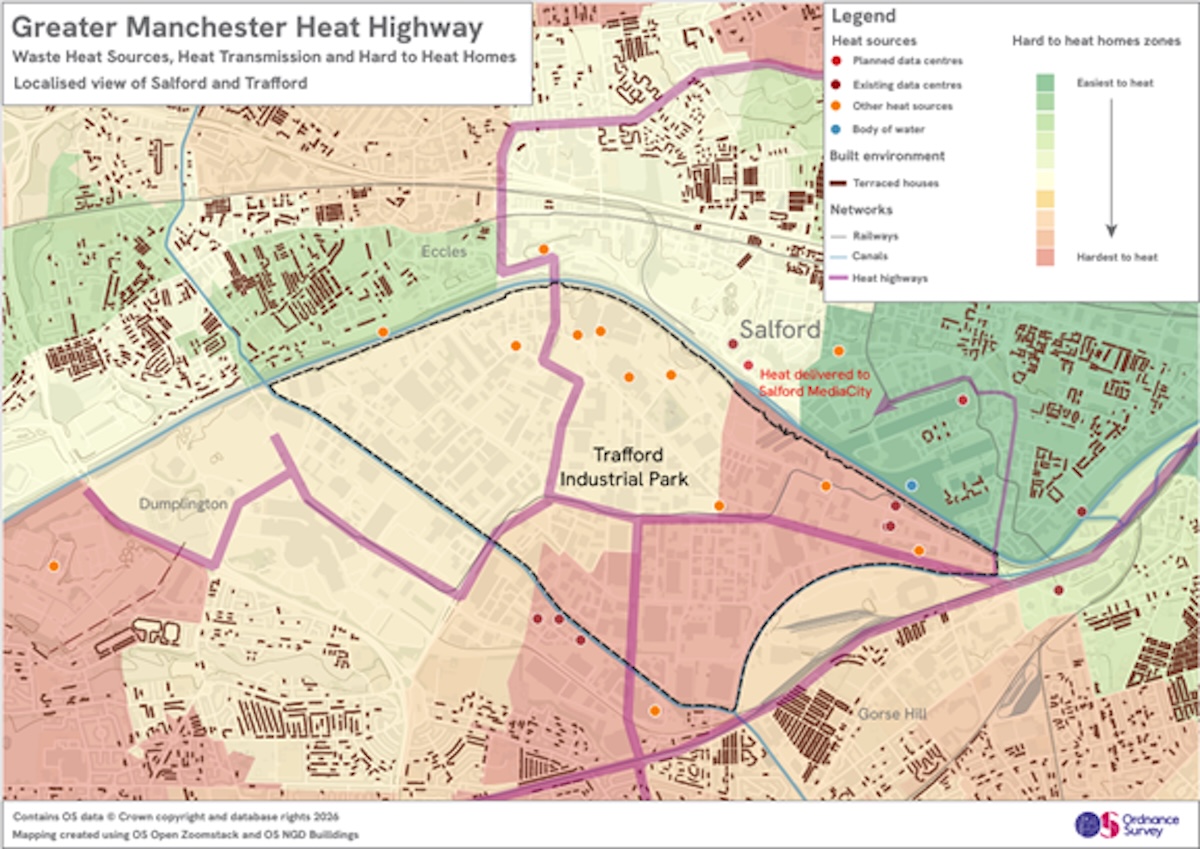
6 in 10 Britons (58%) think planning permission for data centres should depend on them sharing excess heat via a local network, polling from Censuswide, commissioned by energy experts EnergiRaven has found. This reinforces calls from EnergiRaven and industry body ADE to update local planning rules to incentivise using easily recoverable heat from data centres, projected to be enough to heat 3.5m homes across the UK by 2035, increasing energy security and bringing down bills.
The recent poll outlines how this could become central to data centres’ social license to operate. Almost two thirds (62%) of respondents would be more supportive of a new or expanded data centre in their area if it committed to heating nearby homes and businesses through a heat network using its waste heat. This comes shortly after an announcement of £90m in government funding for new and expanded heat networks across the UK via the Heat Network Efficiency Scheme and Green Heat Network Fund.
58% of respondents thought that planning permission for data centres should be dependent on them supplying waste heat into a network. This attitude was consistent across political divides – 56% of Reform voters, 62% of Labour voters, 64% Conservative and 62% Green voters agreed with this proposal.
EnergiRaven and ADE have emphasised that simple policy fixes could help kick start heat sharing between data centres and homes, as part of networks capture and re-use excess heat from a range of sources, from water treatment to breweries.
They recommend that data centres that co-locate with heat networks, industrial sites, thermal storage, and/or provide flexibility services to the grid, should get higher priority in grid and planning decisions, a recommendation ADE raised in evidence hearings with the Environmental Audit Committee.
Empowering local government to co-locate affordable energy with the communities that can benefit the most is at the heart the Prime Minister’s drive for devolution. As local governments are being given increased responsibility for designing and managing their energy systems via new Regional Energy Strategic Plans (RESPs), there is an opportunity for them to integrate data centres and heat sources into these plans.
ADE’s recommendations would also require NESO’s new RESPs to recognise data centres as active system assets capable of providing heat recovery and grid flexibility. They are also calling for a change to planning rules where currently, sites are compelled to connect to heat networks – but are not obliged to use the heat, removing certainty for heat network operators.
They would also require all new data centres above 1MW to install heat offtake infrastructure, and ensure every AI Growth Zone plan includes a consented heat network spine designed to capture waste heat before the first facility is operational.
“As local authorities develop local plans for energy systems, these simple shifts to planning recommendations can lay the foundations for generational infrastructure to keep bills low,” said Simon Kerr, head of heat networks at EnergiRaven. “Building on this, councils and municipalities should work together to establish regional heat utilities and transmission mains under majority public ownership, recovering and distributing excess heat from data centres and other major sources whose output often exceeds the needs of a single development.”
“Most of the energy that goes into a data centre ends up as heat; there’s no reason we can’t recover that and put it to good use. Across Europe, particularly Nordic countries, we can see data centres powered by renewable energy, sharing heat with local networks. We could do this in the UK as well – which would save billions in heating bills. The alternative is more of what we see in the US – gas-powered data centres that work against, rather than with communities.”
Aaron Gould, Interim CEO of ADE added, “Data centres keep Britain online. Existing data centres already give off about as much heat as the combined use of a city the size of Sheffield. With Europe’s biggest growth market for heat networks right here in the UK and data centres growing rapidly in number, capturing and using this low-cost, low-carbon heat should be routine. Wherever it makes sense, data centres should support the community by sharing its heat with local homes, hospitals and schools and if they do they should be first in line for a grid connection.”