
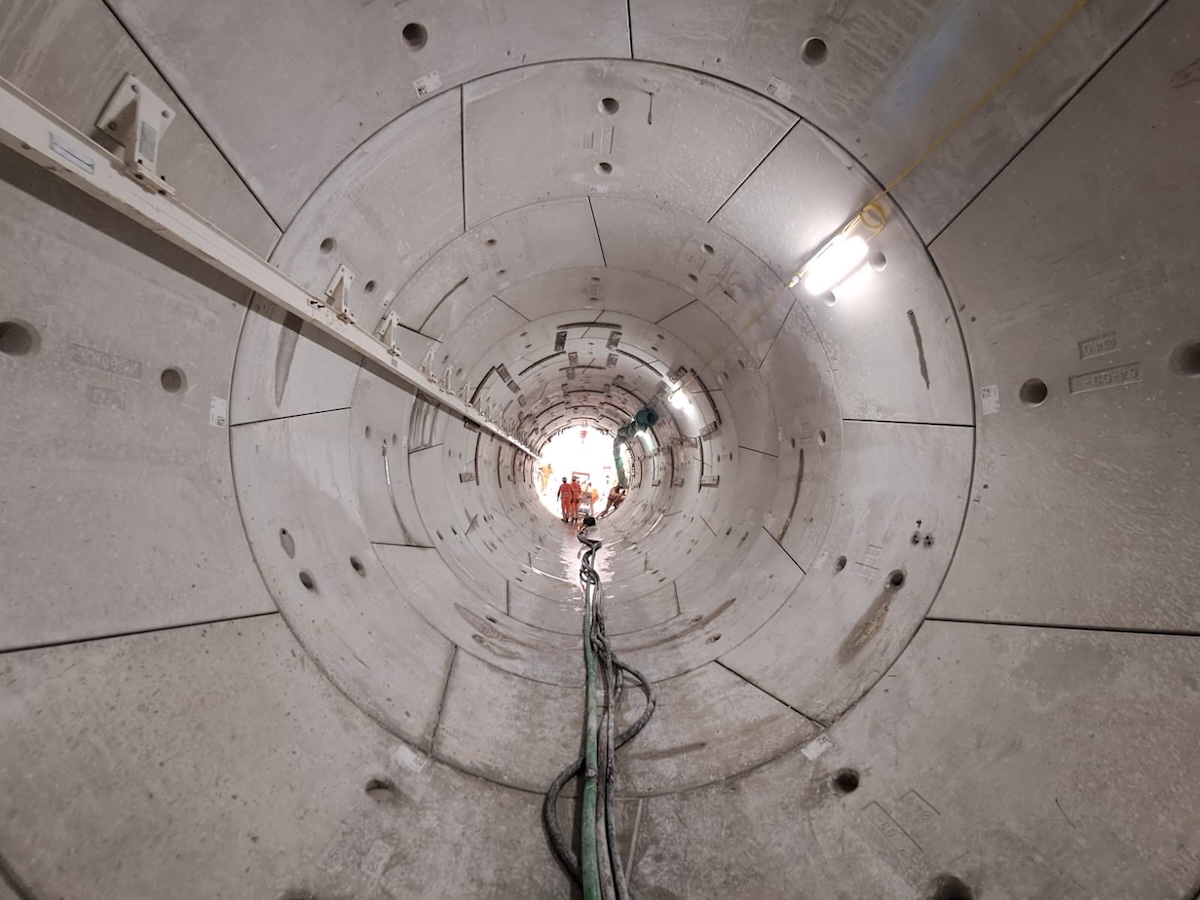
National Grid has reached the halfway point in the construction of a new 2.2km high-voltage electricity cable tunnel between Tilbury in Essex and Gravesend in Kent, with tunnel boring machine (TBM) Caroline progressing more than 1.1km beneath the River Thames.
This achievement marks a significant step in replacing the existing Thames Cable Tunnel, which has been in service since the late 1960s and is approaching the end of its operational life.
Part of National Grid’s The Great Grid Upgrade, the project will help strengthen the electricity network and support the continued connection of secure, cleaner and home-grown sources of energy to homes and businesses across the UK.
Since tunnelling began in May, significant progress has been made beneath one of the UK’s busiest waterways. More than 40,000 tonnes of material have been excavated and over 5,100 pre-cast concrete tunnel segments installed to form the tunnel lining. Just over 840 rings have been installed, and the tunnelling team has achieved its best daily performance of 29 tunnel rings installed within a 24-hour period.
Weighing 464 tonnes, the TBM, together with the trailing gear, is excavating the tunnel using a specialist Mixshield system. Named after pioneering electrical engineer Caroline Haslett, TBM Caroline has been designed to operate safely in the challenging ground conditions beneath the Thames.
The milestone follows a series of major achievements on the project, including the launch of ‘Verena’, Europe’s largest diameter Vertical Shaft Sinking Machine, which was used to construct the tunnel access shafts at Tilbury and Gravesend.
The Grain to Tilbury project is being delivered by National Grid in partnership with Ferrovial BEMO JV and tunnelling specialist Herrenknecht.
Mark Farmer, Project Director, National Grid, said, “Reaching the halfway point of tunnelling beneath the River Thames is an important moment for the Grain to Tilbury project and is a testament to the expertise and collaboration of teams across National Grid and our partners. The progress made so far reflects the dedication of everyone involved and moves us a step closer to delivering infrastructure that will help strengthen the electricity network and support Britain’s future energy needs.”