Atlas Copco has introduced the H2Y hydraulic booster to the UK market, strengthening its offer for manufacturers, energy project developers and infrastructure operators working with high-pressure hydrogen. The 100% oil-free compression system is designed to raise hydrogen to the pressures required for storage, distribution and dispensing, particularly for hydrogen mobility, refuelling stations, trailer filling and other high-pressure hydrogen applications.
Its introduction comes as the UK hydrogen sector faces a decisive shift from strategy and project announcements towards delivery. While hydrogen remains central to many industrial decarbonisation plans, the success of individual schemes increasingly depends on the supporting infrastructure around production, storage, transport and use. Compression is a key part of that infrastructure.
For operators, the H2Y combines high-pressure performance with predictive maintenance, long service intervals, closed-loop water cooling and integrated control options. Its design also helps minimise hydrogen losses during operating cycles.
Chris Hyde, Business Line Manager for Air and Gas Applications at Atlas Copco UK, said, “The conversation is no longer just about hydrogen’s potential, but about how projects can operate safely, reliably and efficiently in real conditions. Compression has a direct impact on that. If hydrogen is going to be used in power generation or industrial applications it needs to be available at the right pressure and with the right level of control. The H2Y gives UK customers a high-pressure boosting solution designed for those realities, from variable inlet pressure to reduced gas losses and long-term serviceability.”
The H2Y range can be configured for discharge pressures of up to 1,000bar(g), depending on the application, making it suitable for hydrogen refuelling stations and other applications where high-pressure performance, reliability and safe gas handling are critical. It has been developed to handle variable inlet pressure and flow rates, helping operators respond to changing production and demand conditions.
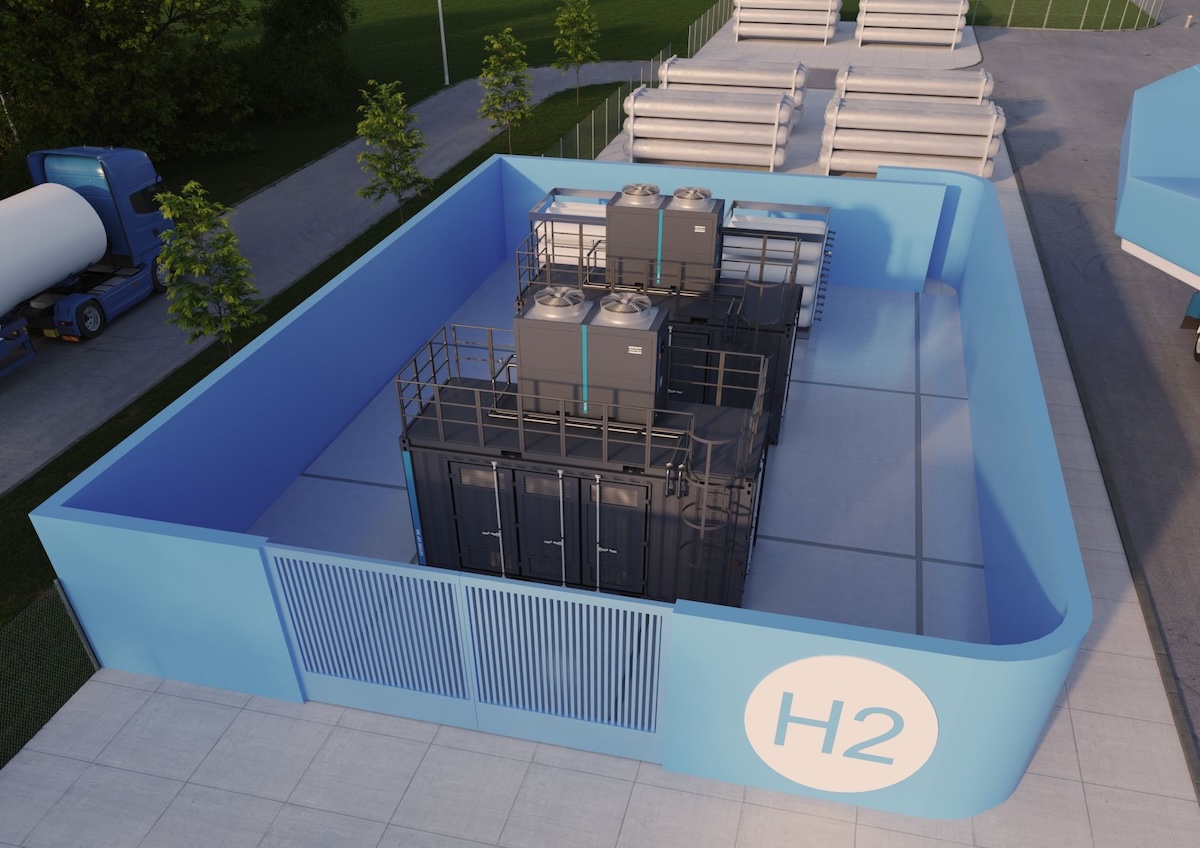
For operators, the H2Y hydraulic booster combines high-pressure performance with features that support day-to-day reliability, including predictive maintenance, long service intervals, closed-loop water cooling, integrated control options and no gas blow-off on start and stop. This helps reduce the amount of hydrogen intentionally vented during operating cycles. The system can also be supplied as a plug-and-play or containerised package, supporting easier integration into new or developing hydrogen projects.
Atlas Copco already supports hydrogen production, transportation and distribution projects through a wider portfolio that includes oil-free piston compressors, hydraulic boosters, gas compressors, dryers, filters, chillers, control systems and monitoring technologies.
Hyde added, “Hydrogen compression is not new to Atlas Copco. What is changing is the market around it. More companies are looking at hydrogen as a practical route to lower-carbon energy, and they need partners who understand both the technology and the process it supports.”
To find out more about Atlas Copco’s hydrogen compression technologies, including the H2Y hydraulic booster, visit here.