
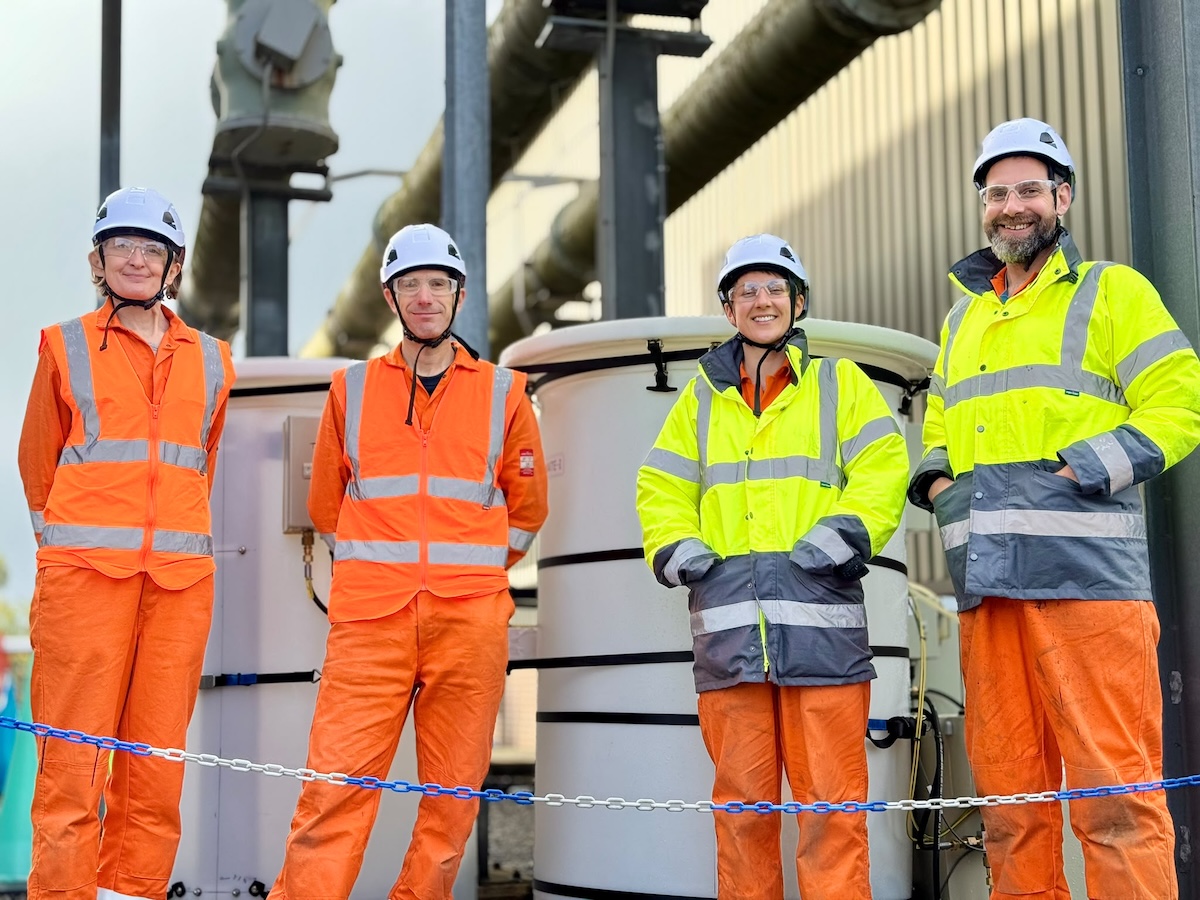
National Grid has launched an innovative trial with climate-tech start-up Climate-i to explore a new way of reducing sulphur hexafluoride (SF6) emissions from its network of high-voltage equipment.
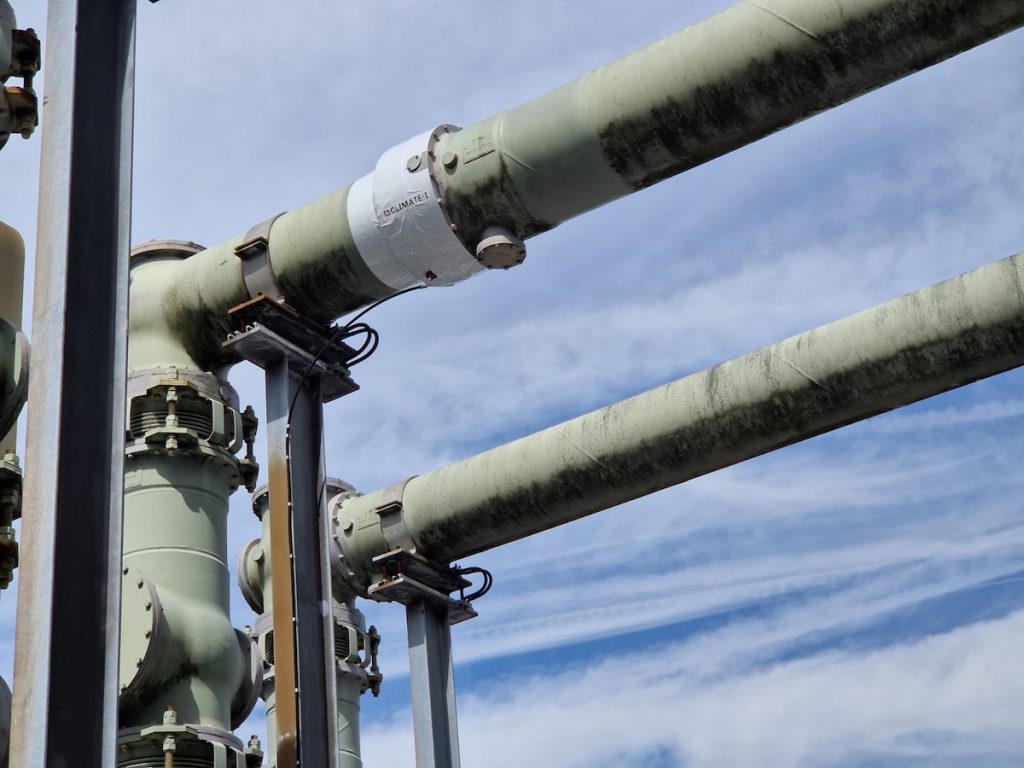
The trial marks the first live deployment of Climate-i’s technology, which uses a flexible temporary covering to encapsulate and capture SF6 leaking from transmission assets before it enters the atmosphere.
SF6 is a gas commonly used in the power industry to provide electrical insulation and arc interruption. While it plays an important role in the network, SF6 is a potent greenhouse gas with a global warming potential that is 24,300 times greater than CO2.
National Grid has committed to reduce SF6 emissions from its operations by 50% between 2018/19 and 2030/31, and is reducing the use and release of SF6 by building new substations with SF6-free switchgear and an ongoing programme of leak repair and mitigation of older SF6-filled equipment.
The trial is part of National Grid continually exploring innovative new technologies to address the challenge and is taking place at a National Grid substation in the North West of England, where the Climate-i technology has been installed to address two leaks.
It uses a flexible adhesive rubber patch which covers the leak and directs any escaping gas to a capture rig which measures the amount captured before pumping it into a storage tank.
The SF6 is then being collected and safely disposed of by specialist recycling company Celtic Recycling which is also supporting the trial.
The rubber patch can be adapted to different asset geometries and leak locations, creating the opportunity to tackle emissions where other solutions may not be suitable, and it is the first operationally oriented SF6 leak capture solution to be used by National Grid.
It can often be installed without shutting down the equipment and is designed to act as a short to medium term intervention while assets await repair or replacement.
The system also incorporates remote monitoring capabilities, providing National Grid with additional data and insight into leak behaviour and asset performance.
The trial will help National Grid and Climate-i evaluate the technology’s performance in a live operational environment.
Mark Waldron, Substation Technical Leader at National Grid, said, “We already use a range of solutions to manage SF6 leaks across our network, but are always looking for innovative new technologies that can complement our existing approach and help us further reduce emissions.
“The trial with Climate-i is an opportunity to test a new solution which is highly flexible and better understand how it could contribute to reducing SF6 emissions from transmission assets in the future.
“While the trial is in its early stages, the technology is already contributing to reducing our emissions.”
Elinor Wakefield OBE, Co-founder and CEO of Climate-i, said, “Our solution is designed to capture SF6 emissions during the period between a leak being identified and a permanent repair being carried out, helping electricity companies meet and outperform their SF6 leak reduction targets.
“This trial is an important milestone for Climate-i. We’re excited that it is already successfully reducing emissions and is also providing us with valuable insights as we continue to develop the technology and demonstrate its potential benefits within the industry.”
National Grid and Climate-i will continue to work together to monitor and refine the trial over the coming months.
The trial is one of a range of projects being undertaken by National Grid to address SF6 emissions, with others including the new Bengeworth Road substation which features SF6-free switchgear and a world first retro-fill project to replace SF6 in existing high-voltage equipment at Richborough substation in partnership with Hitachi.