Founded by solar experts, renewable power partner Electron Green helps remove the practical and financial barriers to solar adoption. Siemens Financial Services provides the financing capability that allows Electron Green to scale confidently and sustainably – giving end customers a route to lower-cost, on-site renewable energy without upfront capital outlay, Emma Banks, Clean Technology, Siemens Financial Services explains
Untapped roof space in the UK
Solar power installations are at record levels in the UK, with 2025 reported as the strongest year on record for solar deployment. The nation surpassed 2 million total solar installations for the first time in March 2026, across homes, communities and solar farms. The majority of new installations are rooftop solar.
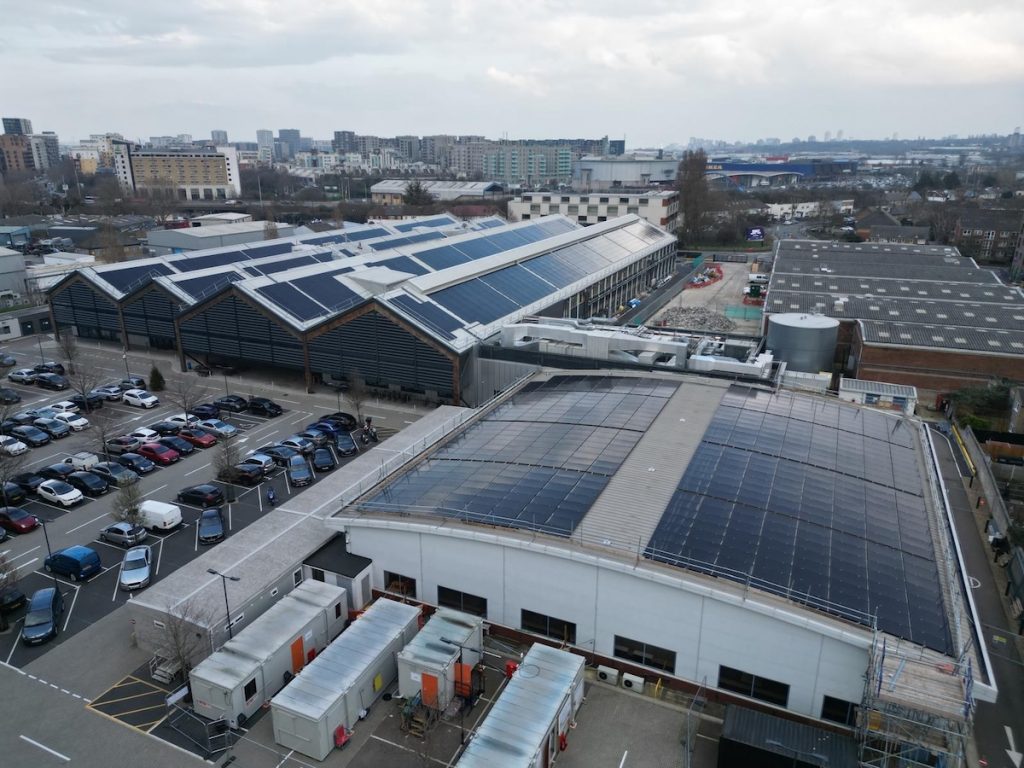
However, in the commercial and industrial sectors, rooftops remain an untapped source of clean, on-site energy. In fact, less than 5% of commercial and industrial rooftops are thought to be equipped with solar installations. Yet much of this flat space, optimal for solar capture, could be serving occupants with lower-cost, renewable energy every day.
Barriers to commercial uptake
If households are reacting to higher and more volatile energy prices by exploring renewable alternatives, why are businesses slower on the uptake?
Despite the clear commercial logic, many organisations hesitate because solar often requires upfront capital, specialist knowledge, landlord and tenant alignment, planning permission, and engagement from senior decision-makers with competing priorities.
Misconceptions also persist. One common perception is that solar is ineffective in the UK. In reality, solar PV systems rely on daylight, not sunlight. Additionally, advances in data, software and machine learning can help predict daylight hours and expected energy yield more accurately.
Solar has also become increasingly economical. Costs vary depending on the site, system size and the complexity of installation, but commercial solar systems can start at around £25,000 for a 25kW system, increasing to around £85,000–£130,000 for a 100kW system and exceeding £750,000 for a large-scale 1MW project. However, most systems will pay for themselves in around six to ten years – or sooner depending on energy use and current prices.
Reaching boiling point
Regulatory, financial and sustainability concerns are increasing the need for action. Under the government’s Clean Power 2030 Action Plan, 95% of electricity must be generated from non-fossil-fuel sources by 2030. To help achieve this, government ambitions include increasing solar power capacity to 45-47GW – more than double current capacity.
In parallel, legal requirements for building developers and landlords are becoming more stringent. Under new building regulations coming into force in March 2027, Wales will be the first UK country to mandate a system for renewable electricity generation on new buildings. Similar rules are expected to follow in England.
Commercial landlords are also facing growing pressure to improve energy performance, with Minimum Energy Efficiency Standards expected to tighten. Landlords of privately rented commercial buildings over 1,000 square metres have a new deadline as of June 2026, to reach an energy performance certificate (EPC) rating of B – as a minimum – from 2031.
However, while the pressure may be ramping up, organisations still need a practical route to implementation. Commercially advantageous solutions can help to turn the tide faster.
Electron Green turns to commercial rooftops
The team at Electron Green is on a mission to remove the barriers of cost, specialist skills, time, and landlord-tenant complexity, one commercial rooftop at a time. The company’s founders bring decades of experience in the residential solar market. Each individual on the team brings interesting credentials, include coining the term ‘CarbonNeutral’ in the early 1990s and inventing the first ‘air space’ leases with HomeSun, as well as roles in leading investment banks, energy companies, the government and the British Army.
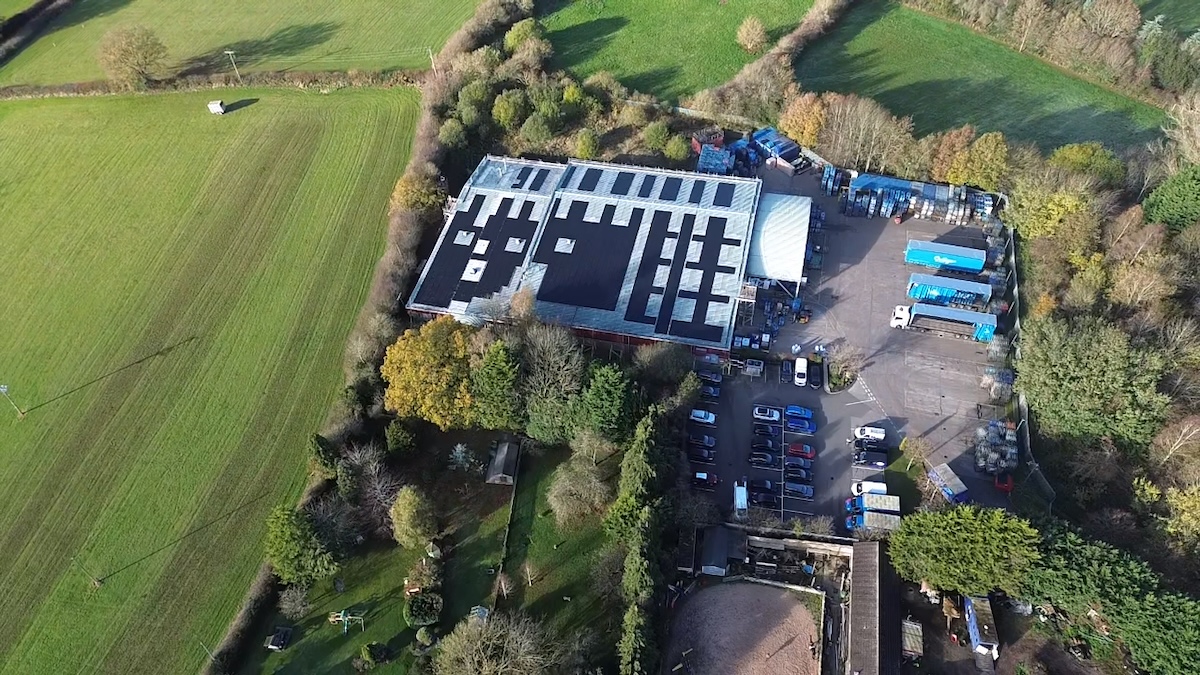
Since launching in 2021, Electron Green has 100MW of solar potential in development, in the UK and Europe. The specialist solar developer estimates that 55 million square feet of rooftop space in Europe could be available for installations. Working with some of the world’s largest real estate asset owners, as well as high energy users such as supermarkets, retailers, data centres and schools, Electron Green develops and manages rooftop solar PV projects from design and finance through to procurement, installation and operation.
Any company can benefit from saving money with solar, but those best placed to act include organisations with sizeable real estate portfolios, such as care homes, student housing providers, and hotel and leisure operators. Electron Green is also seeing demand from businesses seeking to insulate themselves from electricity price volatility, from manufacturers to food and beverage producers. The company’s bespoke software platform provides clients with grid and solar information in a single place, at both site and portfolio level. Customers can track live and historic energy use, savings and performance, helping them understand the value being generated from their rooftop assets.
Two routes to solar
A top priority for Electron Green was to make solar easier for customers to access, allowing them to benefit from renewable power without unnecessary complexity – all while protecting its own cash flows.
The company offers two pathways. Electron Green can develop the PV System where the client funds and owns their PV system outright, or Electron Green can develop and fund the PV System and sign a Power Purchase Agreement (PPA) with the client. In the latter option, the customer can access solar-powered electricity at an agreed fixed price for a 25-year term, with no capital outlay upfront.
This model is designed to give customers long-term predetermined price stability and immediate access to on-site renewable electricity. It also gives them flexibility. At the end of the 25-year term, or earlier if agreed, the system can transition to the end client, enabling them to benefit from free power for the remaining expected life of the asset.
In this way, PPAs significantly facilitate installation and investment. However, they also require the right financing and legal structures behind the scenes. Developing a solar project requires investment long before electricity is generated or revenue is earned, as providers organise planning requirements, regulatory checks, procurement and grid connection.
Stability through specialist financing
With a dedicated clean technologies team, Siemens Financial Services (SFS) came recommended. SFS supports Electron Green’s PPA structure by financing projects and releasing capital back into the business. That means Electron Green can continue progressing the next wave of projects, rather than having capital locked into completed or near-completed installations.
Let the sun shine
On-site solar offers multiple financial benefits to adopting organisations. Firstly, it helps businesses reduce exposure to rising non-commodity costs. According to Electron Green, wholesale energy (the commodity cost) accounts for roughly only half of many commercial electricity bills, while the rest is made up of non-commodity costs such as distribution, transmission, taxes and levies.
Secondly, on-site solar shields companies from fluctuations in energy prices, giving users greater independence, improved cost visibility and long-term savings. Between 2021 and 2023, the average electricity price for UK non-domestic users rose by over 90%, and average prices remain significantly higher than pre-crisis levels.
For landlords and asset owners, rooftop solar can also help turn underused space into a productive energy asset, supporting tenant needs while contributing to sustainability targets and future regulatory compliance.
Not too good to be true
Founder & CFO Gordon Kuper says that scepticism as well as apathy may be behind investment hesitation; people often wonder, what’s the catch? Yet solar technology is proven, and with the right partners and financing structures, it can deliver long-term energy savings, resilience and decarbonisation benefits.
In the PPA model, flexible finance reduces the need for upfront capital, while the contract structure helps address landlord and tenant concerns by clarifying responsibility for installation, ownership and long-term operation. Electron Green takes responsibility for delivery from start to finish; as project owner, the developer ensures every installation meets the highest standards. Having delivered projects with a wide variety of technical features, there are few problems Electron Green has not already solved.
There are multiple routes to solar adoption, from outright investment to government grants. PPAs give businesses and landlords a practical route to adoption: low complexity, no upfront cost, outsourced maintenance and immediate access to lower-cost renewable electricity.
Learn more about clean technology finance.