

Planning approvals for battery, wind, and solar projects in Great Britain (GB) have almost doubled over the past year, with more than 45GW of capacity approved in 20251. This is 96% higher than last year’s 23GW, and enough to power 12.9 million homes.
Fresh analysis from Cornwall Insight reveals that this boom is being driven by battery storage, which climbed to 28.6GW from 14.9GW in 2024 and offshore wind, which saw planning approvals jump to 9.9GW from 1.3GW in 2024. These technologies are rapidly transforming the UK’s energy landscape.
The growth reflects a longer-term shift as the UK fast tracks its transition to renewable energy. Many of the projects have been years in the making, with developers submitting plans well before recent approval dates.
The sharp rise in approvals also points to more immediate factors. Technologies such as battery storage have reached a greater level of maturity, enabling developers to bring forward much larger-scale projects. At the same time, some developers accelerated applications ahead of network Connections reforms, where development status helps determine queue position under the new ‘first ready, first needed, first connected’ approach.
Local elections may have also influenced timing. With uncertainty around future renewable energy planning policies, some developers may have sought approval before any potential changes in local administration.
Government efforts to streamline planning processes and prioritise nationally significant infrastructure have helped cut delays and give developers greater certainty. Recent updates to the National Policy Statements and commitments to faster consenting have been widely welcomed by industry and are expected to support further growth over the next few years.
Over the past five years, planning approvals for battery, wind, and solar power have soared by more than 400%, climbing from just over 9GW in 2021 to today’s unprecedented levels. While approvals have accelerated, the pace of delivery has lagged behind. Long construction timelines and grid connection delays remain major obstacles.
Recent reforms from NESO should help clear bottlenecks and reduce the number of so-called ‘zombie’ projects. While the Planning and Infrastructure Bill seeks to further reduce approval times for Nationally Significant Infrastructure Projects and limit delays from legal challenge. Even so significant hurdles remain.
This rapid expansion of renewable projects underscores the urgent need to reinforce and build out the UK’s electricity grid. The current network was never designed for such high volumes of intermittent generation and storage. Investment in grid flexibility, transmission upgrades, and smart technologies will be critical to ensure these projects can deliver power where and when it’s needed.
Figure 1: Selected renewables technology capacity by year in which planning permission was granted
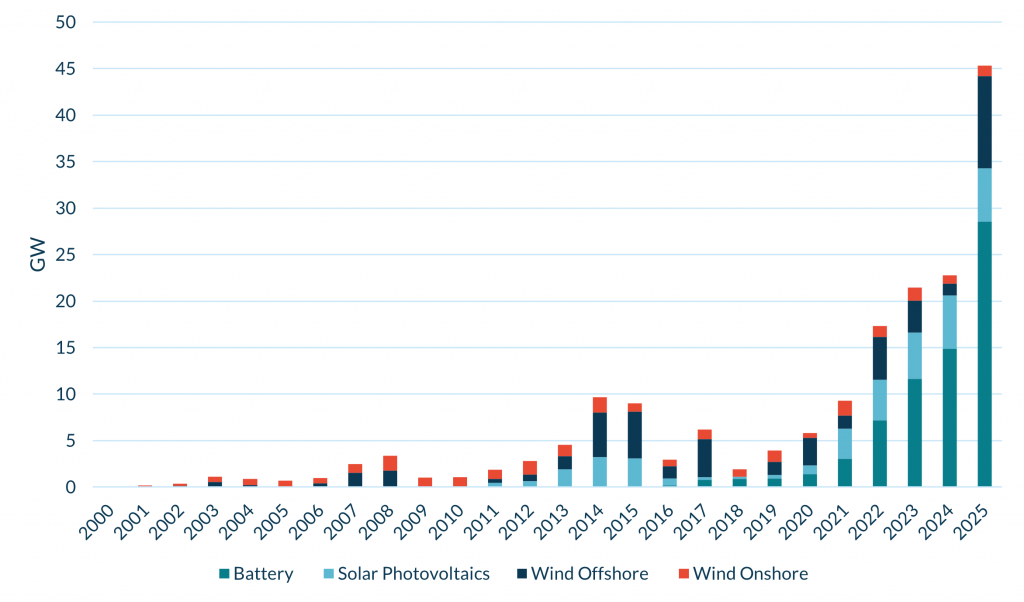
Source: Cornwall Insight
Robin Clarke, Senior Analyst at Cornwall Insight, “On paper, the UK’s renewables pipeline has never looked stronger. This record-breaking surge in planning approvals signals real momentum in the UK’s energy transition, with offshore wind and battery storage reshaping what’s possible at scale.
“But approvals alone don’t generate electricity, and we urgently need to move from ambition to actual delivery of these projects. Too much capacity is still stuck in queues or waiting on grid upgrades. Grid bottlenecks remain one of the biggest risks to turning today’s approvals into tomorrow’s power.
“The recent grid connection reforms are a significant step forward, and should help clear some of the backlog, but they won’t solve everything. We need faster decisions, more investment in the grid, and real collaboration between Government, regulators, and industry. Without that, these record numbers risk becoming just another statistic.”
Reference: 1. Data up to the end of Q3 2025