Innovation in energy storage for wind power generation has reached an all-time high according to the latest patent data* reported by Appleyard Lees.
This latest finding is revealed in the fifth annual edition of the now-published Inside Green Innovation: Progress Report** from the leading intellectual property firm.
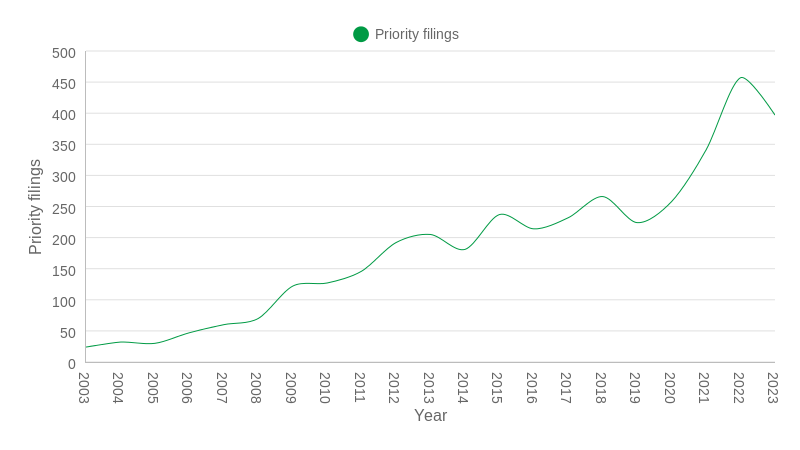
Patents filed worldwide for long-duration energy storage (LDES) in the context of wind energy in the four years from 2019-2022 increased by 104% (from 224 to 457 filings), compared to the 47% (from 181 to 266 filings) growth in the previous five years and are now outstripping the plateau in patents for wind turbine technology.
Appleyard Lees’ Paul Beynon, UK & European Patent Attorney, said: “This suggests a new phase of innovation and investment focused on deploying, scaling and integrating storage solutions for wind power generation into power grids.”
Meanwhile, patent data shows an acceleration in innovation activity for monopiles – the most common method for securing offshore wind turbines to the seabed.
LDES technology development reflects wind power expansion
Increased patent filing for LDES technology mirrors the growth in wind-generated energy, which accounted for 25-plus per cent of electricity produced from renewable sources in 2024.
The technology, which stores surplus wind energy and provides a more predictable power supply, limits the risk of partial power loss (brownouts) and reduces reliance on fossil fuel backup systems.
In the field of offshore wind, innovation in monopiles – as represented by patent filings – has had a generally-upward trajectory in the 2020s, rising from 26 filings in 2020 to a record high of 42 filings in 2023. This reflects the increase in size and weight of wind turbines, needing bigger and stronger monopiles. The focus of monopile technology development is on safety enhancement during installation and reducing underwater noise pollution.
Jordan Tinkler, European Patent Attorney at Appleyard Lees, added, “As general wind-related patent filings continue to plateau – pointing to more mature technologies and saturated markets – LDES is emerging as a cornerstone technology to achieve a renewable-centric power grid. With wind power capacity growing globally, this will increase the demand for long-duration storage to manage intermittency of power supply and grid reliability.”
Countries and companies
Among global territories investing in innovation and associated patent filings for LDES, the US is leading the pack, though wind power accounts for only about 10% of the country’s power generation.
European activity in this technology area – likely driven by a positive approach to renewable power – is in second place, with a steady upwards trend in patent filings. Meanwhile, the late entrance of China to LDES innovation suggests a move to energy storage solutions other than pumped hydro. More recent data from 2024 indicates an increase in patent filings from India, supporting a target of 500 GW of non-fossil fuel-based power generation by 2030.
In monopile innovation the Netherlands is taking pole position, for example with technologies that simplify and reduce the environmental impact of installation. Offshore company, CAPE Holland, has developed a tool that enables monopiles to sink with gravity, therefore avoiding excessive underwater noise pollution that disrupts marine wildlife.
*Inside Green Innovation: Progress Report – Fifth Edition, examines patent filing data through 31 Dec 2023, the latest date complete filing data is available from public sources.
**Appleyard Lees’ Inside Green Innovation: Progress Report – Fifth Edition is available to read here.