Amid growing climate pressures and intensifying global competition, Thailand’s cement industry is accelerating its transformation by integrating policy, technology, innovation, energy transition, circular economy, and digitalisation into practical implementation; enhancing competitiveness while reducing greenhouse gas emissions.
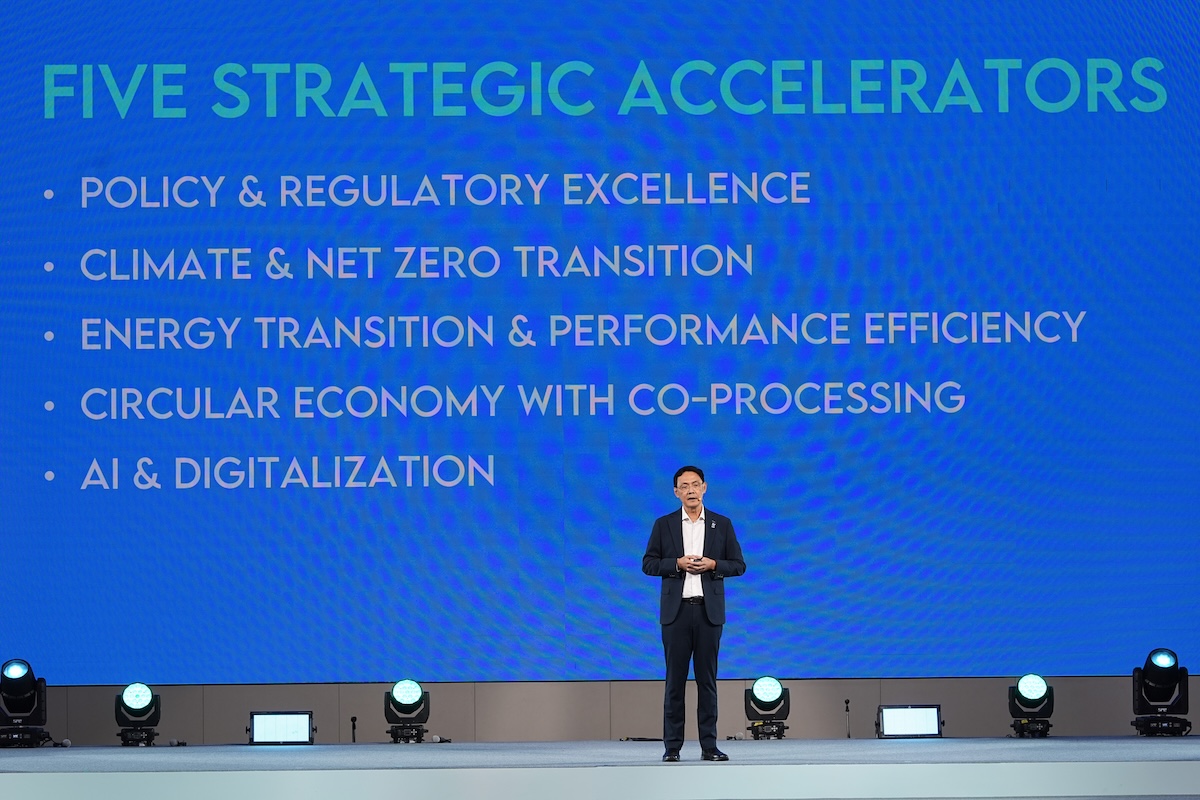
Mr. Surachai Nimla-or, Chairman of TCMA, (pictured above), states that, “The NEXT Chapter represents a critical inflection point for the industry, guided by being competitive, growth-oriented, and low-carbon.” TCMA is advancing this through five key engines:
- Policy – Strengthening carbon governance frameworks, including carbon pricing, emissions trading systems, and green procurement, alongside standards and incentives to create an enabling investment environment.
- Transition – Advancing low-carbon technologies across the value chain, including calcined clay cement, new supplementary cementitious materials, and carbon capture, utilization, and storage (CCUS), through international collaboration.
- Energy – Increasing the share of clean energy and alternative fuels, while improving production efficiency to reduce reliance on fossil fuels.
- Circular – Promoting the circular economy through co-processing in cement kilns, utilising waste as alternative inputs to reduce landfill and emissions.
- Digital & AI – Enhancing system-wide efficiency, improving precision, reducing energy use, and increasing productivity through digital technologies and artificial intelligence.
“The core of ‘The NEXT Chapter’ is ‘accelerating collaborative action’; connecting policy, technology, and investment to deliver measurable and scalable impact,” says Mr. Surachai. The TCMA continues to advance SARABURI SANDBOX, a low-carbon city pilot, serving as a test ground for innovative technology before scaling.