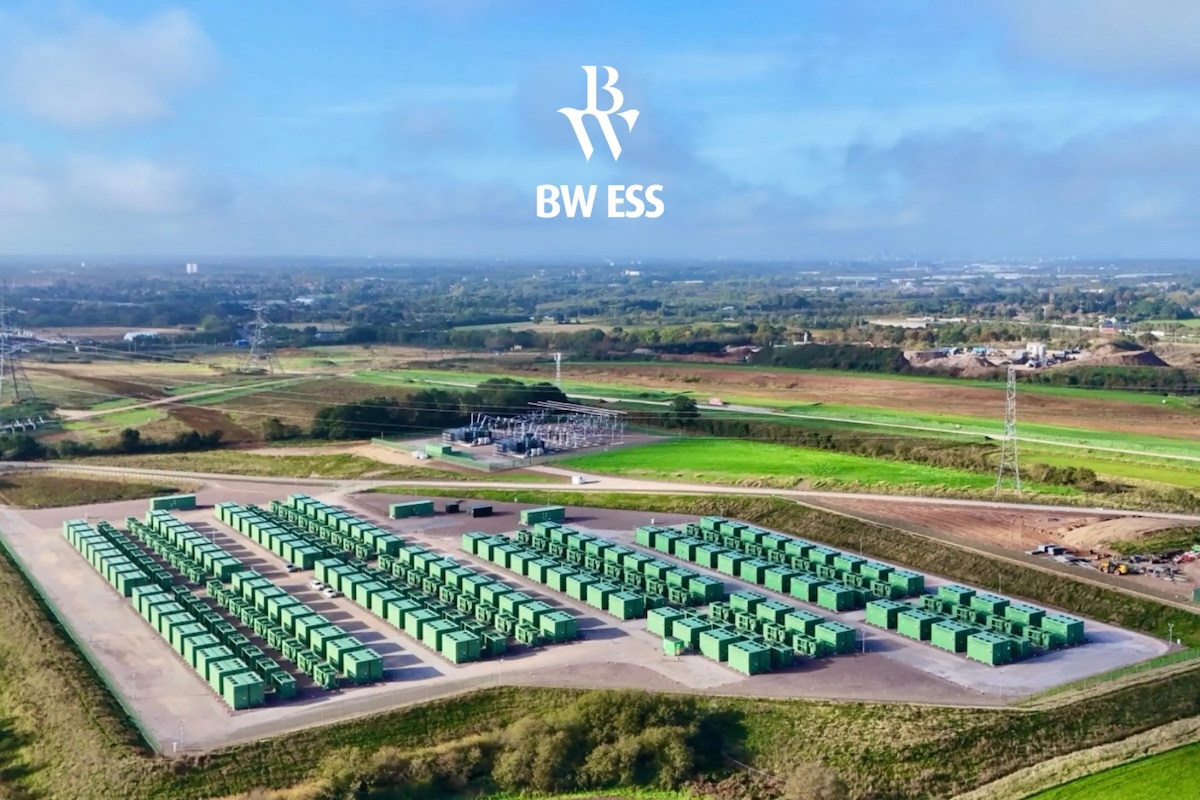
Watson Farley & Williams advised a consortium of lenders and hedge providers – comprising OCBC, Rabobank and Societe Generale – on an operational debt package granted to BW ESS in relation to its Hams Hall battery energy storage system project in the West Midlands, UK. The project forms part of BW ESS’ 2.6GWh Ardenham portfolio, which it co-owns with energy and decarbonisation investor AIP Management.
Located adjacent to National Grid’s Hams Hall substation, the project recently entered commercial operation with 350MW (1,243MWh) of storage capacity, making it the largest operational BESS project in Europe by MWh. Capacity is expected to increase to 400MW (1,424MWh) upon completion of the second phase of the project.
The project can support the electricity needs of approximately 1.3 million homes for up to 3.5 hours, helping integrate renewable generation, enhance grid flexibility and strengthen the UK’s energy security. Long-term revenues for the first phase of the project are underpinned by a 10-year floor and optimisation agreement with EDF.
BW ESS is a leading global energy storage owner-operator, with operations and development activities across the UK, Australia, Italy, Germany, Spain and Sweden. In the UK, BW ESS currently operates the 331MWh Bramley BESS project in Hampshire and has a substantial pipeline of battery storage projects under construction and development.
Partner and Co-Head of the London Projects Group at WFW, Jennifer Charles, commented, “We are delighted to have advised the lenders and hedge providers on the financing of Hams Hall, the largest operational battery storage project in Europe by MWh. This mandate reinforces WFW’s position as a leading adviser on complex battery storage financings and builds on our involvement in many of the UK’s flagship BESS projects, advising on both construction-stage and operational financings across the sector. We are proud to have supported another landmark project that will play a key role in supporting the UK’s energy transition, strengthening energy security and enhancing grid flexibility”.