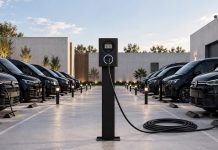

Weakening the Zero Emission Vehicle (ZEV) Mandate could delay up to £1.56 billion in UK EV home charge point sales and installations, according to new analysis from UK trade association BEAMA. Reducing the 2030 target could also slow the rollout of flexible charging capacity at a time when Government expects EVs to provide a growing source of flexibility to the electricity system.
Manufacturers across the UK have incorporated the existing sales targets from the ZEV Mandate into investment plans for the next decade. Some have planned investments approaching £100 million which would result in job creation in local communities. Manufacturers say significant reductions in the targets could force those plans to be reviewed.
BEAMA modelled what could happen if the Government reduced the 2030 target for zero-emission car sales from 80% to 50%, following the launch of a review published on Friday 14, August 2026. BEAMA estimates that the weaker trajectory could mean up to 1.7 million fewer home charge point sales by 2034 than under the existing Mandate, representing around £1.56 billion in sales and installations. That would delay demand manufacturers have already invested or planned to invest to serve.
The impact could also be felt across the electricity system. BEAMA estimates that reducing the 2030 target to 50% could mean up to 12GW less flexible charging capacity by 2034. That sits uneasily with the Government’s own Clean Flexibility Roadmap, which expects around 4.5GW of flexibility from EV smart charging by 2030. This contribution could become harder to achieve if EV uptake, and with it the rollout of charge points, slows.
Under the same 50% scenario, the additional petrol, diesel and plug-in hybrid vehicles sold could generate 71MtCO2e over their lifetimes. For scale, that is close to the emissions produced by the UK’s entire transport sector in a year.
Matt Adams, Head of Electrical Transport Systems at BEAMA (pictured, above), said, “Government needs to decide whether it is mandating or meandering. Manufacturers have invested millions against the trajectory the Government set. If the targets keep changing, the case for investing, expanding and creating well paid, highly skilled jobs that support communities, becomes harder to make.
“Ministers want EV smart charging to provide more flexibility to the electricity system, while considering a weaker Mandate that could slow EV uptake and the rollout of smart charge points.
“And there is a wider contradiction. People are being asked to use less water in their gardens as the country grapples with hotter, drier weather. Yet Ministers are considering changes that our analysis suggests could add 71 million tonnes of carbon emissions over the lifetime of the vehicles affected. If they are prepared to accept higher emissions from road transport, they need to explain where those emissions reductions will be made elsewhere.”
Paul Taylor, Managing Director, Em-lite, specialists in smart and prepayment metering manufacture, said, “It is clear from the Governments proposals they do not realise the impact on businesses and consumers of their messaging. Government acknowledge that we need to improve EV uptake, yet their messaging undermines this entirely. What this means is more expensive to run petrol cars will be on sale for longer and investment in the UK by charge point manufacturers will be reduced as the government increases uncertainty in the UK as a place to invest.”