Aggreko today urged European industry and policymakers to adopt a more pragmatic approach to decarbonisation, emphasising the rising importance of hybrid energy systems built around flexible gas generation as the Continent navigates growing electrification, rapid renewable expansion and increasing grid pressure.
Across Europe, countries such as Germany, France and those in the Nordics are seeing strong momentum in renewable deployment as part of their net zero strategies. While this progress marks a vital step forward, it also exposes a fundamental challenge: industrial demand and variable renewable output do not always align, and grid reinforcement timelines are often measured in years rather than months.
 “Europe’s energy transition is accelerating, but so too are the operational demands placed on national grids,” said Alan Dunne, Managing Director for the UK & Ireland at Aggreko. “The reality is that businesses cannot afford to wait for perfect conditions. They need solutions that support resilience today while enabling decarbonisation tomorrow.”
Hybrid systems delivering resilience where Europe needs it most
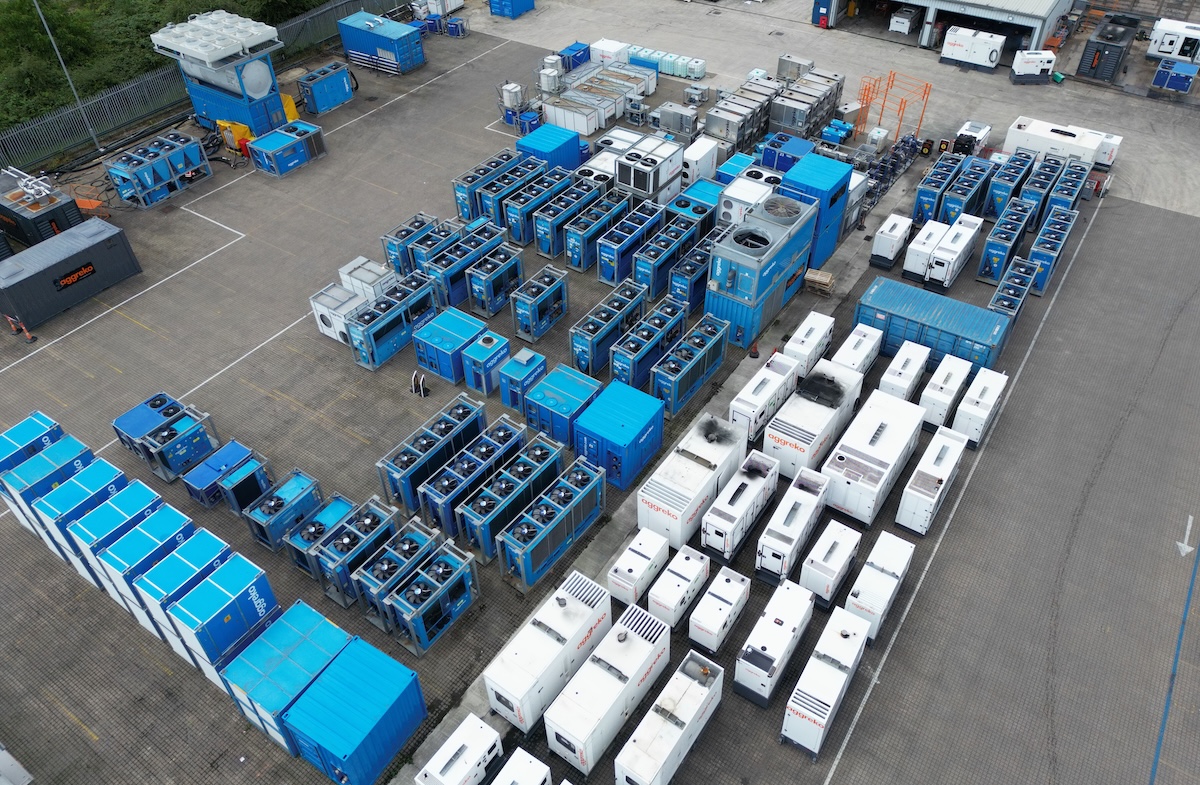
As industries from manufacturing to data infrastructure expand across Europe, many are turning to hybrid energy systems that combine gas generation, battery storage and onsite renewables. These systems allow each technology to perform the function it is best suited for: batteries handle rapid fluctuations, renewables reduce emissions when available, and gas provides the dispatchable, longer duration power needed to maintain stability during periods of low renewable output.
This approach is particularly relevant in energy intensive sectors – including the rapidly growing data centre clusters in the ‘FLAPD’ markets (Frankfurt, London, Amsterdam, Paris, and Dublin), where large continuous loads and tight operational tolerances make power security essential.
“Hybrid systems are proving their value across Europe because they solve practical problems,” Dunne said. “They keep critical operations running when grid conditions are tight, they integrate smoothly with renewables, and they allow businesses to operate more sustainably without increasing risk.”
Modularity and speed of deployment underpin Europe’s flexibility gap
One of the most pressing challenges facing businesses across the continent is the mismatch between rising demand and the pace at which permanent grid connections can be delivered. Modern modular systems can be deployed both on‑grid and off‑grid, giving businesses the flexibility to secure reliable power whether they are connecting to constrained networks or operating independently in remote or fast‑growing locations. In regions where connection queues stretch years into the future, modular gas generation and hybrid configurations provide a fast, scalable and low disruption path to securing the power required.
“Speed is now a critical part of Europe’s energy equation,” Dunne added. “Industries need solutions they can deploy quickly, scale up or down, and relocate as their needs evolve. Modern modular systems deliver that agility.”
Decentralised energy as a strategic advantage
European businesses are increasingly adopting decentralised power systems, placing generation closer to consumption. This approach improves resilience, reduces dependence on overstretched transmission networks and offers a degree of energy independence that is particularly attractive for sectors operating high value facilities or geographically distributed operations.
From industrial corridors in France to advanced manufacturing hubs in Germany and innovation clusters across the Nordics, decentralised and hybrid systems are helping organisations maintain productivity while managing their carbon footprint.
A pragmatic route to net zero
While long duration storage, expanded grid infrastructure and emerging low carbon technologies will all play critical roles in Europe’s energy future, Aggreko emphasises that businesses can make meaningful progress immediately.
“Sustainability and reliability are not mutually exclusive,” Dunne said. “The most successful organisations will be those that take pragmatic, flexible steps now – integrating renewables where possible while using dependable, efficient technologies to fill the gaps. Hybrid systems provide the bridge that allows Europe to transition at pace without compromising industrial performance.”