

A battery fire can occur at any time and at any place within a battery energy storage system (BESS), and that’s why multiple safety solutions are available to protect nearby people and property.
Thermal runaway is the chemical reaction that results from a malfunctioning lithium battery. The reason these events are so dangerous isn’t because of one battery fire, but rather because the intense heat spreads to adjacent batteries and forces them into thermal runaway as well until the entire battery pack is consumed. This chain reaction is called “cascading thermal runaway,” and is the reason why unprotected BESS cannot be deployed near populated areas.
New technologies have been developed that eliminate the propagation of cascading thermal runaway. For example, Fike Blue is a high-heat capacity liquid that is discharged into the affected battery module and submerges the cells undergoing thermal runaway. Therefore, rather than each of the BESS’ battery cells offgassing flammable materials and producing fires, the event is localised to just a few cells, greatly limiting the hazard.
“If you’re able to suppress it and stop propagating thermal runaway, instead of losing 1000 cells, you may only lose 50, which means that gas can be dispersed and get to levels which are not quite so toxic,” Tom Farrell, Fike Principal Engineer of Test & Validation, said.
Now, what about BESS installations that aren’t located immediately near populated areas? Is it responsible to let them burn if a thermal runaway even were to occur?
While a solution like Fike Blue may offer far more protection than what those types of installations require, other reliable solutions fill that gap in the middle that provide the appropriate level of detection and mitigation, which local authorities having jurisdiction may demand.
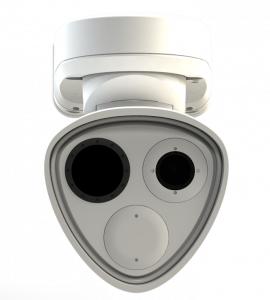 One such solution for more rural BESS installations is the use of thermal radiometry cameras. These cameras may be strategically placed to view every BESS within the array and notify the control panel, sound alarms and communicate to emergency personnel when a problem is identified. While earlier methods of detection exist, such as li-ion gas detectors, thermal radiometry cameras are an economical method of viewing a large area to discover signs of thermal runaway.
Explosion vent panels are also a common protection method to eliminate the “worst-case scenario” of flammable gasses collecting within the enclosure and exploding violently. In these scenarios, when combustion occurs and pressure suddenly rises, the explosion vent opens to relieve the pressure and flames to a safe area.
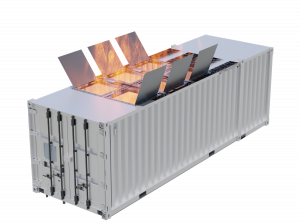 “Explosion control in the context of a BESS should include a vent because every battery that goes into thermal runaway generates explosive gas in that atmosphere and it has to go somewhere,” Farrell said. “It may be possible to achieve enough ventilation to stay below 25% of the LFL, but in the case of an unpredictable factor such as an electrical failure that may take those systems down, passive explosion venting is still highly recommended in many applications.”
When it comes to protecting BESS from thermal runaway, every situation is vastly different and requires a safety expert to determine how best to effectively meet the safety goals of the installation. The protection system recommendations greatly rely on whether it’s deployed near residential or commercial areas, and therefore the speed at which a thermal runaway event is detected may be critical. Other aforementioned scenarios may not need as early detection, yet a mitigation system is still highly recommended and possibly required by a local AHJ.