
Today the Mayor of London and London Councils, working in partnership with local authorities, utilities, industry partners and Transport for London, have launched the London Infrastructure Framework – a long-term plan for London’s infrastructure which is critical to the city’s growth ambitions.
The capital is rapidly growing with an expanding population, new businesses and new technology demands. Alongside this growth, there is a need to make London more resilient. To achieve this, the capital needs reliable transport networks, secure energy systems, resilient water and wastewater services, strong flood protection and world-class digital connectivity.
Commenting on the publication, Vijay Tank, Chief Commercial Officer, E.ON Energy Infrastructure Solutions, said, “Our cities create sources of heat everywhere – from data centres to sewage works and energy from waste plants, even the fridges in supermarkets. This energy is abundant but is too often lost to the air rather than being captured as a more affordable, more secure, and more sustainable alternative for energy in our homes or businesses.
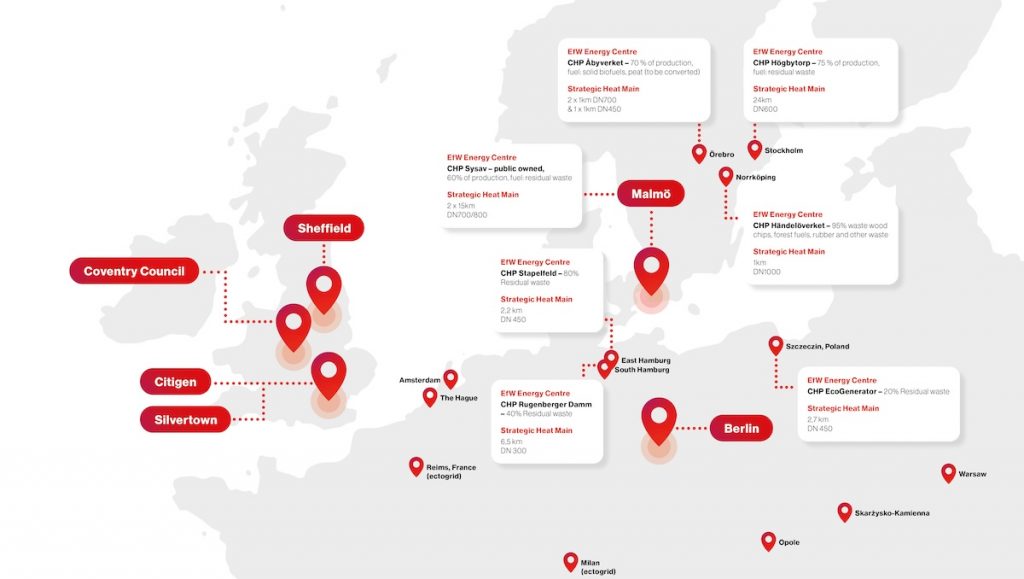
“From our work in cities such as Berlin, Hamburg, and Malmö, one lesson stands out: cities succeed when heat planning is coordinated, long‑term and grounded in shared purpose. London has a huge opportunity to lead the UK’s clean heat transition, and the London Infrastructure Framework can only help to accelerate the development of heat networks so the capital can reap the same long‑term benefits including new skilled green jobs and cleaner air.
“Cory’s ‘heat transmission main’ is one such project. Connecting all the way from Bexley where heat energy is generated right into the centre of the City and connecting to existing heat networks or other large heat consumers along the way.”