
Harrier is a leading UK business-to-business photo print fulfilment centre, with over 30 years of industry experience at its Newton Abbot site. Evolving from TRUPRINT, the UK’s biggest direct to consumer photo processing brand, Harrier now produces millions of print-on-demand photo products annually for many of the most recognised retail and app-based photo services across the UK and Europe.
As Harrier’s operations scaled to print up to two million photos a day and thousands of customised gifts – often dispatched within hours of order – temperature regulation in production zones and IT environments became increasingly critical. The company’s advanced digital print and server equipment is highly sensitive to temperature fluctuations, and any instability puts both throughput and product quality at risk.
Given Harrier’s sustainability-focused approach, traditional chiller-only cooling could not deliver the combination of energy efficiency and environmental performance required. Harrier needed a solution that would support its demanding production schedule, minimise energy consumption, and align with its environmental objectives.
“Efficiency and sustainability are integral to our customer promise. Conventional cooling methods simply weren’t enough, we needed a solution that could keep pace with our rapid turnaround while also meeting our energy and environmental goals,” explained Jeremy Rawley of Harrier.
“High-volume fulfilment relies on dependable, process-grade temperature control. Our goal was to help Harrier achieve both operational reliability and measurable sustainability gains, aligning technical proficiency with their business priorities,” said Rod Avery, ICS Cool Energy project engineer.
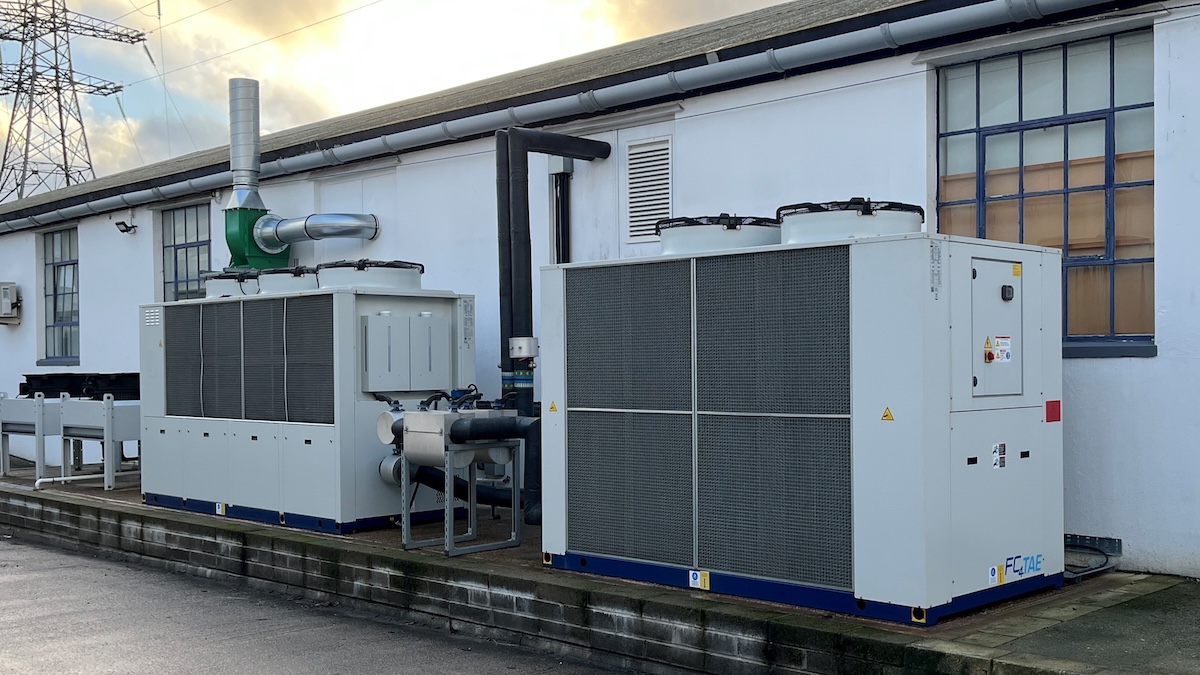
ICS Cool Energy worked collaboratively with Harrier, analysing operational data and long-term cost models from the outset. Rather than defaulting to an all-chiller approach, ICS Cool Energy proposed a system design combining process-dedicated i-Chillers with additional free coolers. This flexible system automatically switches between mechanical and air-based cooling in response to changing outdoor conditions and production loads, optimising energy use throughout the year.
“Rather than defaulting to standard cooling methods, we worked with Harrier to model future savings and environmental impact. We detailed the potential savings over three-, five-, and seven-year horizons, helping Harrier weigh the initial investment against projected operational benefits,” said Rod Avery.
The process-dedicated cooling system keeps production areas and IT infrastructure stable, ensuring fast, error-free fulfilment even at peak capacity. The reduced reliance on mechanical refrigeration also aligned with Harrier’s desire to lower its carbon footprint and enhance equipment longevity.
“We’ve seen a real impact: the new cooling system has reduced our energy consumption and carbon footprint, while maintaining the reliability we need for fast turnarounds. It has set our facility up for long-term sustainable growth. The successful partnership with ICS Cool Energy highlights the value of proactive engineering and data-driven decision making for any business seeking targeted efficiency and sustainability improvements,” concluded Jeremy Rawley, Harrier.