
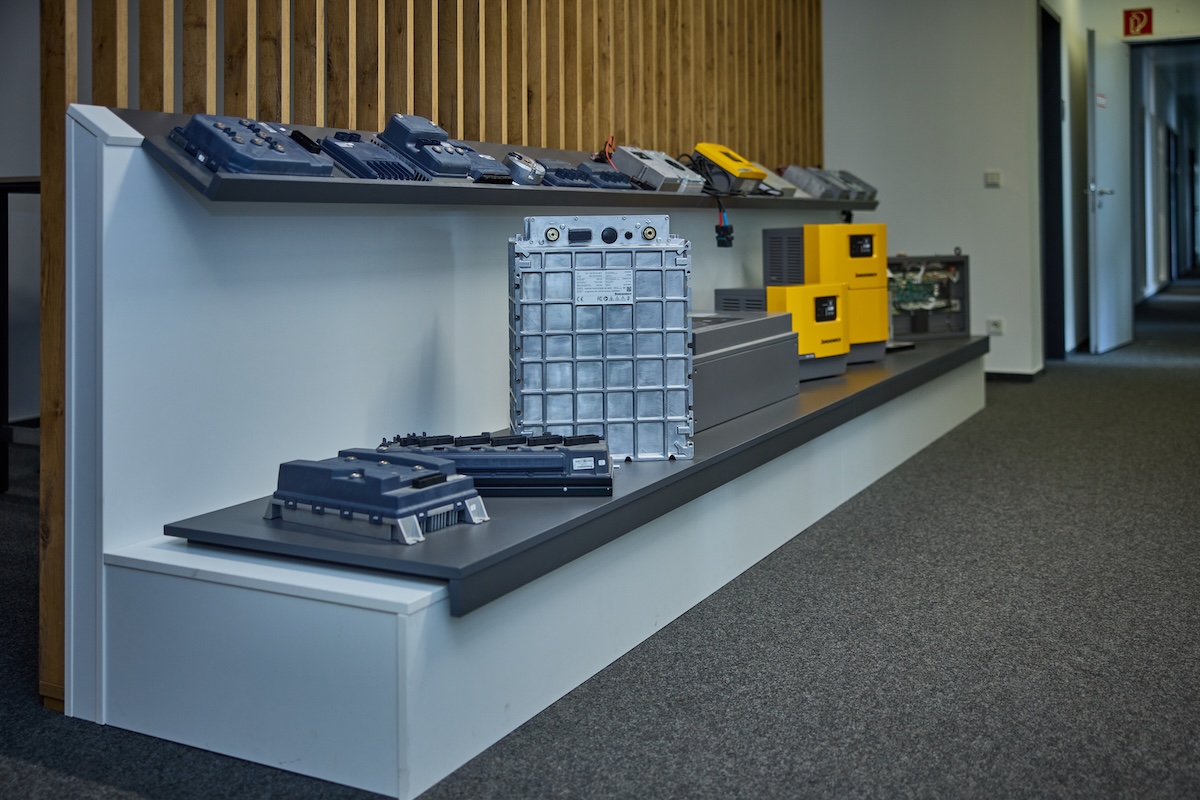
Monolith, an artificial AI software provider helping engineering teams solve complex physics and engineering challenges, today announced a collaboration with Jungheinrich, one of the world’s leading industrial equipment manufacturers, to accelerate the development of battery-powered material handling equipment.
With the rapid evolution of battery technologies, assessing their performance and integration into new vehicle platforms has become a highly complex engineering challenge.
Through the collaboration, Jungheinrich engineers will use Monolith’s AI-powered engineering tools to analyse early battery test data and predict performance characteristics relevant to product development. By training machine learning models on real-world test data, the team will gain earlier insights that support faster and better‑informed engineering decisions while reducing reliance on extensive physical test campaigns.
Jungheinrich conducts dedicated battery testing activities throughout the year, generating significant volumes of technical data. Monolith will ingest these datasets into its purpose-built engineering tools, train predictive AI models, validate the results and work closely with Jungheinrich engineers to identify insights and recommend next steps for batter qualification.
By transforming raw test data into predictive models, the collaboration aims to streamline how battery technologies are evaluated as Jungheinrich scales its electric product portfolio.
The collaboration reflects a wide transition across manufacturing industries toward AI-driven engineering, where machine learning models complement physical testing to accelerate innovation while maintaining reliability and safety.
The use of AI in engineering is therefore becoming increasingly important as manufacturers face mounting pressure to deliver more sustainable products while reducing development timelines and costs. Research from McKinsey suggests that AI-enabled approaches could accelerate R&D processes in complex manufacturing industries by 20-80%, highlighting the significant opportunity that engineers can grasp to enhance workflow productivity.
Monolith enables engineers to combine historical test data with machine learning models to predict physical test outcomes and prioritise future experiments. The methodological approach reduces the need for prototypes and repetitive testing, allowing engineering teams to focus on solving critical design challenges and bringing products to market faster.
Through the collaboration, Jungheinrich will also gain access to a centralised engineering intelligence platform where teams can securely access test data, model insights and recommended next experiments across multiple development programmes. This scalable solution helps engineers make decisions earlier in the development cycle while reducing cost and testing overheads.
Dr. Andreas Münz of Jungheinrich said, “As we continue expanding our range of electric material handling equipment, the ability to evaluate battery technologies quickly and reliably is nothing short of essential for retaining our competitive edge. By working with Monolith, we can better leverage our test data to understand critical battery performance characteristics earlier and make smarter engineering decisions that support the next generation of efficient, sustainable products.”
Dr. Richard Ahlfeld, CEO and Founder of Monolith, added, “Electrification is at the heart of making the industrial equipment sector futureproofed for success, and battery performance optimisation is now a core influencing factor for how quickly new products can be developed and brought to market. By applying AI to engineering test data, we’re helping Jungheinrich’s teams turn complex battery datasets into actionable insights – which in turn gives them the power to make faster, more confident decisions while reducing reliance on costly physical testing.”