

Renewable energy is scaling up rapidly but integrating it reliably into the grid remains a challenge. As solar and wind capacity increases, so too does the need to manage variability, maintain efficiency and ensure consistent output across distributed networks. Much of the discussion centres on storage, grid balancing and digital control. Physical systems must perform, continuously and predictably, often in constrained environments. Here, Chris Johnson, managing director of miniature bearing specialist SMB Bearings, explores how miniature mechanical components support renewable energy performance.
Global renewable power capacity is expected to double by 2030, adding around 4,600GW of new generation according to the International Energy Agency’s (IEA) 2025 renewables report. That’s roughly equivalent to the combined power capacity of China, the European Union and Japan.
In many countries, growth between 2025 and 2030 is expected to outpace the previous five-year period, although this rapid expansion is also intensifying challenges around grid integration, supply chains and project financing.
Supporting integration isn’t just about balancing supply and demand across the grid. It’s also about making sure thousands of individual systems keep running as intended, often in tough conditions like strong winds. Every installation, whether it’s a solar array, wind turbine or supporting system, depends on mechanical components that need to perform reliably for long periods with very little intervention.
When that reliability fails, it shows. In November 2025, a blade detached from a 300-foot-tall wind turbine in Plymouth in Massachusetts. While the exact cause hasn’t been confirmed, incidents like this are often linked to a combination of extreme weather and mechanical stress.
These incidents highlight a wider reality. Renewable systems are under constant pressure from their environment and day-to-day operation, and even small mechanical issues can grow into bigger problems over time.
Compact assemblies matter more than ever
This is where compact, precision assemblies become critical. Renewable technologies increasingly depend on smaller subsystems responsible for positioning, control and monitoring. These include drive units, actuator linkages and sensor mechanisms, many of which operate within confined housings where space is limited and tolerances are tight.
Solar tracking systems provide a clear example. They may look like large mechanical structures, but their performance depends on precise, repeatable movement from compact internal assemblies. Motors, gears and control systems all need to work together to keep panels tracking the sun throughout the day, directly affecting how much energy they capture.
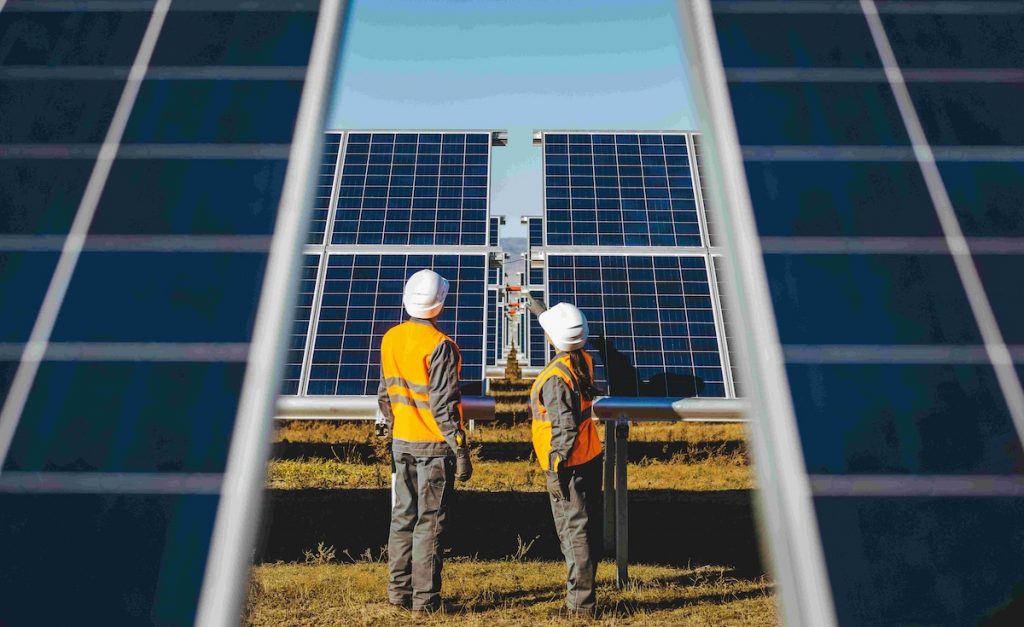
According to Earth.org, the amount of solar energy reaching the Earth’s surface in just 90 minutes would have enough power to meet global annual energy consumption. This means that even small improvements in capture efficiency can quickly add up when applied across large installations.
Bearings are a big part of what keeps these assemblies working. They support rotating components in motors, gears and sensors, allowing for smooth, controlled movement in tight conditions. It’s a small role on the surface, but it affects the whole system.
In confined spaces, small variations in bearing performance can have a big impact. A slight increase in friction can put more strain on the motor, increasing energy consumption and accelerating wear. Small misalignments can affect positioning, making solar tracking less effective. Over time, these issues can build up across a system, reducing efficiency and increasing maintenance.
Choosing the right materials
Selecting the right miniature bearing for these assemblies depends on balancing environmental resistance with consistent mechanical performance. Stainless steel bearings, particularly in grades such as 440C or 316, are often well suited to outdoor solar applications due to their corrosion resistance in exposed conditions. Where lower friction and longer service intervals are required, hybrid or full ceramic bearings can offer advantages, reducing wear and maintaining smooth operation under variable temperatures.
In compact motor and sensor assemblies, low-noise deep groove ball bearings are commonly used for their ability to deliver precise, reliable rotation within limited space. Careful consideration of sealing and lubrication is equally important, ensuring contaminants are kept out while maintaining stable performance over extended operating cycles.
The same principle applies across other renewable technologies. In wind turbines, compact control systems adjust blade pitch and orientation in response to changing conditions. These systems rely on rotating components operating under continuous load.
In energy storage, cooling and circulation systems depend on compact assemblies that must function reliably within tight spaces. Hydrogen and grid-support technologies similarly incorporate pumps and compressors where precision components are essential to stable operation.
As systems get smaller, there’s less room for things to go wrong. When everything is tightly packed, even small changes in friction, alignment or how loads are distributed can start to affect performance. What wouldn’t matter much in a larger setup can quickly become a real issue in a compact, high-precision system.
Material choice becomes especially important here. Renewable installations are out in the elements, exposed to moisture, dust and constant temperature changes, so components need to hold up over time.
Temperature changes add another layer to think about. Components are constantly heating up and cooling down, causing expansion and contraction. In a compact system, even tiny shifts like this can affect alignment and how loads are shared across a bearing, which in turn impacts reliability over time.
Then there’s lubrication. In many renewable systems, especially distributed ones, access for regular maintenance isn’t easy. In miniature bearings, lubrication is more sensitive, particularly when temperatures fluctuate, so choosing the right approach is key to keeping things running smoothly over longer periods.
As renewable capacity grows, all of this scales up. A single solar farm might have hundreds of tracking units, each with multiple compact assemblies. Across a wider network, that quickly becomes thousands of bearings all operating at once. Keeping performance consistent at that level comes down to careful design and smart component choices.
As the energy transition moves forward, most of the attention stays on big-picture topics like capacity, storage and grid flexibility. But there’s another side to it. These systems need to work reliably, day in and day out, in real-world conditions.
That ultimately comes down to the smallest parts, because when it comes to building a resilient and efficient energy future, those details matter.