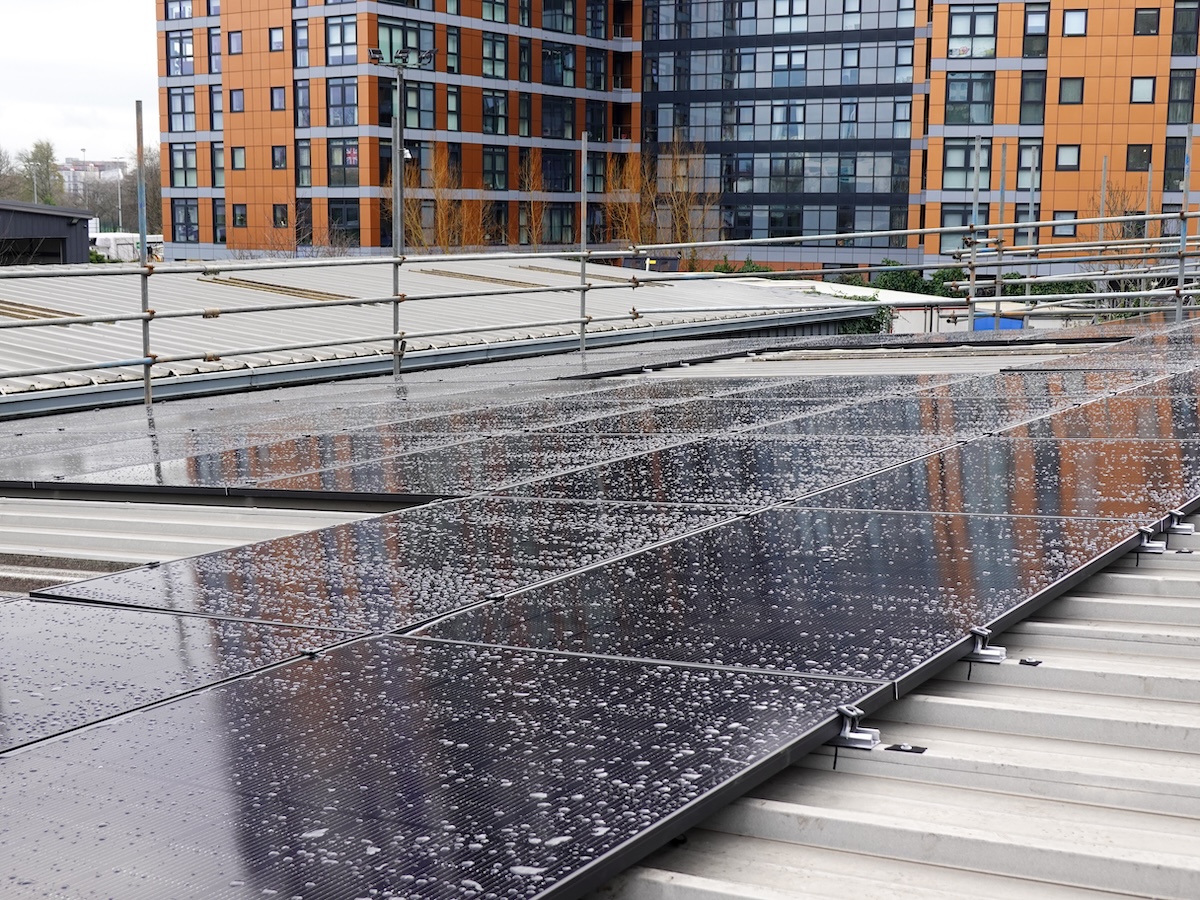
Technical facilities management provider, Thermatic Group, has set out to prove the long-term value of solar PV to SMEs with the installation of its own rooftop system at its headquarters in Salford. The installation which comprises 200 PV modules is designed to not only make the building more energy efficient, but to also reframe the value of solar PV as financial infrastructure for small and medium sized businesses.
Prior to installation, Thermatic’s annual electricity consumption was approximately 44MWh, with a unit rate of 28p/kWh. Average monthly bills stood at just over £1,040. Following installation of the Solar Edge system, Thermatic will save £1,126 a month, offsetting the bill by almost 108%.
Over its lifetime, the picture becomes even more compelling. The system, which initially cost £87,450 is expected to generate around £247,000 in electricity bill savings – equating to £159,000 projected net profit against a payback period of just over six years. The fully traceable JA 450W panels also generate more electricity annually than the building consumes, in effect making the roof an income-generating asset.
Gary Boon, Managing Director of Thermatic Homes which leads the group’s renewable strategy, said, “For SME decision makers, this reframes the whole conversation. Solar in this context is not a discretionary sustainability spend or a nice to have, it becomes part of a company’s financial infrastructure for the long term while reducing exposure to volatility across the energy market.”
That’s not to say that environmental impact and sustainability considerations don’t play a part. The system is projected to reduce carbon emissions by over 15 tonnes annually, the equivalent of planting 700 trees each year. For SMEs increasingly asked to evidence reductions in Scope 2 emissions by larger supply-chain partners, this delivers measurable, reportable impact. Safety is also built into the system through a fire alarm shutdown feature meaning that when an alarm is raised the entire system shuts down.
Thermatic’s decision reflects a wider trend among UK SMEs. Where businesses have high daytime energy consumption, ownership or long-term control of their premises, and electricity rates above 20p/kWh, solar PV is increasingly stacking up on purely commercial grounds even before ESG considerations are factored in. For Thermatic this is not an environmental add-on, it is embedded infrastructure that delivers a return on investment and improves resilience.