
The UK’s net-zero ambitions are often discussed in terms of renewable power generation, electric vehicles and large-scale infrastructure projects. Yet across manufacturing, energy and process industries, much of the real work of decarbonisation is happening at plant level, where engineers are re-examining how core utilities are produced, controlled and integrated into production.
From compressed air networks that drive automation to industrial gases that support cutting, treatment and packaging processes, these technologies shape how energy is consumed across entire sites. As manufacturers look for credible ways to cut emissions without compromising output, utilities that were once, at best taken for granted and at worst ignored entirely, are now part of broader efficiency and carbon strategies.
Integrating low-carbon processes into existing plants
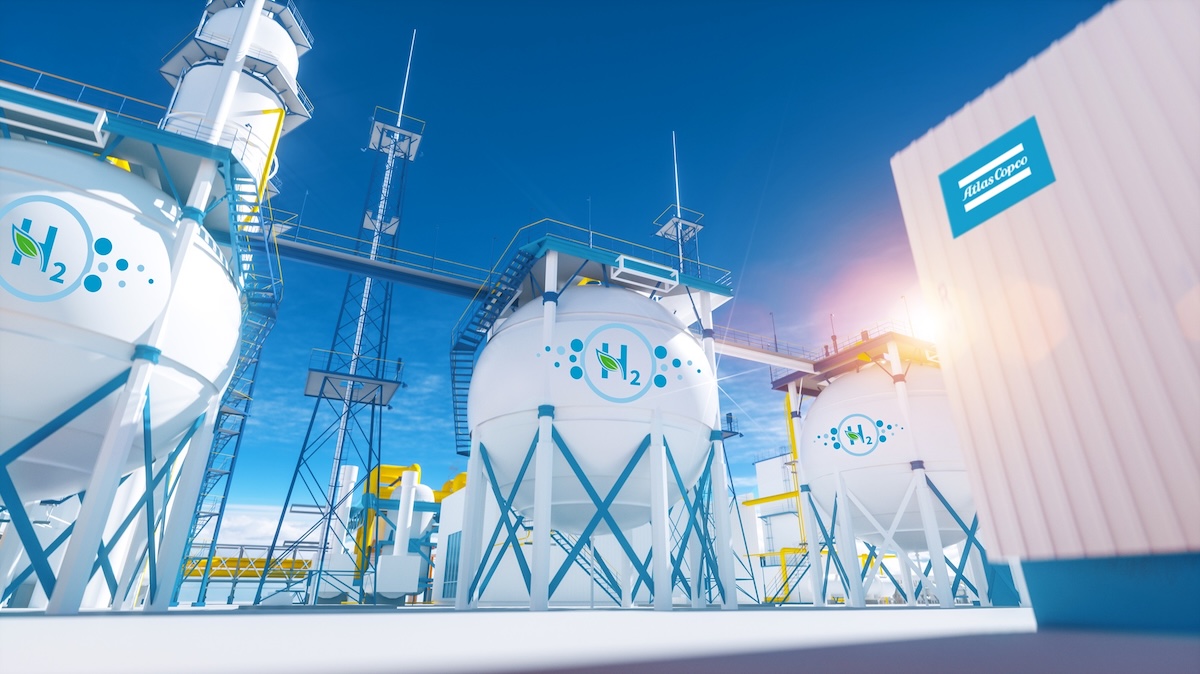
Much of the current momentum is centred on hydrogen, biogas and carbon capture, particularly where these technologies can be integrated into existing industrial infrastructure. Hydrogen projects, for example, are beginning to move beyond pilot scale with applications ranging from fuel for generators to support for transport fleets and specialist manufacturing processes. While still early in development, these projects require high-pressure compression, precise control and dependable uptime, placing air and gas engineering firmly at the centre of system design.
Biogas presents a slightly different picture. The UK already has a substantial network of anaerobic digestion plants, many of which are now focused on upgrading and retrofitting rather than initial construction. Operators are looking to improve efficiency, increase output quality and reduce overall emissions. This has led to greater involvement of air and gas technologies in gas treatment, compression and upgrading stages, particularly where plants are being adapted to meet stricter environmental targets or to inject biomethane into the grid.
Carbon capture remains at an earlier stage of deployment, but interest is growing among high energy users seeking credible ways to reduce process emissions. Heavy manufacturing sectors such as steel, automotive and chemicals are beginning to evaluate how capture technologies could be incorporated into production lines. While large-scale projects attract the most attention, smaller process-level systems are also under consideration, especially where emissions are concentrated in specific stages of production.
What links all three areas is the requirement for reliable, tightly controlled gas handling. Compression, purification and storage are not secondary considerations but core enabling technologies. Without them, hydrogen cannot be transported or stored safely, biogas cannot meet grid or process specifications, and captured carbon cannot be conditioned for reuse or storage. In practical terms, this means that air and gas systems are no longer simply supporting utilities, but part of the decarbonisation process itself.
On-site gas generation as a near-term solution
Alongside these emerging applications, a quieter shift is taking place in how manufacturers source nitrogen and oxygen. Historically, many sites have relied on bulk deliveries via cylinders or tanks, often receiving gas at the highest purity levels available because that is what standard supply contracts provide. In many cases, that level of purity is unnecessary for the process in question.
On-site gas generation allows manufacturers to produce only the purity and volume required, when it is required. From a decarbonisation perspective, this offers several advantages. Transport emissions are reduced by eliminating regular deliveries and any subsequent manual handling equipment and risks that go with them are also stopped. Energy consumption can be optimised by avoiding over-purification. Operational control improves, reducing the risk of supply interruptions that can lead to inefficient stop-start production.
Laser cutting provides a clear example. Different cutting applications require different nitrogen purities, yet bulk supply often delivers gas cylinders of uniformly high grade, regardless of need. On-site systems allow purity to be matched to material and cut quality requirements, cutting both energy use and operating cost. Similar principles apply in food processing, pharmaceuticals and electronics, where nitrogen and oxygen play critical roles but do not always require maximum purity.
This shift reflects a broader change in how utilities are viewed. Rather than being fixed external inputs, gases are increasingly treated as variables that can be engineered into the production process. For manufacturers under pressure to demonstrate tangible progress towards emissions targets, on-site generation represents a relatively accessible step that delivers measurable benefits without waiting for large-scale energy infrastructure to change.
Cultural barriers to technical change
Despite the availability of technology, one of the most significant barriers to wider adoption remains cultural rather than technical. Many sites continue to operate systems that have changed little in decades, partly due to risk aversion and partly due to resource constraints. Maintenance teams are often stretched, and process changes can be difficult to justify when production targets are under constant pressure.
Decarbonisation initiatives can struggle in this environment if they are perceived as additional burdens rather than operational improvements. This is particularly true for complex systems such as hydrogen compression or carbon capture, where unfamiliarity can create hesitancy even when technical feasibility has been demonstrated.
Overcoming this requires a stronger focus on application knowledge and cross-disciplinary collaboration. Integrating new gas technologies successfully depends on understanding not just the equipment but how it interacts with upstream and downstream processes. Flow rates, purity tolerances and pressure stability all influence product quality and safety, making system-level design essential.
This is driving closer cooperation between equipment suppliers, engineering contractors and end users. Rather than specifying components in isolation, projects increasingly involve joint evaluation of process requirements and long-term operating conditions. While this approach can extend design phases, it reduces the risk of performance shortfalls that could undermine confidence in new technologies.
Skills and the future workforce
The growth of hydrogen, biogas and carbon capture applications is also influencing workforce requirements. High-pressure hydrogen systems, for example, involve operating conditions far removed from traditional low-pressure compressed air installations. Similarly, carbon capture introduces new challenges around gas composition, moisture management and material compatibility.
These technical demands are creating the need for engineers with specialist knowledge in gas handling, process integration and digital diagnostics. At the same time, they offer opportunities to attract new talent into engineering, particularly among graduates interested in sustainability and clean energy technologies.
For the UK manufacturing sector, this presents both a challenge and an opportunity. Investment in training and apprenticeships will be essential if companies are to build the capabilities needed to support more complex utility systems. Without that investment, the pace of adoption may be limited by skills shortages rather than technology readiness.
A foundational role in the net-zero transition
While air and gas technologies rarely feature in public debates about net zero, their influence on industrial emissions is significant. These systems underpin many of the processes that determine how efficiently energy is used and how easily lower-carbon alternatives can be adopted. What is changing is not just the equipment, but how manufacturers think about utilities, with greater emphasis on ownership, control and optimisation. Progress will vary by sector, and hydrogen and carbon capture will remain shaped by wider policy and investment decisions. However, for many manufacturers, meaningful progress will depend less on future infrastructure and more on how effectively everyday air and gas systems are woven into the fabric of production.