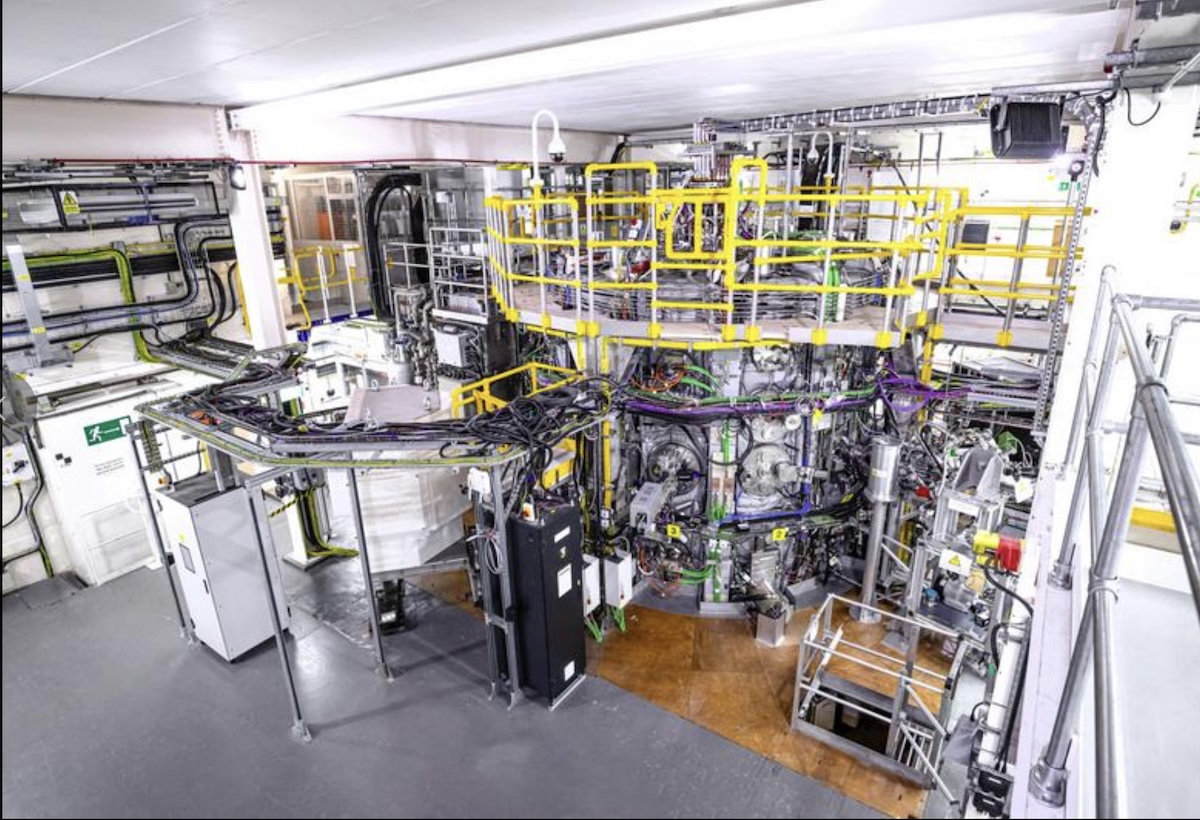
The United Kingdom Atomic Energy Authority (UKAEA) Group has launched its 2026–2030 organisational Strategy for UKAEA’s national fusion laboratory, building directly on the UK Government’s Fusion Strategy launched last month and aligning with the Strategy of UKAEA Group’s subsidiary company, UK Fusion Energy, also published today.
The Strategy sets out the national laboratory’s role to deliver foundational research, technology and innovation in support of the UK fusion sector through world-leading expertise and capability.
The UKAEA Strategy outlines objectives for 2030, including:
- supporting UK Fusion Energy Ltd to complete a detailed design of the STEP Fusion prototype power plant
- increasing the number of UK companies delivering fusion products and services around the world
- completing new internationally leading research facilities at Culham Campus in Oxfordshire
- growing a new generation of fusion scientists, engineers, and technical experts
The Government’s Fusion Strategy directs research and development to yield near-term scientific and economic benefits and support the growth of a competitive domestic industry, backed by skills development at all levels, to lay the foundations for deployable fusion energy.
Fusion offers the promise of large-scale, low-carbon energy to meet rising demand, enhance resilience against climate change and safeguard energy security.
Fusion is tipped to be a multi-trillion-pound global industry in the second half of the century, and it is at an inflection point in 2026. But getting there involves a set of technical challenges, which span specialist science, novel manufacturing, integrated design and large-scale infrastructure.
What are the challenges and how will UKAEA develop solutions?
UKAEA’s Strategy describes how it sees fusion as four interrelated challenges:
- Effective fusion core – deliver sufficient power output from the heart of the fusion machine, controlling the plasma while managing the demands on the components inside to export more energy out than goes in.
- Fuel self-sufficiency – operate an efficient, closed cycle without the need of a sustained external supply of fusion fuel.
- Systems integration – combine diverse components and systems into one energy-producing installation while delivering all required performance objectives.
- Affordability and attractiveness – doing all the above in a way that is affordable and attractive in a global energy market.
To address these challenges, UKAEA will focus its work with industry and academia to build knowledge and capability across the technical disciplines required:
- plasma understanding and control,
- fuel cycle development,
- advanced materials,
- robotics and automation,
- fusion technologies including high-temperature superconducting (HTS) magnets,
- components production,
- integration and design,
- advanced computing
UKAEA will also serve as the ‘Fusion Partner’ to UK Fusion Energy, applying technical knowledge in these areas to advance the design and development of the STEP prototype power plant.
A strategic approach
The Strategy highlights the major technical outcomes UKAEA will deliver by 2030, incorporating a focused subset of flagship targets set out in the UK Government’s Fusion Strategy. The Strategy describes how these activities explicitly target scientific and economic benefits for the UK, collaborating internationally, undertaking cutting-edge research, commercialising technologies for adjacent applications and supporting UK industry to grow.
Efforts will be spread across its four sites – Culham Campus in Oxfordshire, West Burton in Nottinghamshire, Cumbria, and South Yorkshire.
Dr Nick Wayth FEI, Chief Executive of the Energy Institute, said, “UKAEA’s new strategy sets out a clear and credible vision for delivering sustainable fusion energy. By combining world‑leading research with the delivery of the STEP prototype power plant, stronger international collaboration, and a focus on skills and industrial capability, it shows how fusion could strengthen the UK’s energy system. The strategy demonstrates how investment in innovation could deliver long‑term economic growth, energy security and opportunity for UK plc.”
Supporting industry and international collaborations
As part of UKAEA’s 2026-2030 Strategy rollout, it is launching:
- an SME guide to facilitate small- to medium-sized enterprises navigate opportunities in the fusion supply chain
- the Diagnostics Centre for Excellence (DICE), leveraging UKAEA’s decades of plasma science expertise
- the Cumbria Robotics Operation Skills Centre (CROSS) to build the robotics workforce needed for fusion