

 The UK’s transition to renewables is accelerating. But according to Ben Dhesi of Jutton Energy and Hugo Energy, businesses risk missing out on the real financial benefits unless they rethink how energy, storage and procurement work together.
At the heart of the issue is a simple but widespread problem: even highly informed consumers and organisations are failing to capture value from low-carbon technologies.
The knowledge gap holding back savings
Dhesi illustrated this with a real-world example. A highly intelligent EV owner, using a leading supplier, believed she was saving money through smart charging.
“She was with Octopus and had an EV, and assumed she was benefiting,” he explained. “But when we checked, she was on a standard tariff – meaning she gained no advantage from charging at the right times.”
The lesson is clear: adopting technologies like EVs or renewables does not automatically translate into savings. Without the right tariff structures and energy strategy, the financial benefits can be lost.
For UK businesses investing in electrification and net zero, this disconnect is even more critical.
A volatile market with no easy answers
The challenge is compounded by ongoing volatility in energy markets.
“During stable periods, you might think you can ‘buy the dip’ or take a flexible approach,” said Dhesi. “But in times of crisis, there are no easy answers – whether you fix or flex.”
For energy managers and consultants, this creates a difficult environment. Traditional procurement strategies alone are no longer sufficient to manage risk or optimise costs.
The structural challenge of UK renewables
The UK’s growing reliance on wind power introduces another layer of complexity.
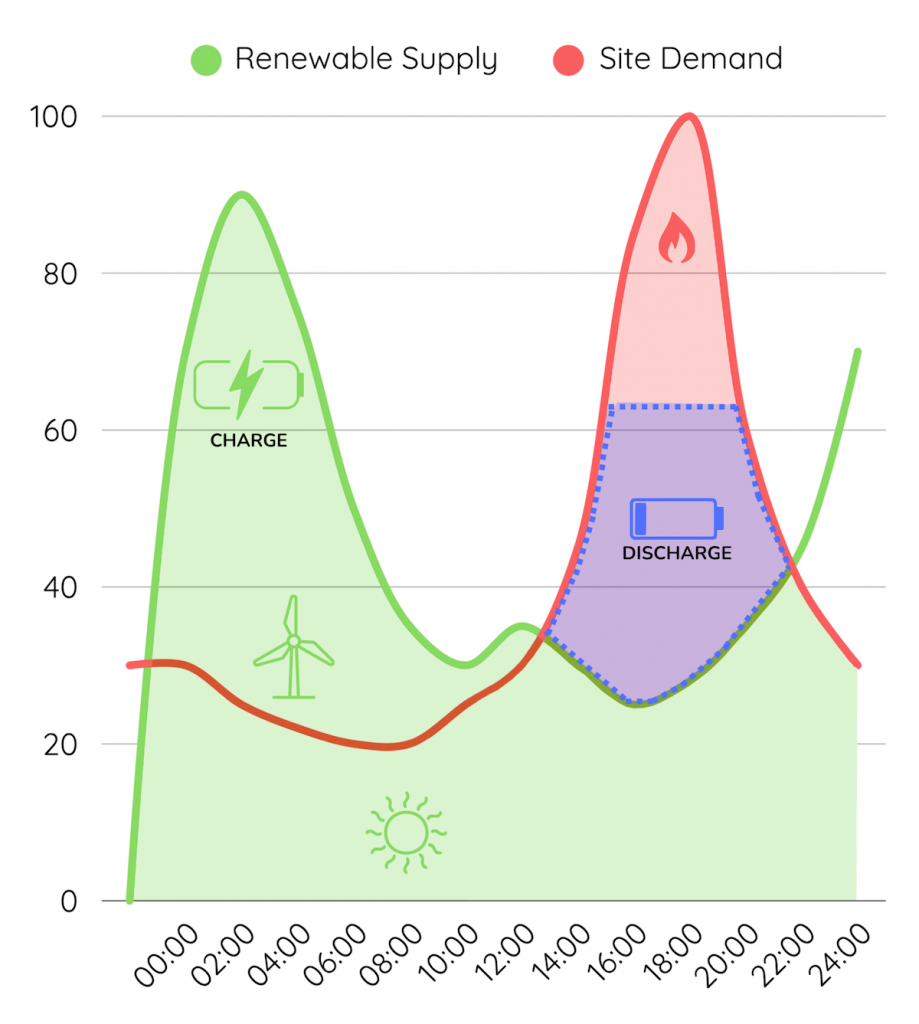
While renewable generation is increasing rapidly, it does not always align with demand:
- Excess wind generation often occurs during low-demand periods
- Peak demand still typically falls between 4pm and 7pm on weekdays
- During peak periods, renewable output can be low or inconsistent
This mismatch means businesses are often exposed to high grid costs at exactly the wrong time.
Why batteries are becoming essential
Dhesi argues that battery storage is the missing link.
“A battery allows you to take excess renewable energy during the day and discharge it during peak periods,” he said.
But the key insight is not simply to install batteries — it is to size and deploy them intelligently.
Based on years of working with smart meter data, Dhesi suggests that the most effective strategy is surprisingly focused:
“The best investment you could have made over the last decade was a battery designed purely to eliminate peak demand.”
Rather than installing large, expensive systems, businesses should:
- Target peak load reduction (4–7pm)
- Size batteries specifically for that window
- Reduce capital costs by avoiding over-specification
This approach significantly lowers upfront investment while still capturing the majority of financial benefit.
From domestic insight to commercial strategy
This thinking, proven in the domestic sector, is now being applied to commercial and industrial energy users.
By focusing on peak shaving rather than full-site coverage, businesses can:
- Reduce battery size and cost
- Minimise space requirements
- Still access flexibility markets and grid services
In parallel, pairing batteries with dynamic tariffs (such as time-of-use pricing) can dramatically reduce average energy costs.
Procurement must evolve alongside technology
However, Dhesi emphasised that hardware alone is not enough. Procurement strategies must evolve to unlock the full value of battery storage.
“We’re working with suppliers to develop contracts that isolate peak-related costs — like capacity market charges — so customers with batteries can maximise savings,” he said.
At the same time, businesses need access to flexibility markets, which can provide additional revenue streams but are often complex to navigate.
The three pillars of energy optimisation
According to Dhesi, delivering real ROI from batteries and renewables requires three core capabilities:
- Data-driven modelling
Understanding site-specific energy usage to correctly size battery systems.
- Specialist procurement
Structuring contracts that align with battery operation and market opportunities.
- Professional design and installation
Ensuring systems are engineered and deployed effectively at scale.
Scaling across multi-site portfolios
For large organisations — particularly those with hundreds of sites — the challenge becomes even greater.
“How do you gather the data, design the systems, and align procurement across 200 locations?” Dhesi asked.
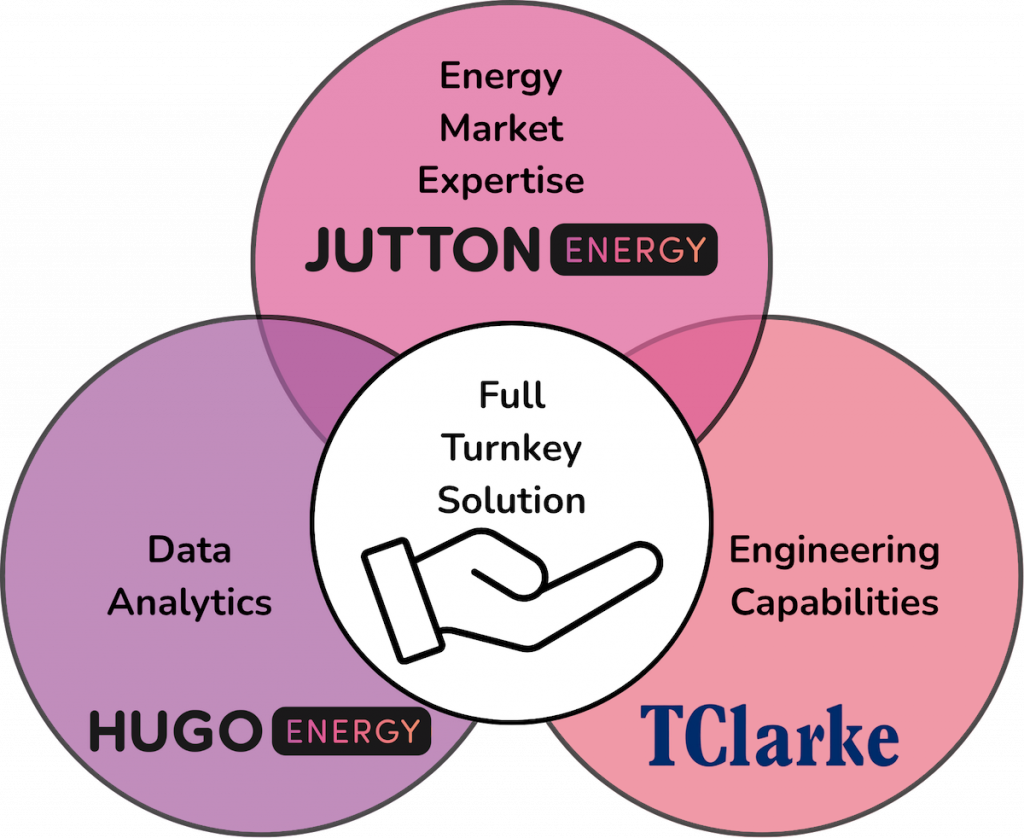
The answer lies in integrated, end-to-end solutions that combine:
- Data analytics
- Engineering capability
- Energy market expertise
This “turnkey” approach, he argues, will define the next phase of the UK energy transition.
A market at a turning point
As the UK continues to expand renewable generation, the role of flexibility and storage will only grow.
“The next five to ten years are incredibly exciting,” Dhesi concluded. “But the market needs to develop services that truly connect the dots.”
For UK businesses, the message is clear: net zero investments alone are not enough — value comes from how intelligently they are integrated.