 Alan Dunne, managing director at Aggreko UK and Ireland, explains the roles of flexibility and digitalisation in breaking through Europe’s utilities gridlock.
Europe is inching closer to reaching its target of sourcing at least 42.5% of energy from renewable sources by 2030,[1] with steady progress being made in key sectors. June 2026 saw the accomplishment of a significant feat, as a quarter of Europe’s power was generated by solar for the first time.[2]
However, despite these necessary successes, the energy transition still faces a major obstacle: the grid itself. The energy transition is creating an ever-growing list of new responsibilities that electricity networks across Europe are simply not equipped to deal with.
Decentralised generation, volatile weather patterns and surging demand caused by the electrification of transport, heat and industry are becoming the new normal, and grids are struggling to cope. Built to handle one-way and predictable flows of electricity from large, centralised power stations, these changing responsibilities are putting pressure on electricity networks.
Consequently, the looming threat of a bottleneck is becoming reality, potentially hindering the transition at a crucial point.
Locating the challenges
An ageing and congested grid is affecting Europe’s hopes to meet well-documented net-zero targets. A large proportion of distribution infrastructure is now over 40 years old, while connection queues extend years into the future.
In the UK, the current figure stands at over 738GW,[3] a far cry from the 220-225GW of clean generation capacity required by the end of the decade. While in July 2025, Spain struggled to integrate more than 11% of renewable energy produced into the system due to technical restrictions.[4]
Keeping systems balanced is becoming more expensive, with billions spent annually on redispatch and remedial actions amidst mounting grid congestion costs. Doing so cost Germany €1.8 billion in 2025, exposing the growing strain on network infrastructure.[5]
Extreme weather also poses a risk, as soaring temperatures recently saw the National Energy System Operator (Neso) calling for additional generation. It issued a series of electricity margin notices, historically restricted to winter, during periods of peak demand, highlighting the scale of the problem.
Practical tools that grid operators can deploy when and where limitations arise are becoming increasingly important, be it to support an island during peak tourist season, stabilise voltage during major works, or, as seen recently, keep the lights on when temperatures climb.
Keeping pace with demand
A failure of policy intent is not to blame for these challenges. Ambitious investment plans are in place across Europe, with over €1 trillion earmarked for grid upgrades and expansion by 2040.[6]
Planning hurdles can take years to overcome, positioning timing as the real obstacle. The need for planning changes to ensure projects and infrastructure are constructed in a timely manner was reiterated by Neso in December 2025 when they announced electricity grid reforms to unlock investment in the United Kingdom.[7]
Demand continues to grow, as industrial projects are waiting to be plugged in and renewable capacity is being added. The introduction of a connection reform programme designed to prioritise shovel-ready projects will also take time to deliver significant results, potentially curtailing the immediate demand for clean energy.
Building an adaptable grid
A significant portion of controllable thermal power stations have been retired recently, posing a problem for grid resilience, which has been historically backed by these assets.
This means that the way resilience must be delivered is changing. As power shifts towards a more decentralised, contract-driven market in which distribution network operators (DNOs) and transmission system operators (TSOs) are more actively involved in planning.
Close coordination between TSOs responsible for the security of the whole system and DNOs in charge of local generation, storage and demand response is required, using automation, forecasting and active network management to manage congestion and prevent curtailment.
A similar picture is painted by recent shifts in policy. Digitalisation has been positioned as a critical enabler of a modernised, decentralised grid by legislation such as the European Green Deal, the updated electricity market design (Directive 2024/1711; Regulation 2024/1747) and REPowerEU, helping to improve flexibility and system efficiency.
Flexibility, in part driven by digitalisation, has emerged as the defining feature of a resilient grid as a result of such collaboration. This translates to the ability to address fluctuations in supply and demand, safely isolate sections of the network and maintain stability while upgrades and connections take place.
Additional capacity unlocked
Without sufficient on-site power, substation rebuilds, network expansions and line reinforcements either taker longer or become unviable altogether. This is because these projects all require outages, partial isolations or temporary reconfiguration.
Years of delays can derail long-term, major investment decisions, posing a challenge for new assets awaiting connection, such as AI data centres.
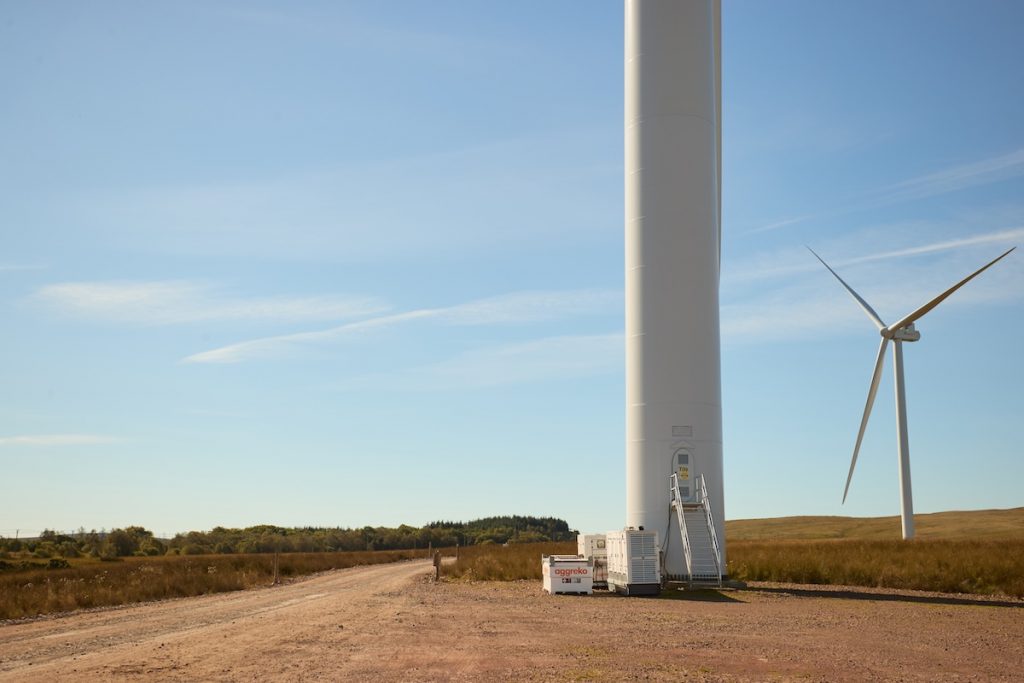
Temporary and hybrid systems, which incorporate on-site engineered energy such as battery energy storage systems alongside Stage V generators powered by hydrotreated vegetable oil, help support infrastructure upgrades without compromising reliability. By providing bridging, balancing or emergency power, these solutions can help to address such issues.
They can also provide flexibility while permanent grid assets are developed, easing the pressure on the network during constrained periods by reducing the need for renewable curtailment. This allows for progress to continue elsewhere.
Delivery without delay
If Europe is to meet its decarbonisation goals without sacrificing energy reliability and security, the energy transition must become more pragmatic. Alignment with delivery strategies that acknowledge real-world bottlenecks is as important as ambition.
As the decentralisation of networks becomes more frequent, there is a growing need to make better use of existing infrastructure. Operators require greater visibility, forecasting capital and control to manage power flows and reduce congestion. Digitalisation will have a central role in achieving this balance.
Ensuring the right power is available at the right time is ultimately the answer to breaking Europe’s gridlock.
To find out more, read Aggreko’s latest report, Breaking the Gridlock.
[3] https://www.neso.energy/industry-information/connections-reform/about-connections-reform
[5] https://www.smard.de/page/en/topic-article/212254/214108/redispatch