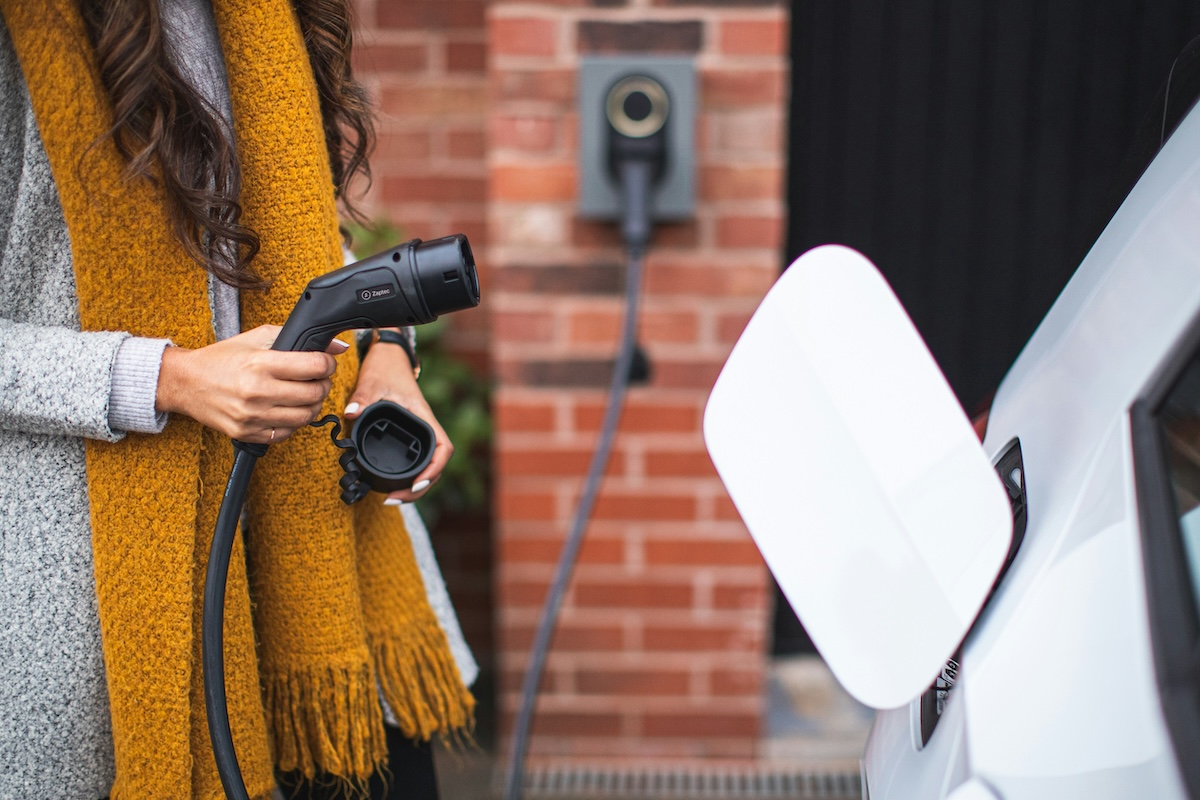
Electric car drivers are increasingly relying on the cheapest and most convenient place to charge … their own driveway.
Home chargers accounted for 96% of all EV charger installations in 2025, while the number of new public chargers installed fell by 46%, says a report from data analysts Barbour ABI.
The one exception is ultra-rapid charging, where the market continues to grow strongly. In 2025, 3,425 ultra-rapid chargers were added to the public network, representing 40% year-on-year growth.
“We are seeing a clear shift towards home charging where drivers have the ability to install their own charge point,” said Ed Griffiths, Barbour ABI’s head of business and client analytics.
“Public charging remains essential, particularly for longer journeys and households without off-street parking, but the pace of new public installations slowed markedly in 2025.”
According to Barbour ABI’s Electric Vehicle Charging Infrastructure UK 2026–2030 market report:
- Around 366,325 EV chargers were installed in 2025, with 96% of these being home chargers. Home charger installations increased by nearly 30% during the year, driven by continued growth in EV registrations.
- The 13,325 additional public chargers still represented a 13% expansion of the overall public network, but the data points to a sharp slowdown in annual public charger deployment.
- To reach the Government’s target of 300,00 public chargers by 2030, there would need to be annual installations of 37,000.
- Barbour ABI estimates that 353,000 home chargers were installed in 2025, bringing the installed base to almost 1.4 million.
- At the end of 2025, there were 11,936 ultra-rapid devices in operation, up 40% on the previous year, with a further 985 installed in the first quarter of 2026.
Charging speeds are also improving rapidly, according to Barbour ABI’s report, which states that modern EVs can add around 200 miles of charge at a public station in under 15 minutes.
Operators are also increasingly installing 400kW to 720kW units capable of adding 100 miles of range in roughly five to eight minutes.
The 2025 slowdown in wider public charger installations reflects several pressures including delays in securing substation upgrades from District Network Operators, bureaucracy linked to LEVI-funded street charger rollout and investor concerns around the pace of EV transition.
Market Forecast
However, with many of these pressures are easing in 2026 and Barbour is predicting growth in demand at several different levels, particularly residential uses both off-street and on-street, destination chargers and ultra-rapid en-route chargers. This could see a 15% growth for the sector by the end of the year and a 18% growth in 2027 according to projections.