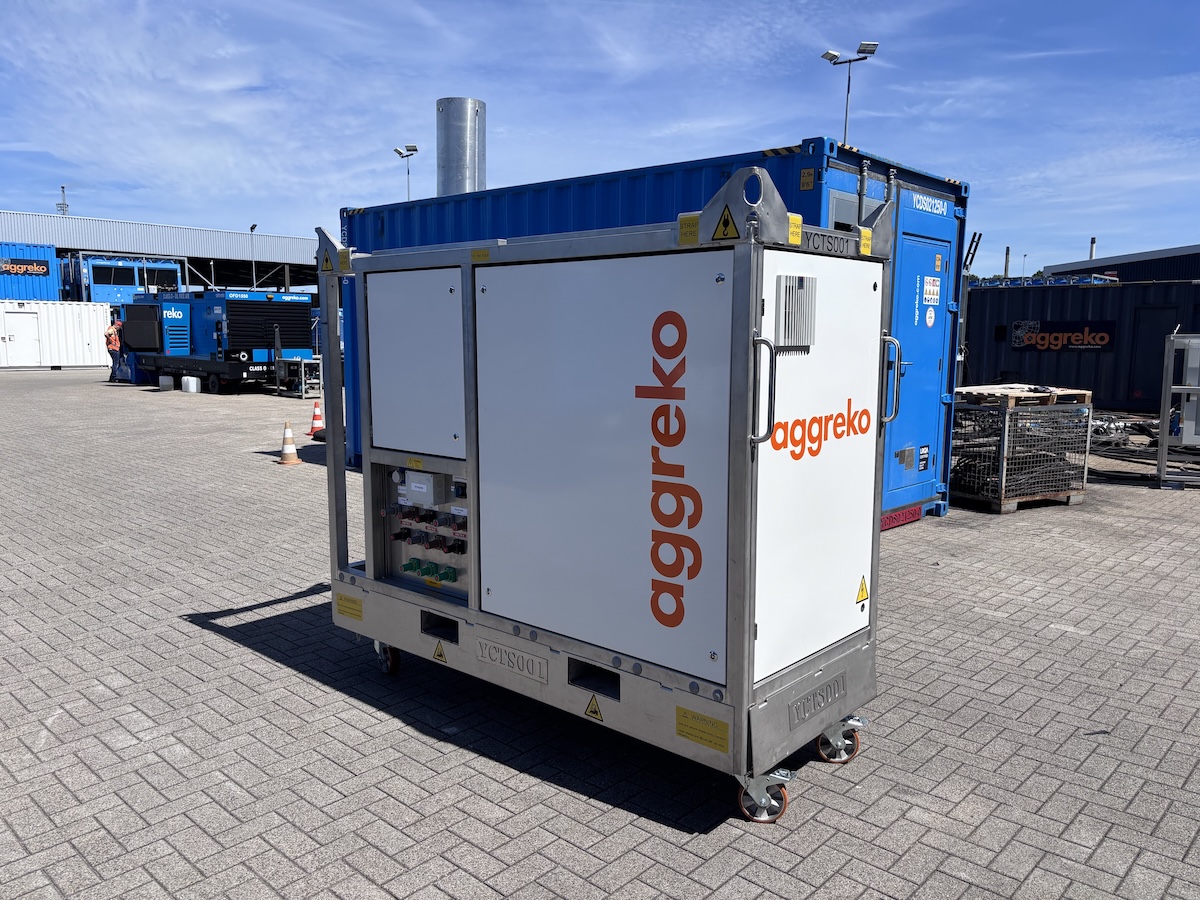
Responding to the rapid evolution of AI cooling infrastructure, engineered energy and temperature control specialist, Aggreko, has invested in a fleet of purpose‑built liquid‑cooled load banks (LCLBs), strengthening its testing and commissioning capabilities in Europe.
With liquid cooling rapidly emerging as the industry standard for high-density AI and high-performance computing data centres, Aggreko’s new LCLBs have been designed and developed with the consultation of some of the industry’s biggest AI operators, and are engineered to support the rigorous testing and validation of these systems through precise load simulation.
During the commissioning phase, LCLBs can be used to mimic the thermal and electrical loads of IT equipment, allowing data centre operators to validate key cooling and electrical infrastructure such as chiller lines, piping, pumps, heat exchangers, and Coolant Distribution Units (CDUs) before bringing the facility online, or during refurbishment. This reduces the risk of equipment failure once live, in turn helping to avoid costly downtime.
Torben Hiller, Lead Development Engineer at Aggreko, said, “The rapid growth of AI has ushered in a new era of data centre cooling. However, with even a single outage presenting six- or seven-figure ramifications, ensuring that this cooling infrastructure is fit to handle the demands of day-to-day operation is paramount.
“Our new LCLBs are the first of their kind on the market, and feature bespoke control systems that allow them to be set up for precise, scenario-specific testing. Combined with the knowledge and sector experience of our data centre team, this new investment will allow us to offer unrivalled testing and commissioning support for European AI data centres and their cooling equipment, providing operators with the best possible assurance that their infrastructure will be able to handle real load conditions.”
Aggreko’s LCLBs offer maximum flexibility in adapting to power supply conditions on site, and are automatically configured to accept 200kW, 300kW, or 600kW options across multiple or single connections. As not all electrical connection points in data centres are uniform, this is a major advantage that can help significantly speed up the commissioning process.
The units are constructed with high-grade, corrosion-resistant 316L stainless steel, which significantly reduces the risk of material degradation and contamination for liquid cooling systems. A rigorous process of specialist cleaning, flushing, sealing, and testing is also applied to every unit and its accessories, guaranteeing a pristine and secure cooling loop prior to live operation on customer sites.
Aggreko’s LCLBs also offer various operational modes to help test liquid cooling systems against diverse real-world challenges. Advanced systems enable control of kW load, delta T, and leaving water temperatures within tight parameters. Multiple units can be networked for scalable load management, enhancing operational flexibility for dynamic testing environments.
According to Torben, only through validating the system against a number of scenarios can the true operational resilience of cooling equipment be ascertained. He concluded, “As rack densities continue to rise, testing should be an essential part of any new investments in cooling equipment, or data centre operators risk running into unforeseen issues once the system is brought online.
“Inadequate testing can lead to poor heat rejection and overheating, coolant contamination, and a reduced system lifespan, so it’s important to iron out these challenges ahead of time. Fortunately, our latest investment has equipped us with the means to validate even the largest of facilities against these exact scenarios, and we are happy to support the sector on its upwards trajectory.”
Data centre operators can view Aggreko’s LCLBs in augmented reality, allowing them to be experienced at true scale or desktop size to support aspects of project planning, including space, connection points and positioning.
Find out more about Aggreko’s liquid-cooled loadbanks.