
UK trade association BEAMA has called for practical implementation pathways to support delivery of the Government’s Smart and Secure Electricity Systems (SSES) programme, strongly advising that successful implementation requires realistic timelines reflecting how products are designed, tested, certified and brought to market.
SSES is intended to enable technologies such as heat pumps, EV charge points, and battery storage systems to operate safely, securely and flexibly across the energy system. It helps unlock smarter tariffs, stronger consumer participation offering bill savings and a more resilient electricity network.
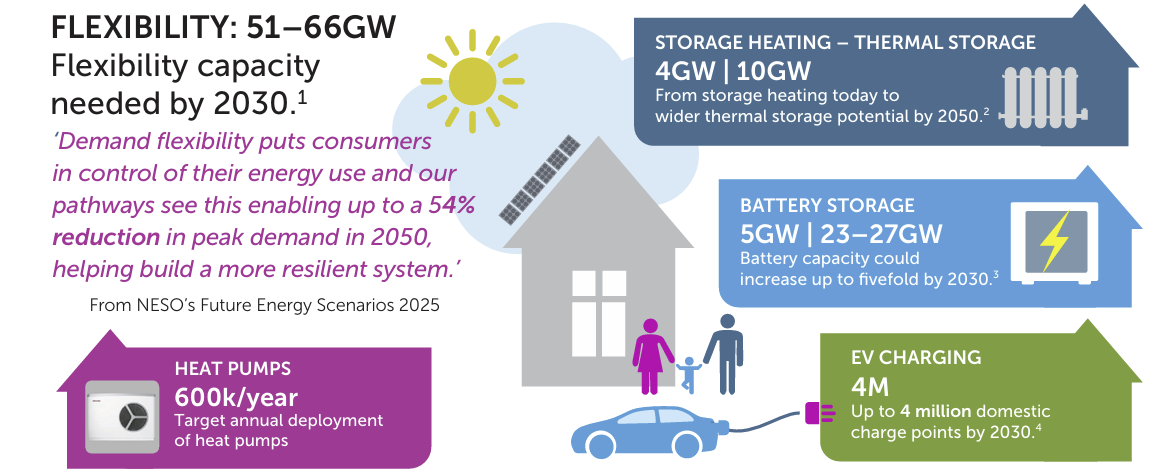
Government expects consumer-led flexibility – enabled by technologies such as heat pumps, EV chargers and battery storage – to grow from around 2GW today to as much as 10–12GW by 2030. This wider flexibility could reduce total energy system costs by at least £70bn by 2050. BEAMA is working in partnership with the wider industry, and policymakers to ensure these benefits can be realised by creating the best conditions for manufacturers to invest and deliver.
BEAMA says bringing energy-smart products to market requires extensive design, testing, certification and manufacturing activity, much of which begins long before regulations formally take effect.
The challenge is particularly important for heat technologies. The UK is seeking to accelerate heat pump deployment and electrification of heat, but progress remains behind the level needed to meet long-term ambitions. As smart requirements become embedded into heating products, implementation frameworks must enable innovation and adoption – not slow momentum through unintended complexity.
Swetta Coopamah, Head of Smart Buildings at BEAMA, said, “SSES represents a major opportunity to support a smarter, more flexible and consumer-focused energy system and manufacturers strongly support the direction of travel. Manufacturers are already investing in product development, software capability, testing and supply chains to support this transition. But successful implementation now depends on creating the certainty, timelines and delivery conditions that allow innovation to scale.
“Products are not redesigned overnight. Delivery frameworks need to reflect how products are actually developed and deployed if consumers are to realise the benefits of flexibility. This is not about reducing ambition it is about creating the conditions to deliver SSES successfully.
“We fully support the ambition behind SSES, but successful delivery depends on a framework that is proportionate, practical and capable of supporting investment, innovation and consumer confidence.”
BEAMA is calling for the proposed 31 December 2027 compliance date to mark the start of a two-year voluntary transition period to support implementation and market readiness.
In addition to:
- Clear and stable implementation pathways
- Timelines that reflect product development and certification realities
- Proportionate approaches across different technology categories
- Strong consumer outcomes and confidence
- Continued collaboration across Government, regulators and industry
The announcement comes as BEAMA hosted its Westminster reception, From Policy to Product: How SSES is shaping manufacturing, flexibility and the consumer experience, bringing together representatives from Government, Parliament, regulators and industry.