Today, KLM Cityhopper, INERATEC, Hamburg Airport and MB Energy jointly operated a passenger flight between Amsterdam and Hamburg using a blend of alternative aviation fuel (formerly referred to as SAF or e-SAF). The fuel, made in Europe using European technology, was integrated into regular flight operations via existing infrastructure. This flight on a synthetic kerosene blend in Germany is an important signal for what is technically feasible today, but also highlights the need to scale production and increase availability.
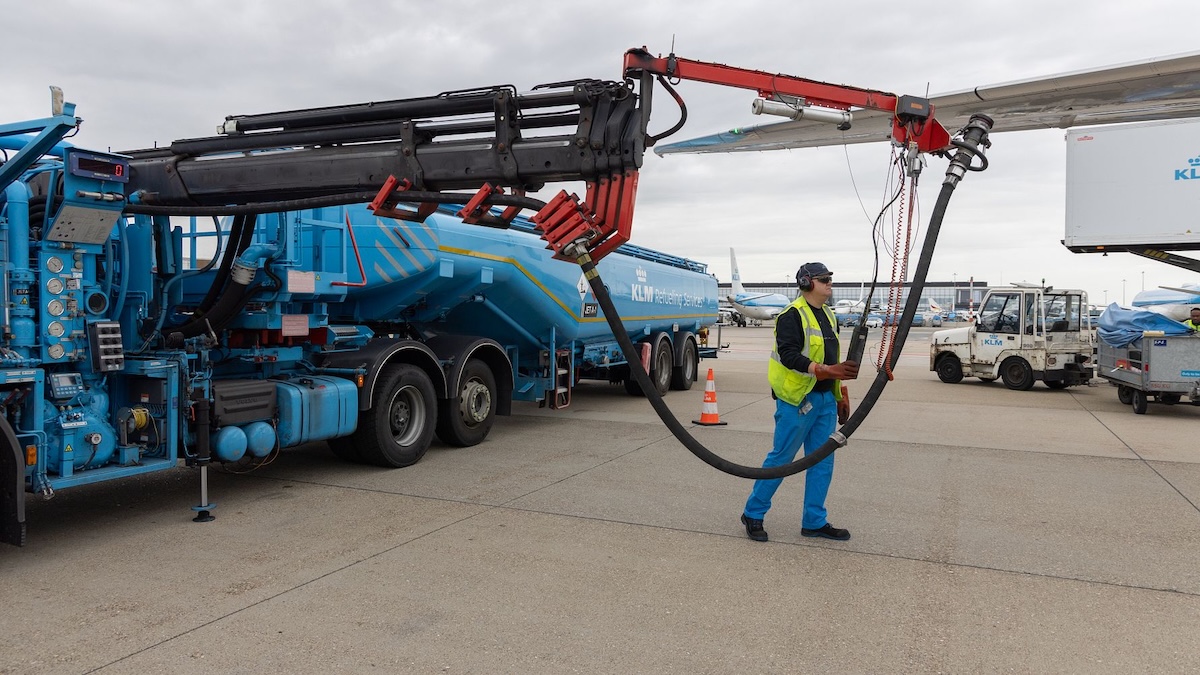
The synthetic kerosene was produced and hydrotreated by INERATEC, then distilled and blended with fossil kerosene by MB Energy at ASG Analytik-Service, before being refuelled into the aircraft at Amsterdam Airport. Produced from hydrogen and CO₂, the fuel originates from INERATEC’s ERA ONE production plant, Europe’s first commercial-scale Power-to-Liquid facility. Alternative synthetic kerosene has the potential to reduce lifecycle emissions by up to 90 % compared to conventional kerosene. The flight operated using a fuel blend containing 5 % synthetic kerosene.
This flight demonstrates that alternative synthetic kerosene blends are technically feasible and can be used safely in regular passenger operations today. It also shows that the entire value chain from production and blending to refuelling and use in commercial aviation can be implemented under real-world conditions.
At the same time, the flight highlights the scale of the challenge ahead. In partnership with the airline, MB Energy is supplying the conventional jet fuel, providing the blending services for the alternative aviation fuel and managing transport to Amsterdam Airport – an important step towards integrating alternative fuels into regular passenger operations. Yet overall availability remains limited: today, only a fraction of the volumes required to meet European 2030 targets is actually in production. And although the project pipeline is strong and growing, many announced plants have not yet reached final investment decision. Accelerating these projects will be crucial to closing the gap between ambition and supply.
Call to the government: make alternative fuels a priority
KLM and INERATEC support European sustainability goals and will continue to invest in the transformation of aviation. At the same time, it is essential that policy ambitions remain stable and that governments create the conditions to turn production projects into reality. Current production figures show that the 2030 EU sub-mandate for e-SAF will be challenging to achieve without urgent action. Construction and environmental permitting in the Netherlands, and in many other European countries remains a challenge, and there is uncertainty regarding potential changes to ReFuelEU legislation. Therefore, it remains crucial that the governments across Europe also commit and invest to enable the acceleration and scaling-up of alternative aviation fuels.
Jonathan Perkins, CEO at MB Energy, “Aviation has long been at the forefront of technological innovation. With this operation, together with KLM and Ineratec, we are showing how lower carbon aviation fuels can be integrated into existing infrastructure and operations. At MB Energy, we are laying the foundation today – preparing routes to market for new fuels, adapting our infrastructure, and ensuring stable supply lines. When our customers are ready, we can deliver what they need, when they need.”
Marjan Rintel, CEO of KLM, “As CEO of KLM and Chair of Project SkyPower, I believe that e-SAF can make a real difference in the decarbonisation of aviation. KLM already pioneered a passenger flight on e-SAF in 2021, from Amsterdam to Madrid. The flight to Hamburg once again shows that flying on synthetic kerosene is technically possible. But the reality is that the availability of e-SAF lags far behind the ambition. To truly make a difference, we must work together with governments, industry and partners on scaling up and improving affordability in order to accelerate the sustainability transition of aviation.”