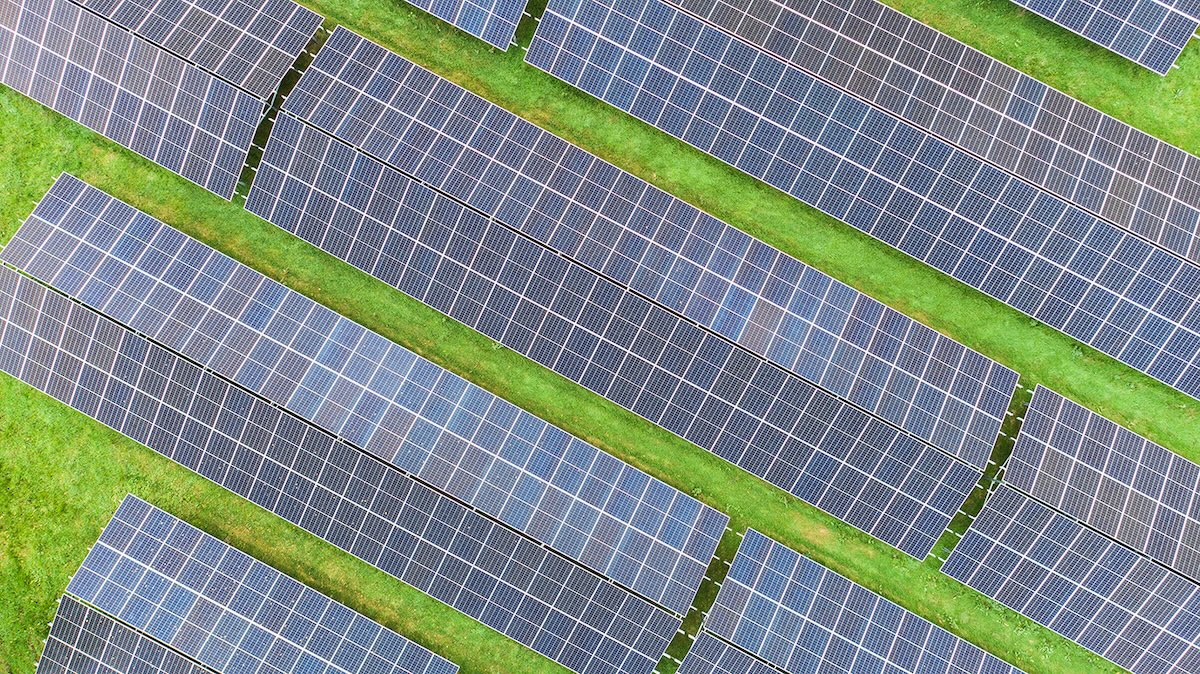
Lancaster University has taken a leap towards net zero, regularly generating 100% of its own electricity for the first time this spring through a new solar farm.
Designed to include an agrivoltaics field demonstrator, a facility to inform how farming and electricity production might be designed to work alongside one another, the solar farm is just one part of a campus-wide drive to cut carbon emissions and invest in renewable energy sources.
This is the latest in a series of clean energy projects which have already halved campus energy-related emissions, opened research and teaching opportunities and effectively established a ‘living laboratory’ for low carbon energy transition.
The University’s energy-related carbon emissions have decreased from a peak of 25,900 tonnes CO2e in 2005 to 10,900 tonnes CO2e in 2025. And together, the University’s wind turbine, new solar farm, heat pump array and expanded district heat network (under construction) are expected to reduce University-related energy emissions to net zero by 2030.
As well as implementing research-informed energy saving measures, the University has radically transformed the way it is powered and heated, thanks to a series of carbon-slashing investments, including:
- The UK’s largest heat pump energy centre (and thermal stores)
- The UK’s second east-west orientated solar farm – designed to maximise electricity generation at peak morning and evening demand
- An existing wind turbine, which, together with the new solar farm, produce enough electricity to power 2,800 homes annually
The solar farm
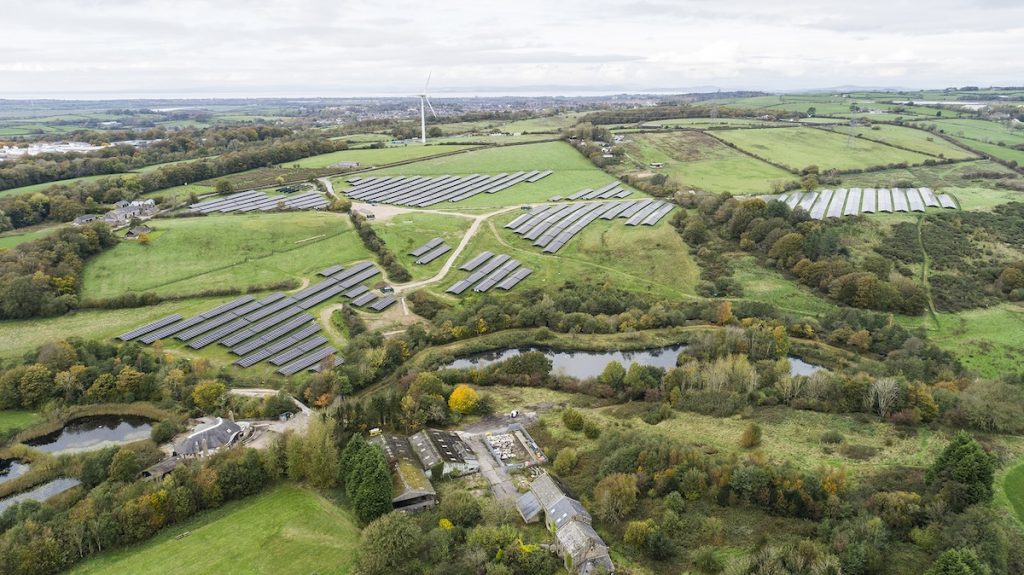
Situated on Hazelrigg Lane, close to the University’s wind turbine, the solar farm began producing energy late last year. The 11MW Solar Farm was installed with consideration for biodiversity and includes the agrivoltaics field demonstrator.
It will be the first of its kind in the UK and an important research, innovation, and engagement facility for scientists, researchers and industry.
Air and water source heat pumps
A new district heat network is also cutting the University’s carbon footprint thanks to the its £44 million Net Zero Energy Project – part funded by the Government Green Heat Network Fund.
Officially completed next year, the extended district heat network is to be heated by one of the UK’s largest arrays of air and water source heat pumps and a series of highly insulated, underground pipes, which will distribute low-carbon heat across the campus, supplying approximately 250 buildings.
Originally, the district heat network supplied only 65% of the University’s buildings, but the new expansion, which includes 6.5km of new pipes, will see that rise to 95%. The network will all but remove the use of gas on campus.
Vital Energi have collaborated with the university on a range of renewable energy measures, including:
- 11MW east-west orientated solar farm, the second in the UK
- 50kW field agrivoltaics demonstrator comprising vertical and single-axis tracking arrays
- 8MW Energy Centre, the first of its size in the UK, operational 2027, housing an innovative array of air and water source heat pumps, along with a visitor facility
- District heating network across campus, currently under expansion.
- Grid import and export capacity