A material that freezes and melts in order to store and use heat as an energy source could see household energy usage become cheaper and cleaner, a project from experts at Loughborough University has found.
Researchers at Loughborough University developed and tested a thermal energy storage (TES) system using phase change materials (PCMs) for domestic heating. Phase change materials are substances that release or absorb energy when transitioning from one state matter to another – for example, from solid to liquid – to provide useful heat or cooling.
It is hoped that this method of heat transfer will improve energy storage efficiency, reduce heat loss, and make the system practical for homes.
As the energy industry constantly seeks new ways to improve energy efficiency and decarbonise processes, this system offers a new way to transfer heat efficiently.
Further to this, heat pumps are growing in popularity, but they stress electricity grids during peak times. TES systems have the capability to store heat when energy is cheap or abundant and release it later, reducing costs and grid strain.
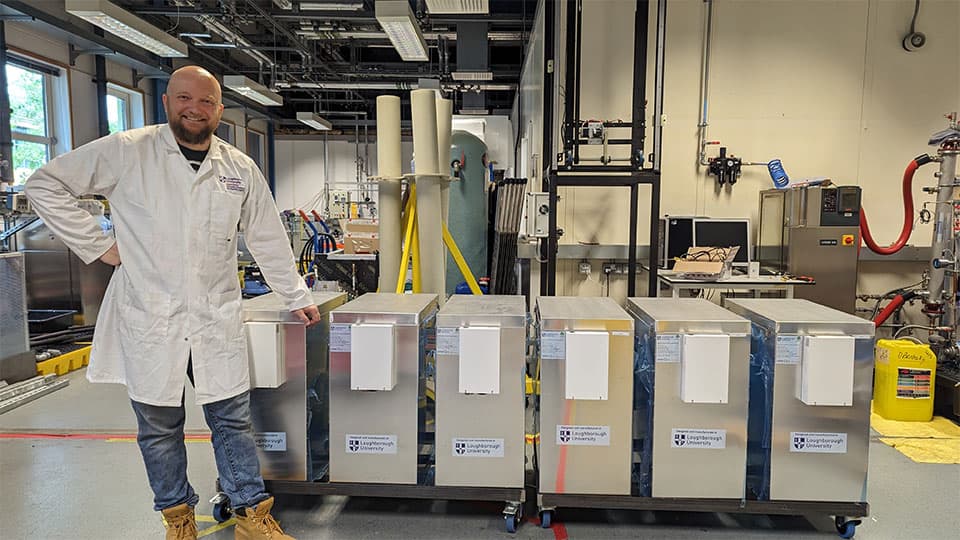
Academics at Loughborough University, led by Dr Pawel Dominik Nycz from the School of Mechanical, Electrical and Manufacturing Engineering, built three modular units, with each module storing about 3.5kWh of useful heat, in the research published in the International Journal of Heat and Mass Transfer.
The new design provided better insulation and reduced void spaces, enabling for better heat transfer.
They found that this third-generation model kept heat above 50°C for ~162 hours (almost 7 days), much better than earlier versions, with the system being compact, efficient, and cost-effective for domestic heating.
The system was found to work well with heat pumps for low-carbon heating, could help reduce electricity costs and grid stress, and was also scalable and adaptable for domestic homes.
Dr Pawel D.Nycz, a Research Associate in Energy storage systems and technologies, said of the findings of the study, “Heat storage will play a critical role in decarbonising home heating. Technologies like ours can work alongside heat pumps, reducing peak demand and helping households transition to cleaner energy without increasing costs.”