

For much of the past three decades, energy sat quietly in the background of business strategy. It was procured annually, optimised tactically and rarely discussed beyond finance or facilities teams. That assumption has now collapsed explains John Behan, CEO, Ampyr Distributed Energy.
Across the UK and Germany, energy has re-emerged as a defining determinant of competitiveness. How power is sourced, priced and managed is increasingly shaping investment decisions, operational flexibility and long-term resilience.
This shift reflects a wider global divide, often held as being cleaved between petro-states and electro-states. Economies dependent on imported fossil fuels remain exposed to volatility and geopolitical risk. Those able to generate clean, reliable electricity domestically are building a more durable economic advantage. For businesses operating within these systems, the implications are immediate.
Manufacturers, logistics operators, data-intensive estates and multi-site organisations are facing a convergence of pressures. Labour costs are rising; capital is more selective; grid capacity is constrained. Wholesale power markets remain volatile, with price shocks still feeding through balance sheets long after the headlines fade.
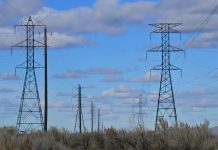
In Germany, sustained high and unpredictable energy prices continue to weigh on industrial output and investment confidence, particularly in energy-intensive sectors. In the UK, network congestion and rising transmission costs are increasingly visible at site level, limiting expansion and electrification even where demand and capital are available. Energy is no longer just a cost line: it has become a gating factor for growth.
As a result, board-level conversations are changing. The question is no longer simply, “What is the cheapest contract this year?” but, “How do we secure reliable, affordable power over the next 10, 20 or 30 years – and how exposed are we if we do not?”. This is driving a fundamental rethink of energy strategy.
Short-term procurement models, designed for an era of surplus capacity and relatively stable markets, are proving inadequate in systems under strain. Increasingly, organisations are looking beyond the wholesale market and towards their own estates, assets and operational footprints. Energy, in short, is being treated as infrastructure.
That means understanding where power is generated, how exposed operations are to grid constraints, and how much control businesses have over their long-term cost base. It also requires reassessing the role of on-site and behind-the-meter assets as part of a broader operational and financial strategy, rather than as isolated sustainability projects.
This is not about self-sufficiency at any cost. It is about resilience, predictability and optionality. Distributed energy, combining on-site generation, storage and intelligent controls, has therefore moved from a sustainability add-on to a strategic tool.
In Germany, distributed solutions are increasingly deployed to protect industrial competitiveness in a structurally high-cost environment, aligned with a policy shift towards decentralised generation, flexibility and long-term investment signals. In the UK, distributed energy is often the difference between growth and stagnation, enabling new sites, electrification projects and estate expansion where grid access alone cannot deliver.
Crucially, the conversation has shifted from technology to outcomes. Businesses are less interested in owning assets outright and more focused on securing long-term energy performance, price stability and operational certainty without tying up capital or management bandwidth.
Looking ahead through 2026, several trends are becoming clear. Grid constraints are intensifying faster than reinforcement programmes can keep pace, pushing distributed solutions from “nice to have” to essential. Geopolitical uncertainty is likely to remain a feature of energy markets, continuing to shape risk assessments even as renewable penetration increases. At the same time, capital is becoming more selective, favouring businesses with predictable cost structures, resilient operations and credible decarbonisation pathways.
In response, organisations are increasingly seeking long-term partners able to fund, deliver and operate energy assets over decades, not just install equipment and exit.
Distributed energy is not a silver bullet, but it is increasingly the difference between constraint and capability. Competitiveness in the UK and Germany is now being shaped one site at a time, one asset at a time, and one long-term energy decision at a time.