
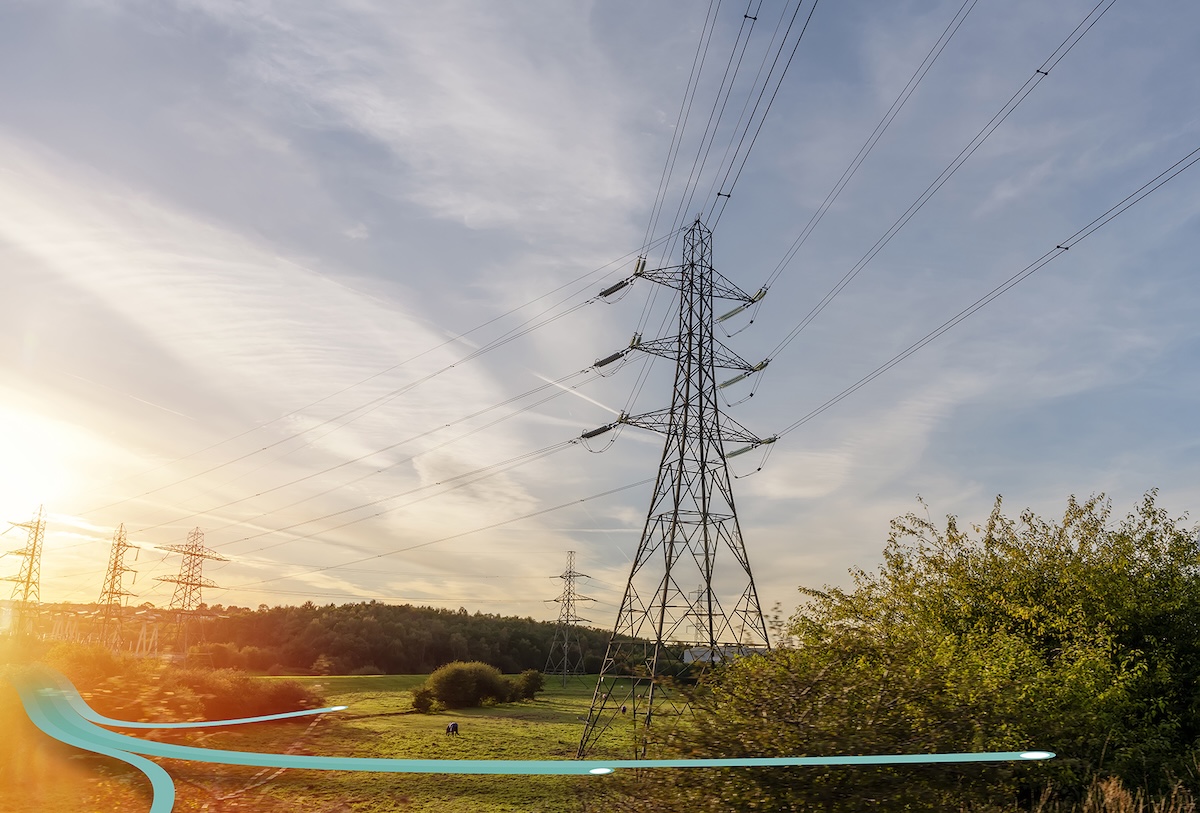
 Energy shocks don’t fully explain rising energy bills. Emma Ford, CEO of Eclipse Power, explains why consumers are paying the price for a lack of competition in energy transmission.
Nobody thinks about the infrastructure behind Britain’s power network day to day: you flick a switch, the light comes on, you pay the bill. But the size of those bills is going up precisely because of increasing demands on the infrastructure that makes power possible, and the rising cost of upgrading the grid.
Some of the pressure on prices is immediate. Volatility linked to tensions around key shipping routes such as the Strait of Hormuz has triggered what the International Energy Agency has called the largest disruption in the history of the global oil market. In its wake, gas benchmarks have roughly doubled. Even though Britain generates a growing share of its electricity from renewables, gas still sets the marginal price – it will take time for the government to achieve its aim of breaking this link. Until then, when geopolitics causes gas prices to spike, bills follow.
But there’s a deeper problem that’s domestic and structural, and which will outlast any geopolitical crisis. Electricity bills don’t just reflect the cost of generating power. Roughly a third goes on network charges – the cost of the physical infrastructure that moves electrons around the country. The high-voltage transmission network is the most expensive part of that chain, and the Transmission Network Use of System (TNUoS) charges that fund it rose 64% this April – adding thousands of pounds a year to the standing charges of a typical business customer.
Transmission owners have submitted plans calling for around £80 billion of investment over the next five years. The grid needs rebuilding to accommodate more renewables, more electrification, and surging demand from data centres. That investment will be recovered through consumer bills – the only question is whether we’ll pay more than we need to.
Building a grid for renewables
Britain faces a reality of grid constraints, where new projects struggle to connect in a viable timeline. Despite ongoing action by Ofgem and the National Energy System Operator (NESO) to accelerate connection offers for generation and demand projects, delays remain, and connection dates are measured in years. At the same time, the distance between major renewable projects and the areas of highest electricity demand means there are more electrons to carry over longer distances: the grid needs new and upgraded transmission links to cope.
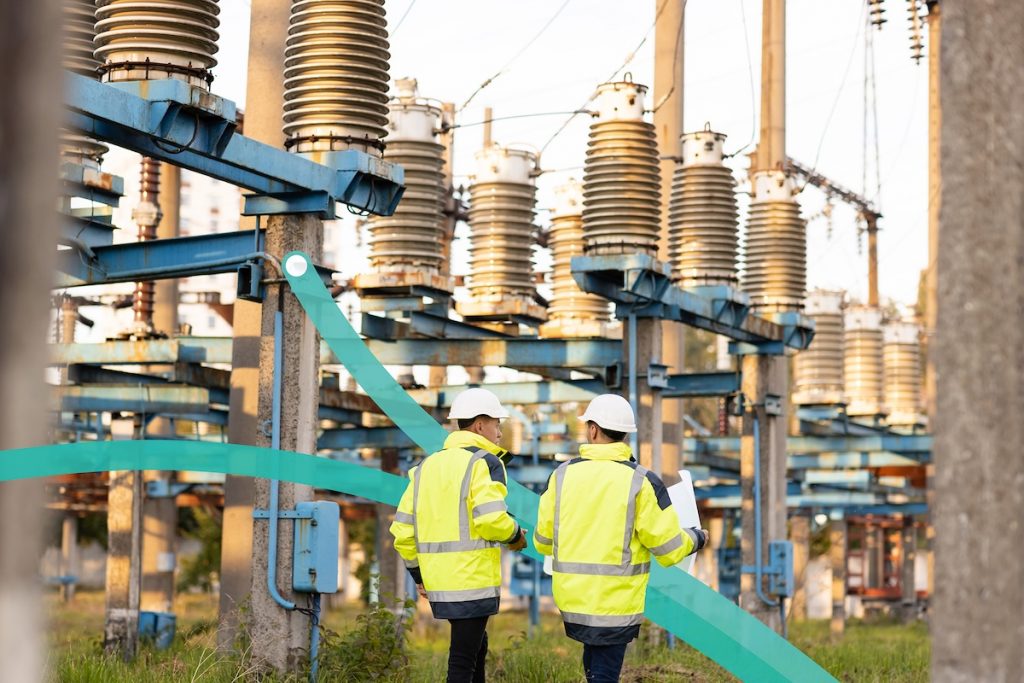
But not every megawatt of new demand or generation requires an equivalent megawatt of transmission capacity. Arrangements such as private networks can effectively pair up generation and demand customers – for example a data centre and a solar farm – keeping most of the electrons local, and reducing the requirements from the grid. Co-locating major generators and demand customers provides a use for energy that the grid can’t absorb, or can’t transport – which is why NESO is working on ‘spatial’ plans that aim to match supply and demand on a regional level.
Co-location solutions such as private networks and microgrids – a similar, smaller arrangement – are being deployed now, largely by independent operators. They’re under increasing demand as an alternative to traditional connection routes, for example by adding solar and storage to an EV charging hub to reduce its reliance on grid capacity, meaning a cheaper and quicker connection can be secured. But these solutions can only go so far when the existing regulatory framework prohibits greater competition, and when the transmission network operators are struggling to deliver the grid access points necessary for major projects like wind farms or hyperscale data centres.
The status quo holding us back
Three companies operate Britain’s transmission network. No independent organisation has yet been allowed to build, own or operate assets alongside them – with predictable consequences. The system is bedevilled by issues such as restricted supplier lists, with the lack of competitive pressure pushing up costs.
Transmission operators face genuine challenges in scaling skills and supply chains at the pace the economy demands. Major housing and infrastructure projects are stalled, imperilling jobs and investment and putting a dampener on growth. Equally, these constraints make it harder to deliver UK policy goals such as Clean Power 2030, and beyond that, Net Zero.
None of this is inevitable. Britain already has a functioning model for competitive power network delivery. Independent distribution network operators (IDNOs) now handle around 80% of new home electricity connections in England, delivering faster timelines and lower costs than the incumbent, geographically restricted distribution network operators (DNOs). While still fully regulated to ensure the safe and reliable operation of distribution networks, IDNOs have the technical freedom to innovate. They also operate in a competitive market, with a commercial imperative to innovate, offer value and deliver customer service.
The regulatory environment is catching up. In March, NESO launched its first market sounding for Competitively Appointed Transmission Owner – the first step towards allowing new entrants to bid for transmission projects. Separately, Ofgem’s demand connections reform proposes an independent transmission operator (ITO) licence, allowing qualified companies to build and operate high-voltage connection assets. Ofgem is expected to set out its position in the coming months.
Eclipse has a long-held ambition to become the first ITO. It applied to Ofgem for a transmission licence in 2022. The regulator declined not because we lacked the capability, but because the framework wasn’t ready. Key within this is the need for similar regulation to that seen in the IDNO sector, holding ITOs to the same standards of safety and reliability. In July we’ll energise our first transmission-connected asset, supported by a 24/7 control centre and full grid code compliance – proof that an independent can meet every requirement of transmission-level work.
Back to the bill
Bringing independent operators into the transmission market will have a similar effect to what happened with the introduction of IDNOs in the distribution sector. New ITOs will bring desperately needed investment, skills and resources to transmission. Competition between operators will accelerate delivery, and help unblock the logjam that threatens the UK’s ambitions.
But to bring it back to where I started, competition will also have a direct impact on the cost of updating Britain’s transmission network, and on the electricity bills that so many individuals and businesses are struggling with. To be clear, rebuilding the grid costs money, and some of that cost will reach consumer bills regardless. But there’s a significant difference between £80 billion spent by a very small number of eligible companies, and the lower figure that competitive delivery would produce. When multiple companies bid for the same project, competitive pressures will result in lower network charges, and we’ll all have less to pay.
There are indirect benefits, too. The first of these comes from the ability of independents to accelerate connections. Projects that can’t get power cannot operate, invest or employ. Every year a factory, data centre or renewable energy project waits for a connection is a year of lost output. Independents with proven delivery records can shorten those timelines, helping support and generate growth.
Beyond that, accelerating the rate at which the grid can accommodate renewable generation means the UK can continue to reduce its exposure to the price instability of imported fossil fuels. In a world where events in the Middle East can double wholesale energy costs overnight, that’s a massive strategic advantage.
The final point is that a competitive market will allow the innovation necessary to use grid resources efficiently. Private networks and microgrids – along with other innovations such as phased connections and link optimisation – allow existing grid capacity to serve more demand. Every electron delivered through smarter use of existing infrastructure reflects increased capacity, without an associated cost landing on customer bills.
The evidence from distribution proves that competition works. It’s time to apply the same principle to the part of the network that desperately needs modernisation and development. Independent operators are ready and waiting – bringing them into the transmission network is an economic necessity.