
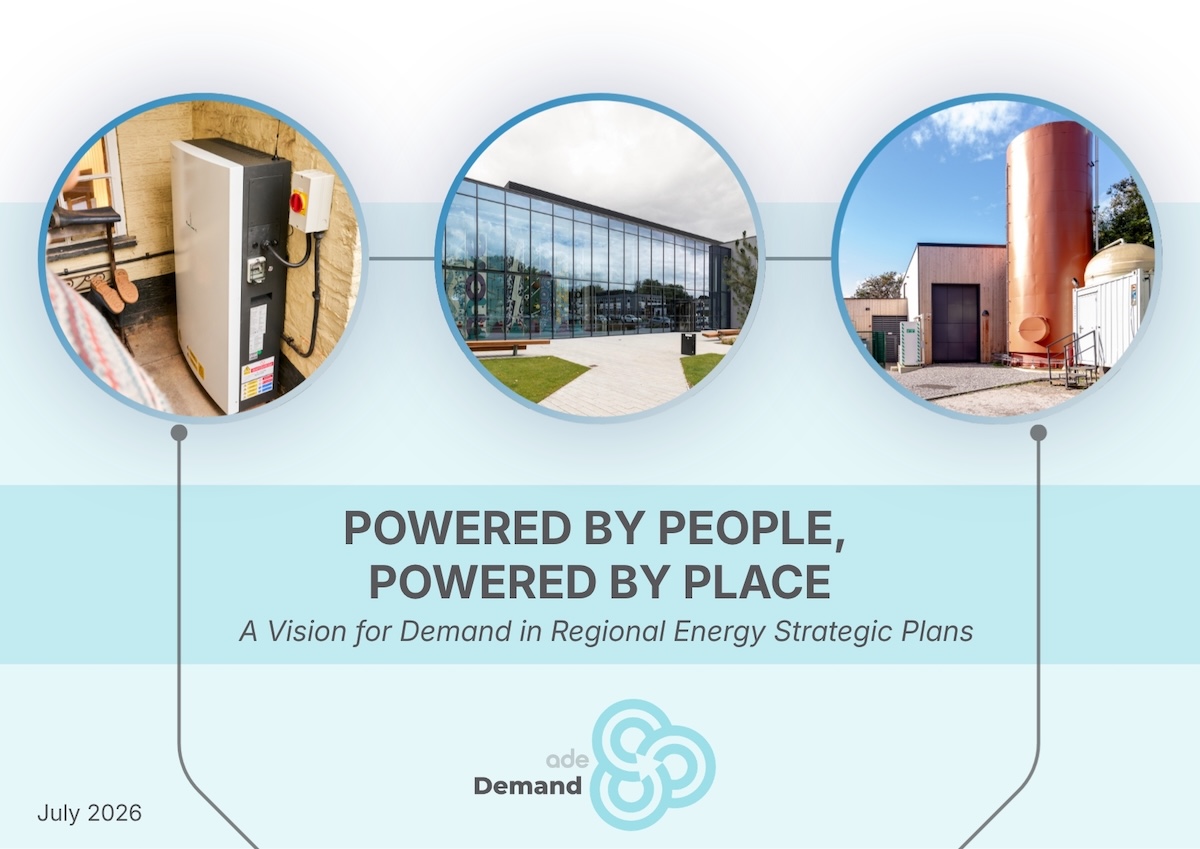
With the final methodology for Regional Energy Strategic Plans (RESPs) being signed off later this summer, ADE Demand has set out a positive vision for regional energy planning where treating energy demand as a flexible, system-shaping asset delivers a cheaper, more resilient and fairer energy system in its latest report ‘Powered by People, Powered by Place: A Vision for Demand in Regional Energy Strategic Plans’.
RESPs will shape billions in infrastructure investment for decades, what we build and how we decide. We can either default to the old predictive model – forecast rising demand, then build more grid – or we can plan for a flexible, decentralised system where energy users actively help balance the grid, cut costs and make better use of British energy. The latter is cheaper, more resilient and fairer, but it requires deliberate policy choices now, in RESP’s first methodology.
Our key recommendations include:
- Mandate ‘optioneering’ for demand-side solutions – Require the National Energy System Operator (NESO) to formally assess demand-site assets such as flexibility, thermal storage, heat networks, microgrids, colocation and onsite generation as alternatives to reinforcement – before any new wires are approved. This is standard practice in other infrastructure sectors, giving demand-side assets a seat at the table.
- Share the savings from avoided network costs – Where a demand-side solution defers or avoids reinforcement, a transparent portion of those avoided costs should be passed back to the consumers, businesses, or investors who made it possible. This sends a clear investment signal and aligns incentives with whole-system efficiency – just as we do for generation.
- Give demand representation on Regional Strategic Boards – Increase the 10% vote share for “cross-sector actors” (which includes demand-side assets) and empower local authorities to systematically consider demand-side options with support from Government to build that expertise.
The full report can be accessed here: Powered by People, Powered by Place: A Vision for Demand in Regional Energy Strategic Plans