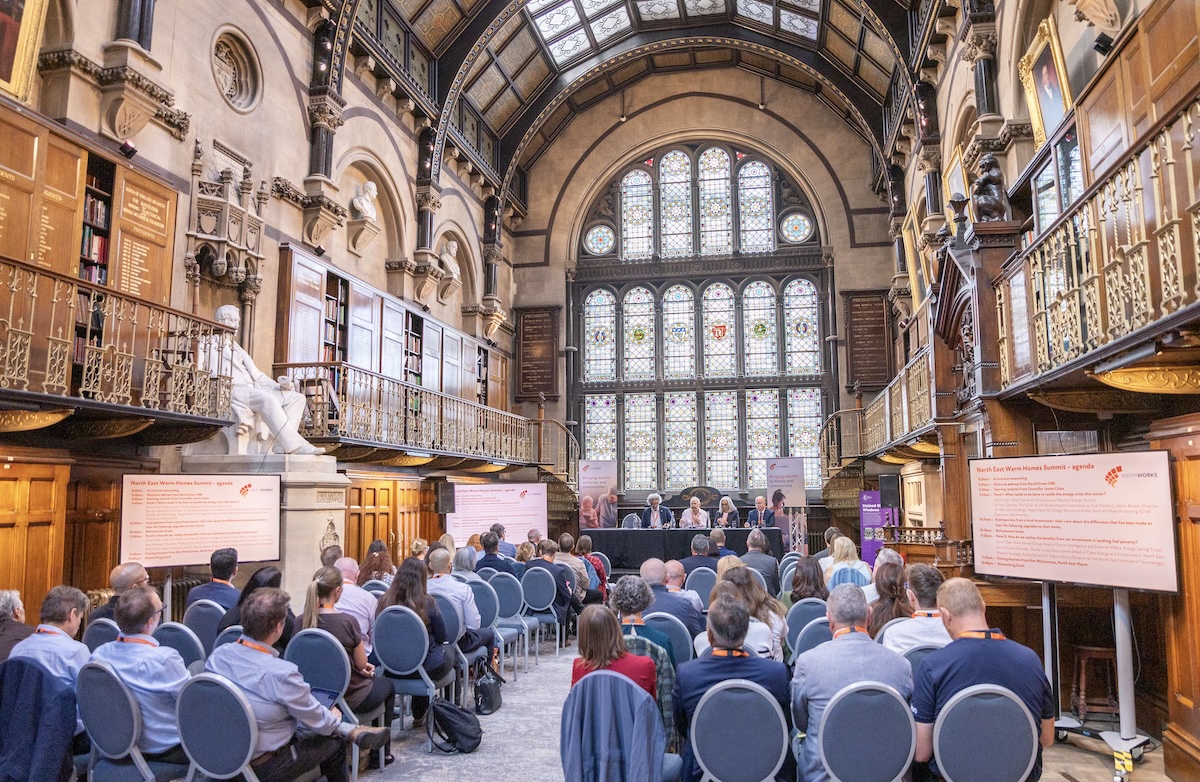
The second annual North East Warm Homes Summit, hosted by Warmworks at The Common Room in Newcastle on Tuesday September 1st brought together political leaders, energy experts and industry representatives.
As Ofgem announces that energy price cap will rise by 4% from October to a three year high, the Summit focused on both the urgent need for action to protect households from fuel poverty this winter, and how investments in home upgrades can create jobs, develop skills and support businesses across the region.
This comes at a time where the UK Government is seeking to deliver its landmark £15bn Warm Homes Plan to upgrade 5 million homes and get one million families out of fuel poverty by 2030.
The first panel, “What needs to be done to tackle the energy crisis this winter?”, was chaired by Adam Scorer, Chief Executive of National Energy Action.
He was joined by Rt Hon. Caroline Flint, Chair of the UK Government’s Committee on Fuel Poverty; Selvin Brown, Director for Net Zero Buildings at the Department for Energy Security and Net Zero; and Ross Armstrong, Chief Executive of Warmworks.
With nearly one in ten households in the North East living in fuel poverty, according to latest Government figures, the discussion centred on the pressures that vulnerable households will face in the coming winter months. It also explored the interventions that could make the immediate greatest difference, and how the government, local authorities and industry can work together to ensure that support reaches those most in need.
The panellists also considered the long-term role of retrofit and energy efficiency in reducing household energy costs and making homes more resilient to the upcoming future energy price pressures.
The Rt Hon. Caroline Flint said, “Every winter presents a challenge, but energy bills are still too high and set to spike again this winter. Fuel poverty, age, ethnicity and rough sleeping are all linked to excess winter deaths.
“We need all public sector partners, charities and the energy companies in the North East to plan and collaborate to identify those at risk and step in.
“And then we need a step change in the campaign to eliminate cold homes.”
Ross Armstrong, Chief Executive, Warmworks said, “Fuel poverty is a national social crisis. There are still too many people living in damp, cold homes that they cannot afford to heat. With a cost of living crisis bearing down and energy prices set to go up again, this winter will pose a significant challenge for those who are living in fuel poverty.
“Now is the time to drive forward and accelerate the work being done in local energy efficiency programmes; we know what needs to be done and we know how to do it. Investment must now follow the warm words so that we can put this into practice and deliver meaningful benefits to those who need it the most.”
The Summit also heard directly from a local homeowner who shared their experience of seeing significant energy efficiency improvements to their home and a first account of the difference this has made to their quality of life.
The attention then turned to the second panel, which focused on how investment in fuel poverty can create wide, long-lasting benefits for the North East.
The second panel, “How do we realise the benefits from our investment in tackling fuel poverty?” chaired by Stew Horne, Group Head Sector Intelligence and External Affairs, Energy Saving Trust; alongside Amy Mooney, Founder of specialist heat pump provider Mutha Cuva; Ross Lowrie, Head of Clean Energy & Environment at the North East Mayoral Strategic Authority; and Dr Sharon Grant, Director of the North East Institute of Technology.
This discussion focused on how investment in domestic retrofitting will create broader economic benefits by producing local jobs, apprenticeships and training opportunities. The transition to more energy efficient homes could also help strengthen regional supply chains to benefit North East businesses.
Stew Horne, Group Head of Sector Intelligence and External Affairs at Energy Saving Trust, said: “With a difficult winter of high energy bills ahead, today’s discussion is timely. We need to accelerate delivery of the Warm Homes Plan and upgrade homes with energy efficiency measures and low carbon technologies to shield households from future energy price shocks. Research from our recent ‘Flexible Futures’ report shows that heat pump users on smart tariffs can save around £330 a year on average, while households combining low carbon technologies can reduce heating costs by up to 80% compared with gas alone. However, more advice and support are needed to help people take advantage of these benefits.”
The Summit concluded with a keynote address from North East Mayor, Kim McGuinness, who reflected on the opportunity for the region to lead the way in delivering warmer, healthier homes.
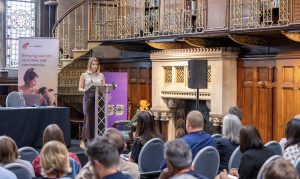 North East Mayor Kim McGuinness said, “We are not just talking about fuel poverty in the North East – we are doing something about it. At last year’s Summit, the conversation was about solutions. This year it is about delivery.
“That means turning ambition into action, working together to make homes warmer and more energy efficient, and ensuring that the investment into a region makes a difference to people’s lives. We have an opportunity to tackle fuel poverty while creating jobs, developing skills and delivering last benefits across the North East”
The second North East Warm Homes Summit reinforces the need for coordination between government, regional and local leaders, industry and charities to support households facing another difficult winter ahead.
It also highlighted the opportunity to ensure that investment in warmer homes delivers a much wider return for the North East, through healthier communities, new skills and employment opportunities, stronger local supply chains and green economic growth.