
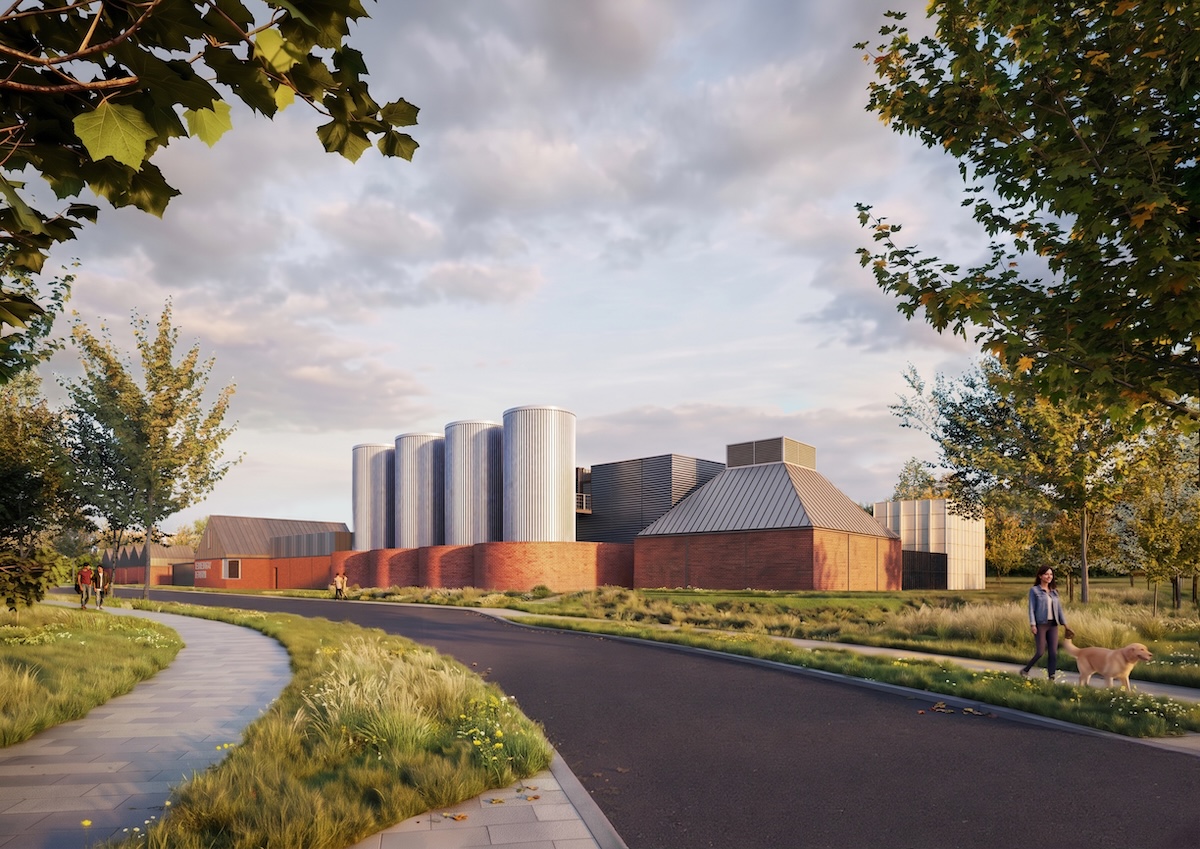
Wellcome Genome Campus has unveiled plans for a landmark new ‘Energy Farm’ that will support its growing site and provide an educational hub where the public can see sustainable energy solutions in action.
Located in Hinxton, the Campus is now expanding from 125 acres to 440 acres, delivering new world‑leading workplaces for companies to undertake research and translation, 1,500 homes, sports, health and fitness, hospitality and community spaces. This growth will be enabled by an innovative energy strategy designed to lower operating costs for occupiers, reduce carbon emissions and strengthen energy resilience.
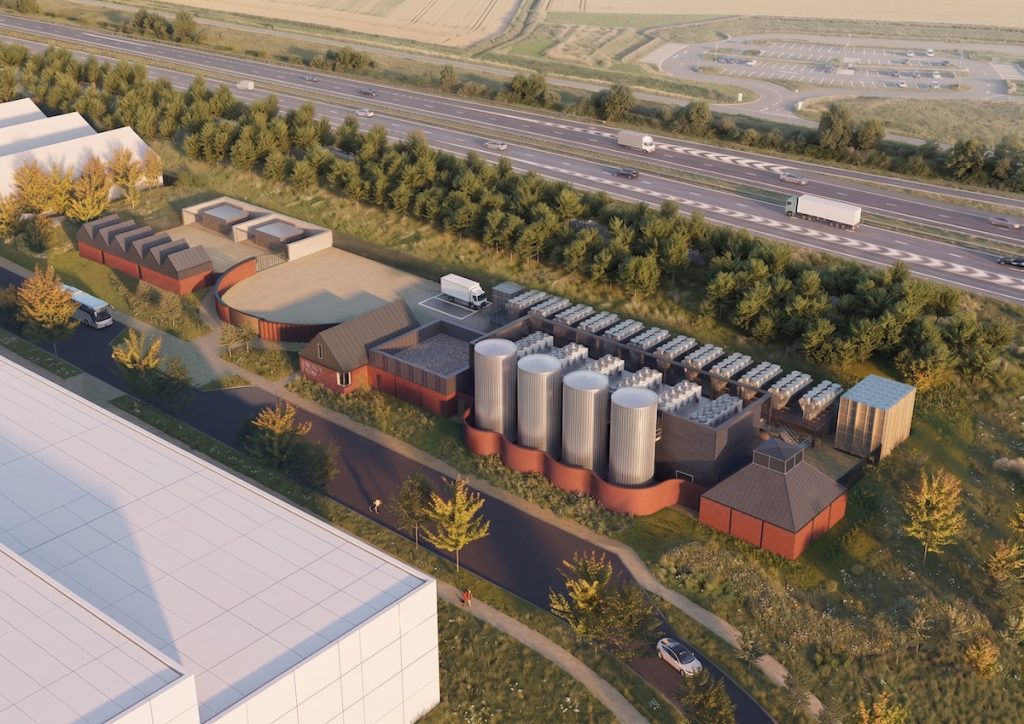
At the centre of this strategy is the proposed Energy Farm – a purpose‑built energy hub that will integrate multiple technologies into a single, coordinated system, bringing together three key components:
- A 5th generation heating and cooling network, an ‘ambient loop’, which will distribute low‑temperature energy across the Campus. By enabling buildings to take or deposit heat from or to the ambient loop and recover waste energy, the system significantly improves efficiency and reduces demand. It is expected to cut energy consumption by up to 50% and save approximately 2,850 tonnes of CO₂ annually.
- Local microgrids with photovoltatics (PVs) battery storage and intelligent controls, capable of generating, storing and dynamically managing electricity across the site. By balancing supply, demand and storage in real time, the microgrid will reduce reliance on the National Grid, optimise renewable energy use at peak times, and save occupiers money.
- A primary substation, providing secure, scalable grid connectivity and supporting the long‑term growth of the Campus energy system.
Together, these elements form flexible, resilient networks that can adapt as the Campus evolves, supporting new workplaces, homes and technologies over time.
The Energy Farm is set to become a defining feature of the expanding Campus, with an educational hub for visitors. There will be dedicated space for people to explore how the system works and see the sustainable energy solutions in action.
The design of the Energy Farm has been inspired by growing interest in urban infrastructure and the surrounding agricultural landscape. The individual system components have been designed and arranged to show how the system works and resemble a cluster of agricultural buildings.
Matt Soules, Head of Development Management at the Wellcome Genome Campus, said, “Energy infrastructure is often designed to sit quietly in the background, or hidden in uninspiring housing, but here we want to celebrate our leading approach to sustainability and make the Energy Farm a defining feature of the Wellcome Genome Campus.
“The plans reflect our commitment to innovation, not only in science and technology, but in how we contribute positively to the environment. By integrating advanced energy systems with high-quality design, the Energy Farm represents a new model for infrastructure that is forward-looking and resilient.
“Alongside the essential role it will play as part of our infrastructure, our ambition is for the Energy Farm to become an educational hub for the public. We want to welcome people in, so they can see innovative sustainable solutions in action and better understand how they are helping us to have a positive impact on our planet.”
Plans for the Energy Farm have been submitted to South Cambridgeshire District Council. If approved, construction is set to begin on the Energy Farm later this year and be completed towards the end of 2027. This will be part of the first phase of the Campus expansion, which will also see the arrival of the first research and translation building, new incubator and accelerator facilities for start-up and scale-up companies, some 84 homes, a major health and fitness facility, new bridges, landscaping and public realm.