 Stuart Gourley, Founder Director & Chief of Product, of renewable energy leasing specialist, RELA
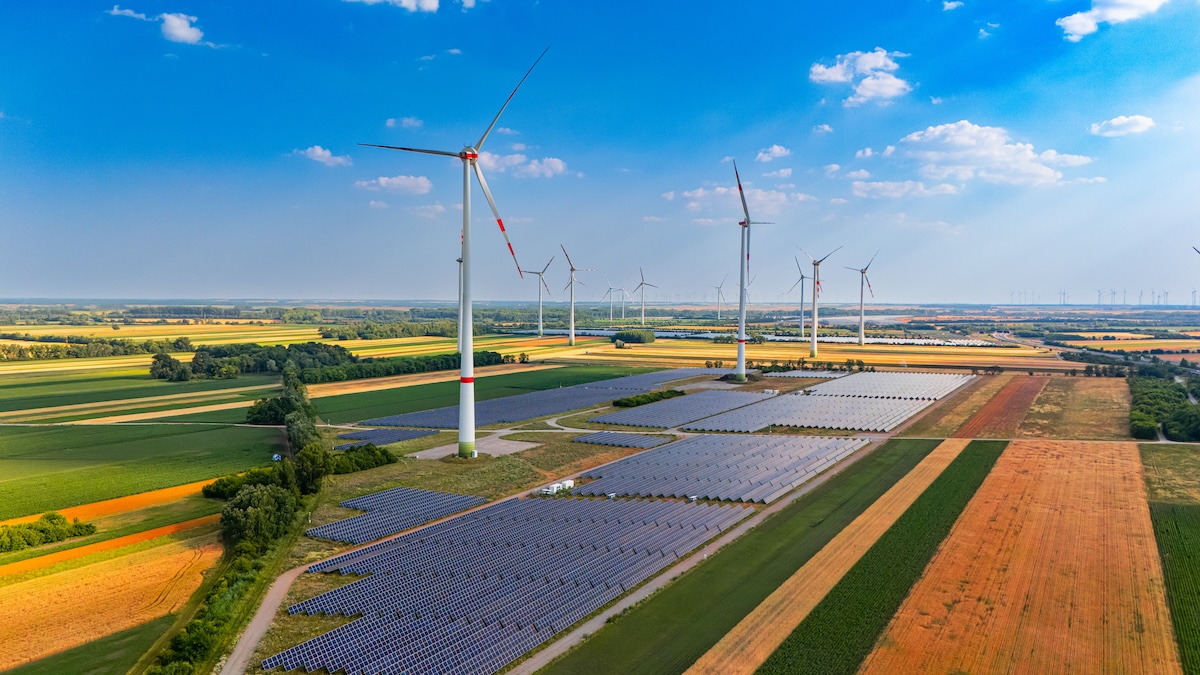
Across the UK, utility-scale solar, wind and battery energy storage projects are becoming an increasingly important part of the rural economy. For the landowners who host them, they can also create something less frequently discussed: a valuable, income-producing asset.
That matters at a time when farming businesses are under pressure from rising costs, changing markets, succession planning, taxation, and the need to invest for the future. Capital may be needed to acquire neighbouring land, invest in machinery or infrastructure, reduce debt, diversify into other assets or provide for the next generation.
The choices available to landowners
For many, retaining the renewable energy lease exactly as it is and receiving regular rental payments will remain the right choice. It provides predictable income if the landowner is confident that the project will continue to operate for the long-term.
Where significant capital is required, borrowing against the asset may be an option. However, conventional lending will generally involve interest, repayments that must be made irrespective of whether the project continues to operate, personal guarantees and security over the underlying land.
Selling land can also release capital, but comes with the obvious consequence that the landowner gives up ownership and potentially an asset that has been held by the family for generations.
Increasingly, there is another option: capitalising some or all of the future income from the renewable energy lease itself – an approach that reflects the growing maturity of the utility-scale renewable energy market.
Turning future income into capital today
New structures entering the UK market allow qualifying renewable energy landowners to exchange an agreed proportion of future fixed lease payments for an upfront lump sum, without the requirement to sell the underlying land.
RELA, an Australian-founded specialist, is just one business introducing this model.
 Under such a structure, the landowner retains ownership of the land, their existing lease with the renewable energy operator, their rights under that lease and any revenue-linked payments. A concurrent lease is created providing an upfront payment in exchange for an agreed proportion of the future fixed rental income.
There is flexibility in how much is capitalised and for how long. A landowner might choose to capitalise only part of the lease, retaining some annual rental income, rather than treating the decision as an all-or-nothing choice.
What can that flexibility achieve?
For one farming family, accessing capital may provide the opportunity to acquire additional land or invest in the existing farming operation. For another it may enable diversification away from a single property asset. Others may be considering succession, gifts to the next generation or wider estate planning.
Changes to Agricultural Property Relief and Business Property Relief have brought those questions into sharper focus for many UK farming families. From April 2026, changes to inheritance tax relief mean that some agricultural estates face potential liabilities that previously may not have arisen.
Renewable energy leases can further increase the value attached to agricultural property while the underlying asset remains relatively illiquid. A lease capitalisation transaction converts that into a liquid asset (cash) that can be gifted early and reduces the value of the land for IHT purposes.
A maturing renewable energy market
RELA estimates that more than 3,000 UK landowners could potentially hold leases associated with utility-scale solar, wind and battery projects of sufficient scale to consider capitalisation. It estimates the current UK renewable energy lease market at approximately £4 billion.
The renewable energy transition is therefore doing more than changing how electricity is generated. It is creating long-duration assets across rural Britain and new sources of wealth for some of the landowners hosting the infrastructure.
As Britain’s utility-scale renewable energy sector matures, giving landowners greater flexibility over the value created on their land should be part of that evolution.