
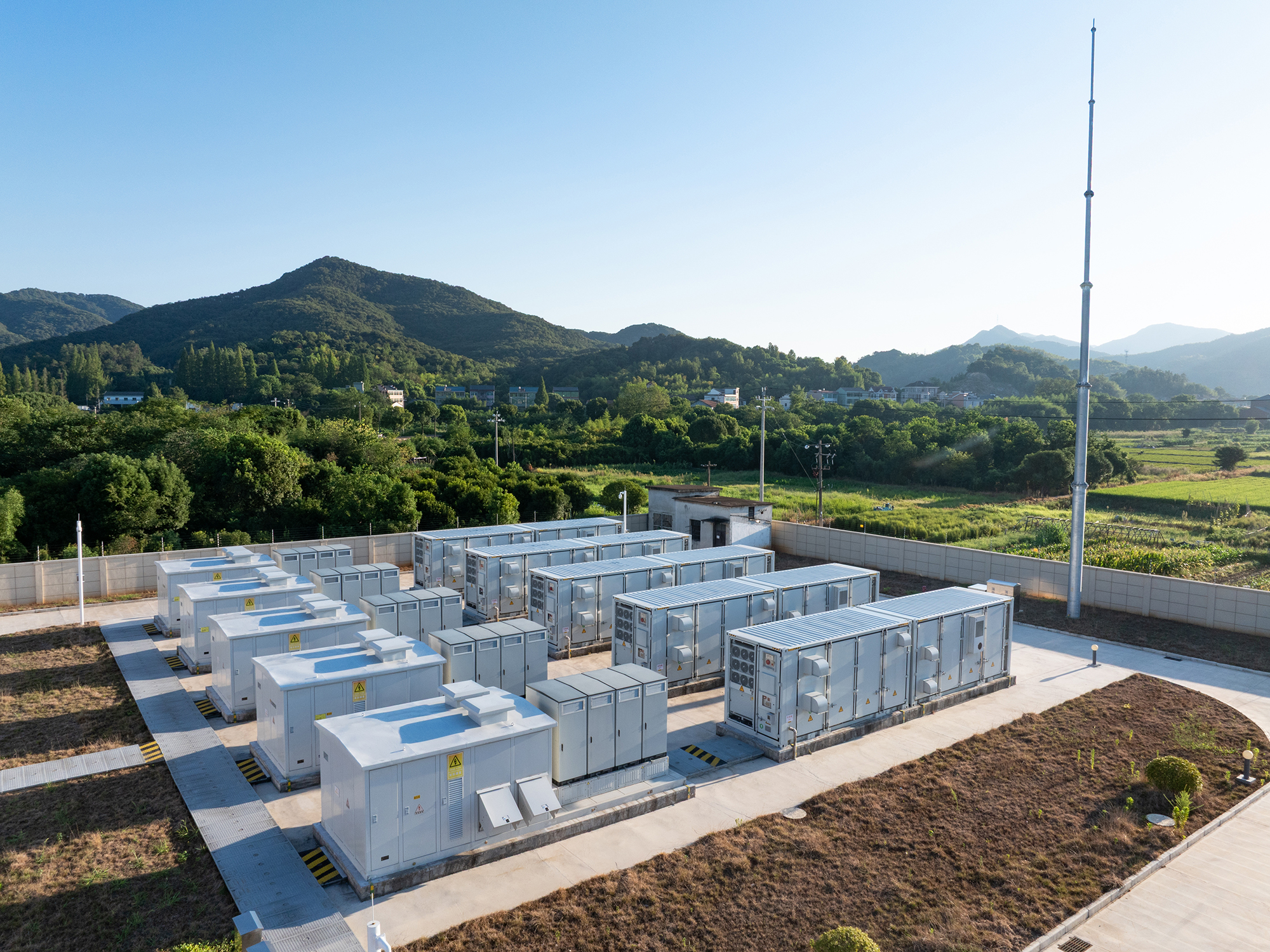
 As the number of battery energy storage system (BESS) projects reaches a critical mass, Matthew Ling, business development director at Leep Utilities, explains the realities of delivering these complex solutions in a fast-moving sector.
It’s not long ago that battery energy storage systems (BESS) were a niche technology pursued by a handful of early movers. But all that has changed fast: BESS solutions are now a mainstream part of the UK energy conversation, with projects increasing in number and scale. We’re seeing far greater commercial interest, and the policy environment is pointing broadly in the right direction.
But growth in this sector also brings risks. The pace at which BESS is expanding is, in some respects, outrunning the industry’s collective understanding of how to deliver these projects well.
The mistakes being made are not always technical, they are often a failure in process, or procurement, or engagement with suppliers in the wider ecosystem. But many of these issues are entirely avoidable, and almost without exception they are far cheaper to prevent than to fix.
A market that’s still finding its feet
Modern BESS projects are not straightforward undertakings. They operate under complex frameworks such as the Bilateral Embedded Generation Agreement (BEGA) or Bilateral Embedded Licence Exemptible Large Generator Agreement (BELLA). They must align with net zero objectives, and are frequently expected to serve a network reinforcement function at the same time as generating commercial returns.
A recent project of Leep’s – a 33 kilovolt (kV)-connected BESS – required a complex discharge profile across multiple daily peaks, including morning and early evening demand, alongside a later evening surge driven by public sector shift changes, providing a reliable 2.5 discharge cycles per day.
That level of operation needs more than good equipment: it requires expertise across engineering, legal, regulatory and commercial disciplines, all working together from day one.
The range of participants entering the market adds another layer of complexity. Some are long-term asset owners looking to operate and retain a battery for 20 years or more. Others are developers whose model is to get planning, secure a grid connection, then sell the project on to the open market – with the independent distribution network operator (IDNO) already contracted in as part of the package. Others still are battery owners focused purely on grid export revenues.
Each model requires a different approach, and the industry does not always make that distinction clearly enough.
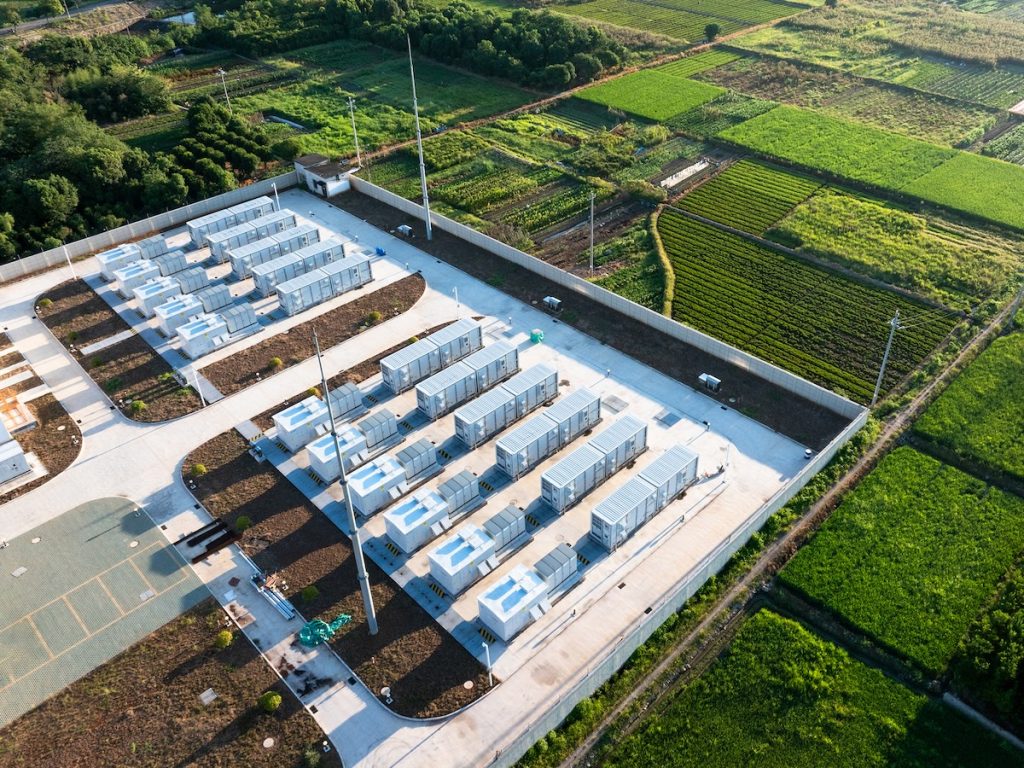
Don’t engage too late
One of the most consistent findings from the BESS projects we work on is that the IDNO is consistently brought into the project far too late.
By the time a scheme is reviewed by the IDNO, the asset owner may already have board sign-off, a contracted independent connection provider (ICP), and a full cost plan – often based on a specification that the IDNO can’t adopt.
This creates a painful situation. The client has made commitments based on figures that do not reflect the full picture. When the IDNO flags that the proposed equipment is not adoptable – perhaps because it doesn’t meet G81 standard, or because the transformer specification is non-standard – it offloads additional cost and timeline slippage onto the client.
It’s not necessarily the ICP’s fault. Their job is to win and deliver the construction works. Long-term adoptability is not their primary concern, and it is unrealistic to expect it to be. But unfortunately, the organisation that does have long-term adoptability as a primary concern – namely the IDNO – is not in the room at the time those decisions are made.
Getting the right skills
A further challenge for BESS projects is that they operate in a relatively new area of regulation and legislation, which can make compliance and approvals feel like moving targets.
If your team can’t adapt at this speed, either because you don’t have the knowledge and resources in-house, or you don’t have easy access to an experienced external team, you put your projects at risk of failing.
The same applies to engineering scope. As BESS projects scale up and connect at higher voltages, unexpected findings become more likely, not less. For a recent BESS project we worked on, detailed engineering work revealed anomalies in the wider network that required reinforcement across multiple circuits.
With our own in-house legal team, we were able to work continuously alongside local specialists and government bodies to navigate this through to final sign-off. It was time consuming, but the solution ended up ultimately benefiting residential and commercial properties in the surrounding area.
Had those issues been discovered late – or by a team without the experience and relationships to act on them – they could easily have become project-stopping problems. Instead, they were resolved as part of the delivery.
Understanding the commercials
While the number of BESS installations is growing, so too is the size – the average project size is nearly 50% bigger than it was in 2024.
As project size increases, so does the importance of choosing the right IDNO partner. Asset values, different customer charge mechanisms, grid export revenues and project-flip structures all operate differently and suit different types of infrastructure owner.
Choosing an IDNO shouldn’t just be on who can meet safety levels and standards. An IDNO whose commercial offer aligns with your model – not just one that can connect you to the grid – matters more than it once did. If you focus purely on minimising upfront costs and accelerating timelines, then you are potentially missing out on longer term value – and almost certainly creating liabilities you haven’t fully accounted for.
There are already lessons to be learned
Grid-scale battery storage is a relatively new industry, but it’s based on proven technology and comes with strong commercial and environmental cases for further growth.
But the industry’s ability to realise the full potential of BESS depends on applying the lessons that are already available – from projects that have been through the complexity and come out the other side.
Done well, BESS solutions deliver real and lasting value: to asset owners, to the networks that adopt them, and to the communities they serve. Getting there requires the right partners, engaged at the right time, with the depth of capability that these projects genuinely demand.
For more information about Leep Utilities and BESS, click here.