Two Blues Solar, a commercial solar funder and developer, has completed more than 1.8 MWp of fully funded commercial solar across three Scottish industrial sites, representing a combined investment of approximately £1.64 million.
The projects, delivered at Kanthal in Perth and at Lossie Seafoods and Ennovi in Arbroath, are expected to generate around 1.39GWh of electricity a year and save approximately 246 tonnes of CO₂ annually. The systems support high-consumption industrial operations, including heating technology, seafood processing and precision-engineered components.
The projects have been delivered through Two Blues Solar’s fully funded model, with the company managing each installation from feasibility to long-term operation. Two Blues Solar retains ownership of the systems, while customers buy the electricity generated on site through a power purchase agreement (PPA), giving them access to the cost and carbon benefits of solar without having to fund the installation themselves.
The projects are structured under long-term PPAs of 15 to 25 years, with the term tailored to each client’s requirements. Two Blues Solar estimates they will deliver approximately £2.85 million in customer savings over the life of the agreements.
“Business electricity bills are increasingly shaped by more than wholesale prices,” said Rachel Stark, Commercial Director of Two Blues Solar. “Non-commodity charges, including network, policy and regulatory costs, are projected to account for around 60% of a typical business electricity bill in 2026, while wholesale markets remain exposed to geopolitical volatility. For industrial users, generating and using green electricity on site can reduce reliance on imported grid power, deliver long-term cost savings and improve cost certainty.”
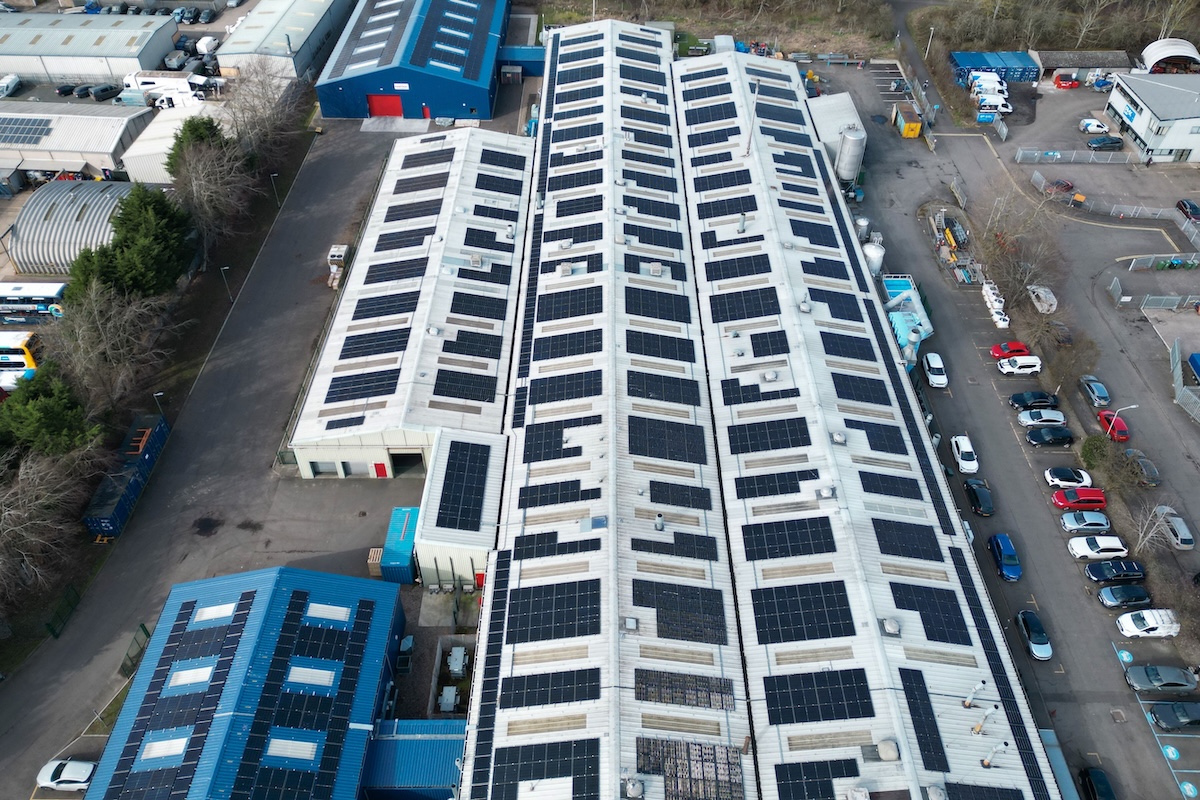
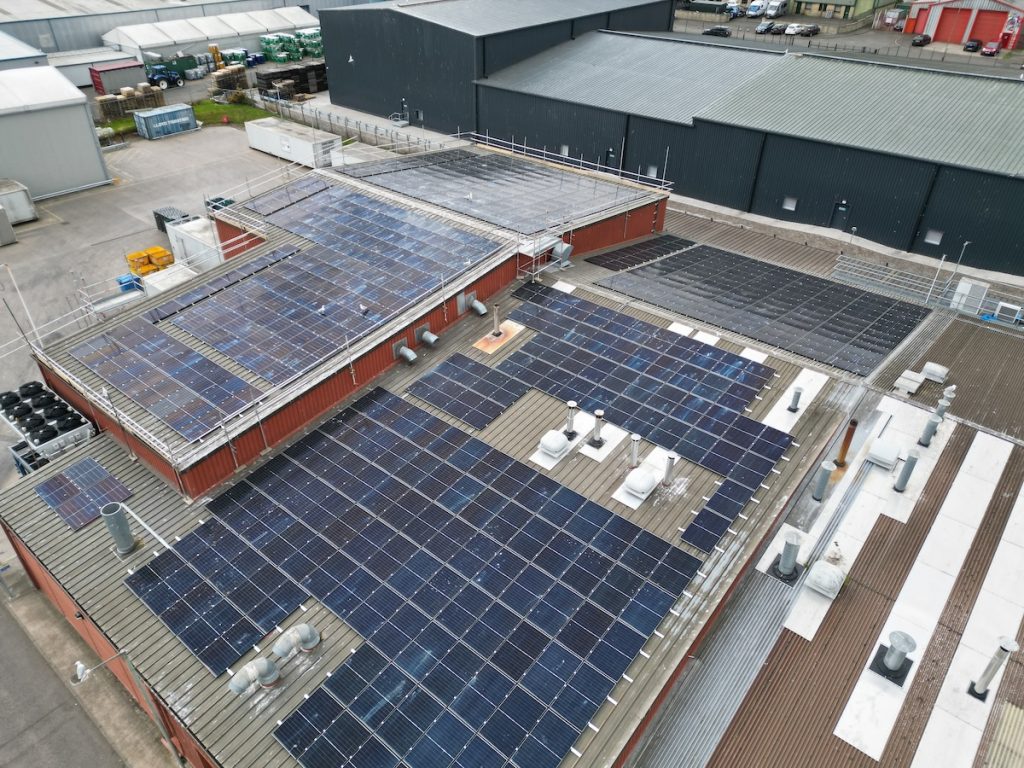
Kanthal’s Perth facility (image above) manufactures silicon carbide heating elements used in high-temperature industrial processes, including applications where manufacturers are replacing gas-fired heat with electric systems. Its 713.92kWp rooftop solar system is expected to generate 546MWh per year and save 96.5 tonnes of CO₂ annually, with around 99% of the electricity generated used on site.
Lossie Seafoods’ Arbroath site (below) operates energy-intensive seafood chilling and processing across its production and secondary buildings, with refrigeration running continuously year-round. Two rooftop systems, with a combined capacity of 293.94kWp, have been designed around each building’s demand profile and are expected to generate 213MWh per year, save 38 tonnes of CO₂ annually, and achieve near-total self-consumption.
Ennovi’s Arbroath site manufactures precision-engineered components for sectors including electric vehicles, aerospace, and medical. Its 818.09kWp rooftop system is expected to generate 630MWh a year, save 111.6 tonnes of CO₂ annually and supply approximately 17% of the site’s total electricity demand.
At Kanthal and Ennovi, the projects extend the electrification story into the companies’ own operations. Both sites make products for industries moving away from fossil-fuelled processes, while using on-site solar to cut the carbon footprint of their own manufacturing.
“Adding solar to our energy mix has given us greater long-term stability over our energy costs by reducing our exposure to rising electricity prices,” said Scott Lawson, PU Manager at Kanthal. “The funded model meant we could move forward quickly without any capital outlay, while also supporting our broader sustainability goals by cutting our carbon footprint. The installation process was well managed and straightforward, with minimal disruption to our operations.”
Two Blues Solar worked with trusted installation partners to deliver the projects. Biosus Energy delivered the installations at Kanthal and Lossie Seafoods; Green Shield Group installed the system at Ennovi.